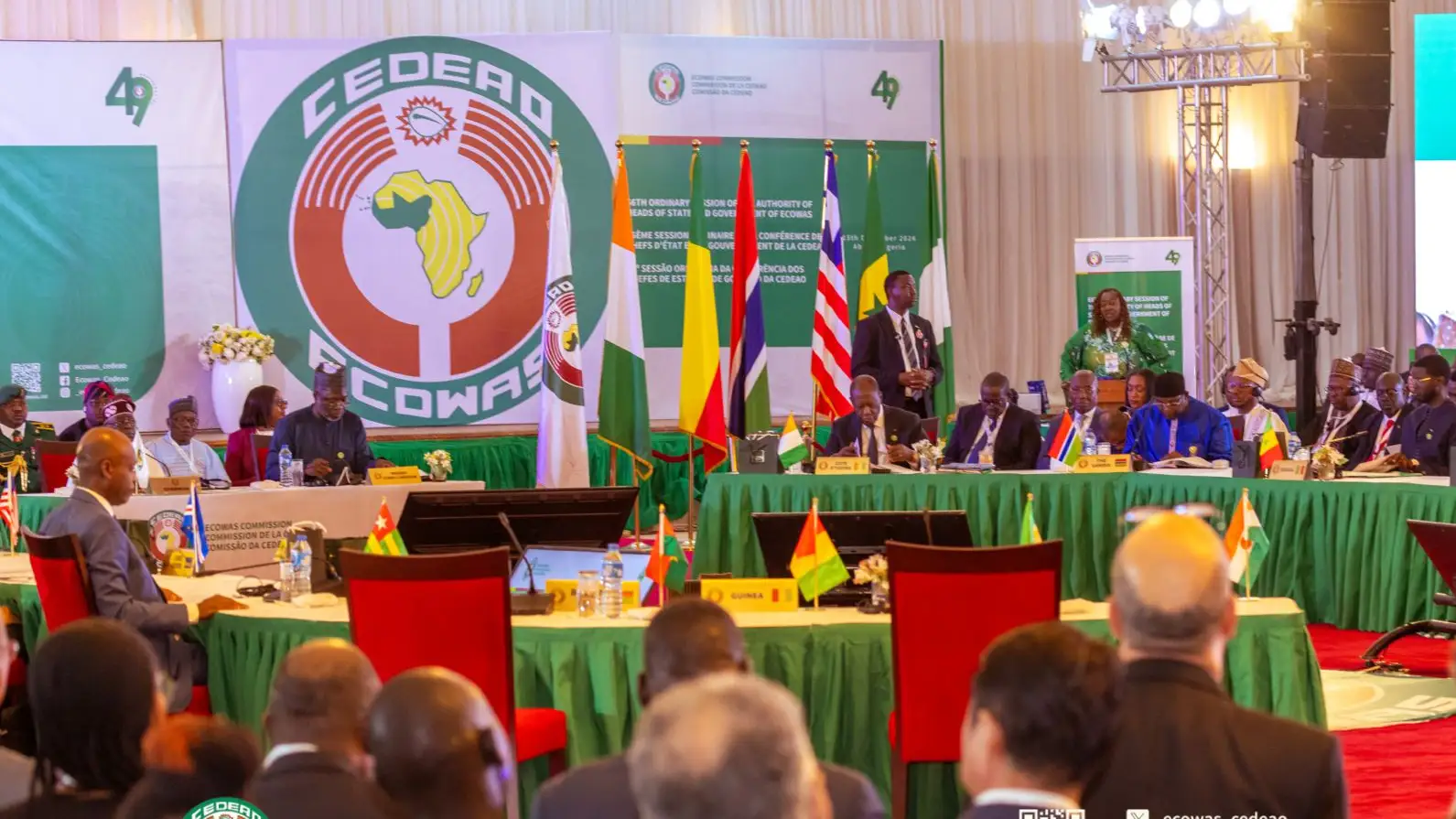
The Economic Community of West African States achieved 4.6% economic growth in 2025, outperforming continental averages despite confronting significant security challenges, the formal withdrawal of three Sahel member states, and persistent global economic uncertainties, according to ECOWAS Commission President Dr. Omar Touray. The resilient performance, announced during a meeting with development partners in Abuja on Thursday, January 30, 2026, signals the bloc’s capacity to maintain economic momentum even as it navigates one of the most complex periods in its 50-year history.
The 4.6% growth figure represents an improvement from 4.3% in 2024, with projections indicating further acceleration to 5.0% in 2026. This trajectory positions ECOWAS as Africa’s second most dynamic economic region and demonstrates the effectiveness of coordinated policy reforms, increased investment in strategic sectors, and improved trade facilitation mechanisms across the remaining 12 member states.
Build the future you deserve. Get started with our top-tier Online courses: ACCA, HESI A2, ATI TEAS 7, HESI EXIT, NCLEX-RN, NCLEX-PN, and Financial Literacy. Let Serrari Ed guide your path to success. Enroll today.
Macroeconomic Stabilization and Fiscal Improvements
Dr. Touray attributed the improved economic performance to multiple factors converging across the region, with structural reforms taking precedence among policy interventions. Member states have undertaken significant adjustments to regulatory frameworks governing investment, taxation, and business operations, creating more favorable environments for both domestic and foreign capital deployment. These reforms have particularly targeted the extractive industries—mining and energy—where rising investment flows have contributed substantially to regional GDP expansion.
Regional inflation declined dramatically from 24.4% in 2024 to 16.8% in 2025, reflecting coordinated monetary and fiscal policy interventions across member states. This substantial reduction, achieved through tighter monetary policies in some countries and improved food supply conditions in others, represents a critical achievement given that high inflation had previously undermined consumer purchasing power and business planning across West Africa.
The fiscal position of ECOWAS member states has strengthened considerably, with government deficits narrowing significantly as authorities improve revenue mobilization and rationalize public expenditure. Enhanced tax collection efficiency, expansion of the tax base to include previously informal sectors, and reduction of wasteful spending have all contributed to fiscal consolidation. The debt-to-GDP ratio has declined modestly across the region, reflecting strong nominal growth rates that outpace debt accumulation combined with improved macroeconomic management practices.
External accounts have remained sound, with the region maintaining a strengthened current account surplus supported by high export earnings from oil, gold, and bauxite. Nigeria, Ghana, and Guinea—the region’s largest commodity exporters—have particularly benefited from favorable international prices for their primary export products, generating foreign exchange surpluses that bolster regional reserve positions.
Sectoral Drivers of Growth
The services sector experienced a strong rebound in 2025, with transport and tourism recovering from pandemic-era disruptions and contributing meaningfully to overall growth. Urban centers across West Africa saw increased commercial activity, while improved air connectivity and easing of travel restrictions boosted cross-border business and leisure travel. The hospitality industry expanded capacity in major cities, responding to growing demand from both regional travelers and international visitors.
Mining and energy investments surged throughout 2025, with multiple large-scale projects reaching operational status or advancing through development phases. Gold production increased substantially in Ghana, Burkina Faso, and Mali, despite security challenges in the latter two countries. Bauxite extraction expanded in Guinea, positioning that country as an increasingly important supplier to global aluminum value chains. Oil and gas development progressed in Nigeria, Ghana, and Senegal, with new discoveries and enhanced recovery techniques boosting output from existing fields.
Agricultural performance varied across the region, with improved food supply conditions in some countries resulting from favorable rainfall patterns and enhanced farming practices, while others continued experiencing challenges from climate variability and conflict-related disruptions. Nevertheless, the overall trajectory showed improvement, with regional food security metrics stabilizing after several years of deterioration.
Trade facilitation improvements contributed to growth by reducing the time and cost associated with cross-border commerce. ECOWAS implemented several initiatives to streamline customs procedures, harmonize standards, and enhance transport infrastructure connecting member states. These measures particularly benefited small and medium enterprises engaged in regional trade, allowing them to operate more efficiently across multiple markets.
Security and Peace Initiatives
Dr. Touray emphasized that peace and security remain at the heart of ECOWAS’ mandate, acknowledging that insecurity in parts of the region continues presenting major concerns that affect economic performance and social stability. The commission intensified preventive diplomacy, mediation, and democratic support activities across the region throughout 2025, deploying missions to multiple member states experiencing political transitions or electoral processes.
Progress was made in combating organized crime and terrorism, with ECOWAS formally taking over the West Africa Police Information System after 12 years under Interpol management. This transfer of operational control represents a significant milestone in regional security cooperation, providing ECOWAS member states with direct access to criminal intelligence databases and enhancing coordination among national law enforcement agencies.
The ECOWAS Committee of Chiefs of Defence Staff completed rotation of the regional Standby Force and reinforced preparations for both the Standby Force and the 1,650-strong Counterterrorism Brigade. These military capabilities are designed to provide rapid response options for security emergencies, peacekeeping operations, and counterterrorism missions across West Africa, though their actual deployment remains subject to political decisions by heads of state.
However, terrorism and violent extremism continued exacting heavy tolls on civilian populations, particularly in the Sahel region. While the number of terrorist attacks declined slightly in 2025, fatalities increased due to rising use of improvised explosive devices that inflict mass casualties. This troubling trend reflects tactical evolution by terrorist groups operating primarily in Burkina Faso, Mali, Niger, and northern Nigeria, where they continue exploiting governance gaps and inter-communal tensions.
The reduced cooperation with the Alliance of Sahel States following the formal withdrawal of Burkina Faso, Mali, and Niger from ECOWAS has complicated regional counterterrorism efforts. These three countries, which face some of the most severe terrorist threats in West Africa, have established alternative security arrangements including partnerships with Russia, limiting the scope for coordinated ECOWAS-led operations across the broader Sahel landscape.
Managing the Sahel Withdrawal Crisis
The formal exit of Burkina Faso, Mali, and Niger from ECOWAS on January 29, 2025, represents the most significant crisis in West African regional integration since the bloc’s founding in 1975. The three countries, now united in the Alliance of Sahel States confederation, announced their intention to withdraw in January 2024 following disputes over ECOWAS sanctions imposed after military coups and the bloc’s threat of military intervention in Niger.
Dr. Touray indicated that ECOWAS continues managing the implications of this withdrawal while keeping channels open for constructive engagement with the departing states. The commission has adopted a balanced approach designed to minimize disruption to citizens and businesses during the transition period while maintaining pressure on the military regimes to restore constitutional order.
ECOWAS has pledged to recognize the national passports of the three countries and maintain trade relationships until otherwise advised, ensuring that ordinary citizens do not bear the full brunt of political disputes between governments. The bloc has also set up structures to facilitate discussions on modalities for managing relationships during and after the transition period, acknowledging that geographic proximity and economic interdependence make complete separation impractical.
The withdrawal carries profound implications for regional integration, affecting cross-border trade flows, financial transactions, labor mobility, and security cooperation. For the departing countries—all landlocked—separation from ECOWAS increases maritime access costs and potentially limits export opportunities. For remaining ECOWAS members, the exit removes approximately 15% of the bloc’s population and reduces its geographic footprint substantially.
Nevertheless, ECOWAS officials maintain that the organization’s doors remain open for the three countries should they choose to return, with Dr. Touray emphasizing during the recent meeting that “any member state was welcome to return.” This conciliatory stance reflects recognition that isolating the Sahel countries serves no productive purpose and that maintaining some level of engagement offers the best pathway toward eventual reintegration.
One decision can change your entire career. Take that step with our Online courses in ACCA, HESI A2, ATI TEAS 7, HESI EXIT, NCLEX-RN, NCLEX-PN, and Financial Literacy. Join Serrari Ed and start building your brighter future today.
Governance and Democratic Support
On governance matters, ECOWAS supported several member states in electoral preparations, political transitions, and institutional reforms throughout 2025. In Côte d’Ivoire, the commission provided technical assistance for electoral administration and voter registration processes. Guinea and Guinea-Bissau both received support for constitutional reform efforts and transition planning, though progress varied significantly between the two countries.
The recent political developments in Guinea-Bissau prompted Dr. Touray to call for a short transition led by an inclusive government with a limited mandate to undertake constitutional and electoral reforms. The proposal reflects ECOWAS’ strategy of promoting negotiated settlements to political crises rather than allowing situations to deteriorate into violence or prolonged instability.
A significant positive development announced by Dr. Touray was the lifting of sanctions on the Republic of Guinea following satisfactory elections in that country. Guinea has been welcomed back as a full-fledged member of ECOWAS after years of suspension following its 2021 military coup. “This is the first time since my arrival in ECOWAS that I am sitting in front of the Ambassador of Guinea in an ECOWAS meeting,” Touray noted, highlighting the symbolic importance of Guinea’s return to full participation in regional affairs.
ECOWAS has maintained its zero-tolerance policy for unconstitutional changes of government, with Dr. Touray reaffirming that “there is now zero tolerance for anti-constitutional behaviour in the region. ECOWAS stands for no coups, and we will continue to maintain that position.” This firm stance, while controversial given the departure of three coup-affected states, signals the bloc’s determination to uphold democratic principles even when enforcement proves politically costly.
Economic Integration Progress
Despite political challenges, ECOWAS recorded steady progress in economic integration initiatives designed to facilitate cross-border commerce and movement. The commission launched the second phase of the pre-movement and migration project, expanding initiatives begun under earlier programming. Additionally, ECOWAS validated the ECOWAS Visa Online approach, a digital platform intended to streamline visa issuance and tracking for travelers within the region.
Seven member states are now implementing the ECOWAS National Biometric Identity Card, with Nigeria becoming the most recent country to operationalize the system. The biometric card facilitates legal movement across borders, reduces identity fraud, and supports regional integration objectives by making it easier for citizens to exercise their rights to residence and establishment throughout the economic community.
These integration measures have practical implications for businesses and individuals. Small-scale cross-border traders, who represent a significant portion of intra-regional commerce, benefit from simplified documentation requirements and reduced harassment at border posts. Women entrepreneurs, who dominate many informal cross-border trading networks, particularly gain from these facilitation improvements.
Current account balances remained positive across the region, driven largely by export surpluses from Nigeria, Ghana, and Guinea. Nigeria’s oil and gas exports continued generating substantial foreign exchange despite production challenges and security disruptions in oil-producing areas. Ghana’s gold, cocoa, and oil exports contributed to positive external balances, while Guinea’s bauxite and gold shipments strengthened that country’s foreign reserve position.
Social Development and Humanitarian Programs
ECOWAS support for women and youth yielded tangible results in 2025, with more than 1,300 small-scale cross-border traders and 50 women-led small and medium enterprises benefiting from capacity-building programs. These initiatives provided business skills training, access to finance facilitation, and market linkage support, enabling participants to expand operations and improve profitability.
Digital skills training programs expanded opportunities for rural women, addressing the gender digital divide that has historically limited women’s participation in the growing digital economy. By providing training in basic computer literacy, mobile money operations, and e-commerce platforms, these programs equipped participants to access new income-generating opportunities and connect with broader markets.
The commission committed approximately $8 million to humanitarian emergencies and disaster risk reduction activities, responding to floods, droughts, disease outbreaks, and conflict-related displacement affecting multiple member states. Drug rehabilitation services expanded to 10 centers across the region, addressing substance abuse issues that disproportionately affect youth populations and contribute to social instability.
Through the West Africa Health Organization, ECOWAS enhanced epidemic preparedness and laboratory capacity, strengthening the region’s ability to detect and respond to disease outbreaks. The experience of COVID-19 demonstrated vulnerabilities in health surveillance and response systems, prompting investments in laboratory infrastructure, trained personnel, and coordination mechanisms that proved valuable when addressing subsequent health emergencies.
Humanitarian interventions focused on vulnerable populations, including programs providing fistula treatment for women and employability training for youth. These targeted initiatives recognize that regional development requires addressing the specific needs of marginalized groups who often lack access to basic services and economic opportunities.
Infrastructure and Connectivity Development
On regional infrastructure and energy, the ECOWAS Commission mobilized over $42 million for regional road network preparatory studies, advancing technical planning for key corridors connecting member states. These studies examine engineering requirements, environmental impacts, cost estimates, and financing options for road projects that will enhance regional connectivity and reduce transport costs for goods and passengers.
The commission advanced preparations for the Praia–Dakar–Abidjan Corridor, supported by the African Development Bank. This major infrastructure project will create an improved transport link connecting the capitals of Cape Verde, Senegal, and Côte d’Ivoire, facilitating trade flows along the Atlantic coast and providing enhanced market access for businesses operating in these countries.
Regional transport infrastructure has been identified as essential for increasing intra-regional trade, with projections indicating potential increases of 10-15% by 2025 if key corridors are completed and maintained. Roads particularly matter given that the vast majority of intra-ECOWAS trade moves by truck, making road quality and border crossing efficiency critical determinants of trade costs.
Communications infrastructure investment is projected to increase by more than 125% between 2018 and 2024, despite limited fixed broadband penetration which remains below 10% in most member states. Mobile broadband expansion has been more successful, with cellular network coverage extending to rural areas and enabling mobile money, e-commerce, and digital government services to reach previously unconnected populations.
Looking Forward: Challenges and Opportunities
While expressing satisfaction with developments across the sub-region, Dr. Touray acknowledged the formidable challenges faced in 2025, noting that it was gratifying ECOWAS remained on course despite these obstacles. The progress outlined “reflects the resilience, determination and unity of our community,” he stated, emphasizing collective achievements rather than individual member state successes.
The global economic environment continues presenting headwinds, with geopolitical tensions, supply chain restructuring, and the rapid acceleration of digital and green transitions reshaping the global economic system. ECOWAS must navigate these external forces while managing internal challenges including security threats, political instability in some member states, infrastructure gaps, and limited fiscal resources.
Nevertheless, the 4.6% growth achieved in 2025 and the 5.0% projection for 2026 suggest that ECOWAS retains significant economic potential despite losing three member states. The remaining 12 countries represent substantial population and economic mass, with Nigeria alone accounting for more than half of regional GDP and Ghana, Senegal, and Côte d’Ivoire providing additional anchors for growth.
The vision articulated in ECOWAS Vision 2050 for a prosperous and peaceful region remains the bloc’s guiding framework, even as political realities require adjustments to implementation strategies. Pillar 1 of this vision emphasizes peace, security, and stability as foundations for development—a recognition that economic integration cannot succeed in contexts of persistent conflict and governance failure.
Strategic priorities moving forward include coordinating macroeconomic policies to promote harmonious development across member states, advancing regional financial integration to reduce transaction costs and enhance capital mobility, and reforming security architecture to address evolving threats more effectively. These priorities acknowledge that ECOWAS must strengthen its core functions and adapt to changing regional dynamics if it is to maintain relevance and deliver value to member states and their populations.
The withdrawal of Burkina Faso, Mali, and Niger creates both challenges and potential opportunities. While their departure removes member states from formal ECOWAS structures, it may also reduce some sources of internal tension and allow remaining members to move more quickly on integration initiatives where consensus has been difficult to achieve. The smaller membership could potentially facilitate decision-making and implementation, though at the cost of reduced geographic scope and economic scale.
Conclusion
ECOWAS’ 4.6% economic growth in 2025 represents a significant achievement given the complex security, political, and economic environment confronting West Africa. The performance demonstrates that regional integration frameworks can continue delivering economic benefits even while managing existential challenges to their membership and mandate.
The dual reality of robust economic growth alongside severe security challenges and political fragmentation reflects the complex, sometimes contradictory dynamics shaping contemporary West Africa. Economic activity continues expanding in relatively stable coastal countries while terrorism and insurgency plague Sahel regions. Democratic consolidation advances in some states while military coups reverse progress in others. Regional integration deepens in trade and movement while fracturing along security and political lines.
As ECOWAS navigates 2026 and beyond, its success will depend on the bloc’s capacity to maintain economic momentum, strengthen democratic governance where it exists, support transitions where it has been disrupted, manage relationships with departing member states constructively, and adapt integration frameworks to address contemporary challenges rather than historical assumptions. The 50-year-old organization faces perhaps its most difficult period, yet the resilience demonstrated in 2025 suggests resources and determination remain for addressing the challenges ahead.
Original Variation
Ready to take your career to the next level? Join our Online courses: ACCA, HESI A2, ATI TEAS 7 , HESI EXIT , NCLEX – RN and NCLEX – PN, Financial Literacy!🌟 Dive into a world of opportunities and empower yourself for success. Explore more at Serrari Ed and start your exciting journey today! ✨
Track GDP, Inflation and Central Bank rates for top African markets with Serrari’s comparator tool.
See today’s Treasury bonds and Money market funds movement across financial service providers in Kenya, using Serrari’s comparator tools.
photo source: Google
By: Montel Kamau
Serrari Financial Analyst
30th January, 2026