Kenya’s Capital Markets Authority is breaking new ground in Africa’s financial regulation landscape by developing a specialized compensation mechanism to protect investors who trade in virtual assets, marking a significant evolution in the country’s ambition to establish itself as the continent’s premier digital finance hub. The proposed fund would operate separately from existing investor protection schemes and provide a safety net for cryptocurrency and digital asset traders in the event that licensed dealers fail to meet their contractual obligations.
The announcement by CMA Chief Executive Wycliffe Shamiah signals Kenya’s commitment to building robust infrastructure around its newly established regulatory framework for cryptocurrency markets. President William Ruto signed the Virtual Asset Service Providers Act into law on October 15, 2025, establishing a comprehensive legal framework for cryptocurrency regulation and positioning Kenya at the forefront of African nations embracing digital asset oversight.
Build the future you deserve. Get started with our top-tier Online courses: ACCA, HESI A2, ATI TEAS 7, HESI EXIT, NCLEX-RN, NCLEX-PN, and Financial Literacy. Let Serrari Ed guide your path to success. Enroll today.
A Dual-Track Approach to Investor Protection
The Capital Markets Authority’s approach to protecting virtual asset investors represents a deliberate departure from the one-size-fits-all model of investor compensation. Shamiah explained in an interview that the virtual asset compensation mechanism would be distinct from the current Investor Compensation Fund that serves equity market participants, recognizing fundamental differences between traditional securities and digital assets.
“Those are purely different markets,” Shamiah emphasized. “We have the normal capital markets, but virtual assets are new creations, so the discussions we are having are about what layers of protection we can have in their cases and whether a fund can be set up for that purpose. That is a discussion we need to have at some point, but I don’t think we want to mix them because these are two different markets.”
The existing Investor Compensation Fund currently provides protection for stock market investors who suffer pecuniary loss due to broker or dealer failures, with maximum compensation standing at Ksh200,000 ($1,550.38) per investor. This ceiling was increased from Ksh50,000 in recent reforms aimed at strengthening investor confidence in Kenya’s capital markets.
The ICF derives its income from multiple sources, including interest accruing on funds received from subscribers to public issues, 0.01 percent of consideration from share transactions through the Nairobi Securities Exchange, 0.004 percent of bond trading consideration, interest earned from invested funds, and financial penalties imposed on operators for regulatory non-compliance.
However, the CMA recognizes that virtual asset markets operate with different participants, transaction mechanisms, and risk profiles that necessitate a tailored compensation structure. The details on funding sources, contribution mechanisms, and payout thresholds for the proposed virtual asset compensation fund remain under discussion as regulators work to design a system appropriate for this emerging market.
Building on Comprehensive Regulatory Framework
The compensation fund initiative builds upon Kenya’s recently implemented regulatory architecture for virtual assets. The Virtual Asset Service Providers Act, which became effective on November 4, 2025, establishes Kenya as one of the first African nations with comprehensive statutory oversight of cryptocurrency markets.
The legislation designates the Central Bank of Kenya and the Capital Markets Authority as joint regulators responsible for licensing, monitoring, and supervising Virtual Asset Service Providers. In a joint notice issued in November, both regulators clarified that while the Act provides the legal groundwork, no VASPs have yet been licensed to operate in or from Kenya, as implementing regulations are still being finalized by the National Treasury.
The law adopts an activity-based approach to regulation, capturing entities including custodial wallet providers, virtual asset exchanges, brokers, custodians, payment gateway operators, and firms that issue or manage virtual assets. The Central Bank of Kenya will handle licensing for stablecoins and payment-related virtual assets, while the Capital Markets Authority will supervise exchanges, brokers, and market operators.
Operators face strict obligations under the new framework. They must establish a physical office in Kenya, appoint a board of at least three natural persons, segregate client funds from operational capital, and implement robust anti-money laundering and counter-terrorism financing controls. Individuals who fail to meet disclosure requirements face fines up to Ksh3 million, while corporate entities can be penalized up to Ksh10 million.
Ambitious Plans for Stock Exchange Listings
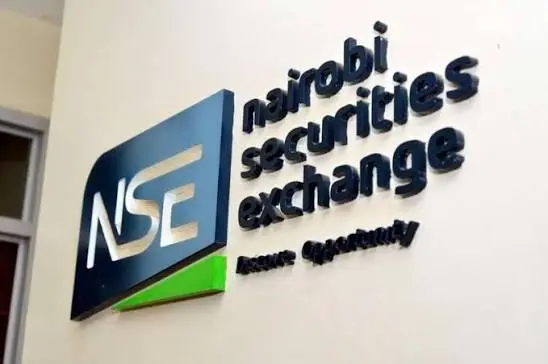
In a development that could further integrate virtual assets into Kenya’s mainstream financial system, the CMA disclosed in November that it is in discussions with four to five major virtual asset companies, primarily from the United States and United Kingdom, about listing their shares on the Nairobi Securities Exchange. This would mark the first listing of pure-play virtual asset companies on an African stock exchange.
The proposed listings represent a nuanced approach to bringing cryptocurrency exposure to traditional investors. Rather than listing tokens or coins directly, these companies would sell equity shares to Kenyan investors, allowing them to gain exposure to virtual asset businesses without directly holding cryptocurrencies. “These companies are saying if you allow us, we will not bring this coin but we will bring our shares so that people are not buying in the coin but they are buying in us (the company),” Shamiah explained.
The big global virtual asset companies interested in listing fall into categories such as exchanges, asset managers, and infrastructure providers. Major cryptocurrency exchanges like Binance Holdings, Coinbase Global, and Kraken operate in these spaces, though the CMA has not disclosed which specific firms are in discussions.
NSE Chief Executive Frank Mwiti welcomed the development as a “very promising” opportunity to modernize the exchange, while cautioning that success hinges on effective implementation of the regulatory framework, investor education, and careful management of liquidity dynamics. The initiative could diversify the NSE’s product offerings and reduce reliance on the few large companies that currently dominate trading activity.
Surging Cryptocurrency Adoption Drives Regulatory Evolution
The push for comprehensive regulation and investor protection mechanisms comes amid explosive growth in Kenya’s cryptocurrency market. The country has emerged as one of Africa’s leading adopters of digital assets, driven by young, tech-savvy users seeking alternatives to traditional financial systems.
According to platform Triple-A, approximately 10.71 percent of Kenya’s population, or nearly 6.1 million people, currently hold cryptocurrencies. In the 12-month period ending June 2024, Kenyan users conducted stablecoin transactions worth Ksh426.4 billion ($3.3 billion), according to blockchain analytics firm Chainalysis.
At the regional level, the cryptocurrency market in sub-Saharan Africa grew by 52 percent year-on-year, reaching more than $205 billion between July 2024 and June 2025. Chainalysis ranks Kenya among the countries with the highest adoption rates worldwide, placing it fourth in Africa for stablecoin receipts behind Nigeria, South Africa, and Ghana.
The rise in cryptocurrency use among young people aged 18 to 35 as a means of payment, investment, and transaction has been identified as one of the main drivers of regulatory reform. Kenya is building on its long-standing leadership in mobile financial services, particularly through M-Pesa, to support the integration of new financial technologies.
One decision can change your entire career. Take that step with our Online courses in ACCA, HESI A2, ATI TEAS 7, HESI EXIT, NCLEX-RN, NCLEX-PN, and Financial Literacy. Join Serrari Ed and start building your brighter future today.
Practical Use Cases Fueling Adoption
Kenya’s cryptocurrency adoption has been driven by practical economic needs rather than speculative fervor. Cross-border traders, Kenyans in the diaspora, and multinational companies are increasingly using stablecoins for payments, setting the stage for wider adoption of digital assets in everyday finance.
Stablecoins, which are cryptocurrencies backed by assets considered reliable such as the US dollar, have gained particular traction. They offer a way to quickly and cheaply make payments, especially cross-border transactions that in traditional systems can take days to settle and incur significant fees. The cost of sending stablecoins averages between 0.5 and one percent, compared to four to seven percent for traditional channels like banks and remittance firms such as Western Union.
Local traders are increasingly using cryptocurrency to pay for imports, while Kenyans in the diaspora use it to wire cash to family members. Gig economy and remote workers in Kenya are accepting stablecoins as payment in place of services like PayPal, citing cost efficiency and convenience. Enablers of stablecoin infrastructure, such as Yellow Card, have integrated with banks, fintechs, and mobile network operators, allowing seamless conversion of digital currencies into cash via mobile money wallets.
Peter Mwangi of Yellow Card predicts that “stablecoins will also be adopted by some of our biggest financial players in our markets here in Kenya, including banks and mobile network operators,” reflecting growing mainstream acceptance of these digital assets.
Across Africa, local currency depreciation and difficulties in obtaining hard currency have driven adoption of stablecoins, particularly in Nigeria and Ethiopia. The March 2025 volume spike in sub-Saharan African cryptocurrency activity, which saw monthly on-chain volume reach nearly $25 billion, was driven largely by centralized exchange activity in Nigeria where sudden currency devaluation prompted increased crypto adoption.
Addressing the Worldcoin Controversy and Consumer Protection Gaps
The urgency of establishing robust regulatory frameworks was highlighted by incidents that exposed consumers to significant financial risks in the absence of oversight. The Worldcoin controversy in August 2023 became a catalyst for regulatory action when considerable numbers of Kenyans lined up in Nairobi believing they would receive money in exchange for scanning their eyeballs, only to discover they would be compensated in the Worldcoin token rather than fiat currency.
In response, the CMA issued a cautionary statement informing the public of Worldcoin’s unregulated status and warning about fraud risks in the over-the-counter token market. The National Assembly established an Ad Hoc Committee to examine Worldcoin’s operations in Kenya, recommending a ban on the company’s activities and the development of a comprehensive regulatory framework for crypto assets.
Similar consumer protection concerns arose in the KeniCoin case, where a court determined that the cryptocurrency should be classified as a security under the Capital Markets Act. The case involved an offer to purchase KeniCoin via fiat currency or another crypto asset with promises of 10 percent monthly returns for three years, marketed as a “crowd sale of cloud tokens.” The court applied the Howey test, determining that the scheme constituted an investment in a common enterprise with profits coming solely from the efforts of others, bringing it within the CMA’s regulatory purview.
These incidents underscored what an IMF technical assistance report on Kenya’s crypto regulation identified as critical needs: increased awareness and financial literacy regarding the nature and risks of crypto assets for the public at large, clear regulatory frameworks with specific definitions and classifications, and robust consumer protection mechanisms.
FATF Compliance and International Standards
Kenya’s regulatory push is also driven by its placement on the Financial Action Task Force grey list. FATF grey-listed Kenya in February 2024, citing challenges in the country’s anti-money laundering framework, including gaps in the regulation of virtual asset service providers. This designation raises due diligence costs, complicates correspondent banking relationships, and can deter foreign investment.
The Virtual Asset Service Providers Act directly addresses FATF Recommendation 15, which requires countries to regulate VASPs for anti-money laundering and counter-terrorism financing purposes. The legislation makes VASPs reporting institutions and gives regulators clearer powers to examine, audit, and enforce compliance. The law explicitly prohibits VASPs from using “mixers” or software tools that obscure the origin of funds by mixing illicit cryptocurrency with clean assets from thousands of addresses.
The regulatory framework aims to align Kenya with international standards while enabling supervised innovation rather than blanket prohibition. As one legal analysis noted, Kenya is pursuing a strategy where crypto activity comes into a supervised perimeter rather than being pushed underground or driven offshore.
Implementation Challenges and Opportunities
Despite the ambitious regulatory vision, significant implementation challenges remain. The IMF technical assistance report warned that staffing and monetary constraints may make it difficult for the CMA to effectively supervise domestic crypto asset activities, particularly with respect to monitoring market developments, staying abreast of new players and product offerings, and transaction monitoring to detect abusive market behavior.
The Central Bank of Kenya and Capital Markets Authority acknowledged these challenges in their November 2025 joint statement, noting that the Cabinet Secretary for National Treasury is still developing detailed implementing regulations that will outline requirements for licensing, supervision, risk controls, and compliance. “Consequently, the licensing of VASPs will commence upon issuance of these Regulations,” the notice stated, underscoring that regulatory implementation remains a work in progress.
For virtual asset service providers already operating or planning to enter the Kenyan market, the regulatory environment creates both compliance burdens and competitive opportunities. Foreign VASPs that already serve Kenyan customers will need to regularize their operations or establish partnerships with licensed local entities. Banks, payment service providers, and capital markets intermediaries that already report to CBK or CMA may move faster through the licensing process, as they have governance head starts despite needing crypto-specific capabilities.
A sandbox phase appears likely, where early pilots with caps can help applicants prove controls while regulators learn from real operational data. This approach would balance innovation encouragement with prudential oversight, allowing the regulatory framework to evolve based on market realities.
Broader Regional Context and Leadership
Kenya’s comprehensive approach to virtual asset regulation positions it as a potential model for other African nations grappling with similar challenges. The regulatory framework stands in contrast to the approaches taken by some regional peers.
Rwanda is developing formal regulation after years of warnings, with the National Bank of Rwanda and Capital Market Authority sharing a draft law in March 2025 that would put the CMA in charge of licensing and oversight. However, Rwanda’s proposed framework includes strict prohibitions, including bans on using virtual assets as official money, energy-intensive mining, standalone crypto ATMs, mixing or tumbling services, and tokenization of the Rwandan currency.
Uganda’s stance remains mixed, with the central bank critical of private cryptocurrencies and a 2023 High Court ruling limiting their use for payments, even as the country pursues tokenization projects and a central bank digital currency pilot. This leaves retail crypto in a grey area while the state advances blockchain initiatives.
Nigeria, which has emerged as Africa’s largest cryptocurrency market, has taken a more confrontational approach at times, banning banks from facilitating cryptocurrency transactions in 2021 before later moderating its stance. The country’s experience with rapid cryptocurrency adoption amid currency depreciation and inflation mirrors some of Kenya’s drivers, but the regulatory responses have differed significantly.
The Digital Finance Hub Ambition
Kenya’s multi-faceted approach to virtual asset regulation—combining comprehensive legislation, investor compensation mechanisms, and plans for stock exchange listings—reflects broader national ambitions to establish the country as Africa’s digital finance hub. This strategy builds on Kenya’s existing strengths in financial technology innovation, particularly the success of M-Pesa, which revolutionized mobile payments and demonstrated how digital financial services could achieve mass adoption.
The country’s 79 percent financial account penetration as of 2021, largely attributable to mobile money, provides a foundation for integrating newer financial technologies. With a population of 55 million and more mobile phone subscriptions per capita than the United States, Kenya possesses the digital infrastructure and user base to support sophisticated virtual asset markets.
The proposed virtual asset compensation fund represents recognition that achieving digital finance hub status requires not just permissive regulation but robust investor protection mechanisms that can build confidence in these emerging markets. By establishing safeguards before widespread licensing begins, Kenya aims to avoid the scandals and market failures that have plagued cryptocurrency markets in less regulated jurisdictions.
CMA’s emphasis on separating virtual asset compensation from traditional securities reflects sophisticated understanding that different asset classes require tailored protection mechanisms. The ongoing discussions about funding sources, contribution structures, and payout mechanisms will be critical in determining whether the fund can effectively protect investors while remaining financially sustainable.
Looking Ahead: Balancing Innovation and Protection
As Kenya moves forward with implementing its virtual asset regulatory framework, several key questions remain unanswered. The specific design of the compensation fund will be crucial—setting compensation limits too low might fail to provide meaningful protection, while limits set too high could create moral hazard or prove financially unsustainable.
The funding mechanism will also require careful calibration. Will licensed VASPs be required to contribute based on transaction volumes, customer counts, or assets under management? How will the fund build initial capital reserves before claims begin? What governance structures will oversee fund administration and claims processing?
The interaction between the compensation fund and other regulatory requirements, including capital adequacy standards and segregation of customer assets, will be important. Strong preventive regulations that reduce the likelihood of dealer failures may be more valuable than generous compensation after failures occur, though both elements contribute to overall investor protection.
The success of Kenya’s regulatory approach will ultimately be measured not just by how many VASPs receive licenses or how much capital the compensation fund accumulates, but by whether the framework achieves its stated objectives: protecting consumers, preventing financial crime, attracting legitimate investment, and positioning Kenya as a regional leader in digital finance.
International observers are watching Kenya’s experiment closely. If the country succeeds in creating a regulatory environment that encourages innovation while providing meaningful consumer protection, it could serve as a template for other emerging markets seeking to harness the potential of virtual assets without exposing citizens to excessive risk.
As Shamiah noted, “we are just starting that market, so as we grow, those are the issues we will be discussing.” This acknowledgment of the iterative nature of regulating rapidly evolving technologies suggests Kenya’s regulators understand that effective oversight requires flexibility and continuous adaptation rather than rigid adherence to initial frameworks.
The proposed compensation fund for virtual asset investors represents one piece of a comprehensive approach to digital asset regulation—an approach that combines statutory authority, investor protection, market development, and international compliance. Whether this multifaceted strategy succeeds in establishing Kenya as Africa’s digital finance hub while adequately protecting its citizens will become clearer as the regulatory framework moves from policy documents to operational reality.
Ready to take your career to the next level? Join our Online courses: ACCA, HESI A2, ATI TEAS 7 , HESI EXIT , NCLEX – RN and NCLEX – PN, Financial Literacy!🌟 Dive into a world of opportunities and empower yourself for success. Explore more at Serrari Ed and start your exciting journey today! ✨
Track GDP, Inflation and Central Bank rates for top African markets with Serrari’s comparator tool.
See today’s Treasury bonds and Money market funds movement across financial service providers in Kenya, using Serrari’s comparator tools.
photo source: Google
By: Montel Kamau
Serrari Financial Analyst
27th January, 2026