The Canadian Institute of Actuaries has launched a groundbreaking climate risk modeling partnership with Université du Québec à Montréal, securing nearly $1.6 million in funding to develop sophisticated statistical and climate models specifically designed to protect Canadian financial institutions from the escalating threats posed by floods, wildfires, and transition risks associated with the shift to a low-carbon economy. The initiative arrives at a critical juncture when Canada’s financial sector faces unprecedented strain from climate-related catastrophes, with 2024 shattering all previous records at $8.5 billion in insured losses from severe weather events—nearly triple the total recorded in 2023 and twelve times the annual average from the first decade of the century.
Led by Mathieu Boudreault, Fellow of the Canadian Institute of Actuaries and Professor in the Department of Mathematics at UQAM, who holds the Research Chair in Actuarial and Climate Sciences, the project represents a significant convergence of actuarial expertise and climate science aimed at addressing what has become an existential challenge for Canada’s property and casualty insurance sector, pension funds, and broader financial system. The Canadian Institute of Actuaries will contribute in-kind resources through March 2030, supporting project oversight, knowledge integration, and awareness-building across the actuarial profession’s more than 6,800 members who provide risk management expertise to organizations and individuals across the country.
Build the future you deserve. Get started with our top-tier Online courses: ACCA, HESI A2, ATI TEAS 7, HESI EXIT, NCLEX-RN, NCLEX-PN, and Financial Literacy. Let Serrari Ed guide your path to success. Enroll today.
Funding Structure and Institutional Support
The nearly $1.6 million project secured $1.05 million in grants from the Natural Sciences and Engineering Research Council of Canada, Canada’s federal funding agency for research and research training in natural sciences and engineering at Canadian universities and colleges. An additional $525,000 will be provided by UQAM’s ClimACT research chair, which receives funding from three of Canada’s top property and casualty insurance companies: Co-operators, Definity, and Intact. This multi-stakeholder funding model reflects the urgent recognition across Canada’s insurance industry that climate risk modeling capabilities must substantially improve to maintain the viability of insurance coverage and financial stability.
The involvement of major Canadian insurers in funding the research chair underscores the practical urgency driving this academic-industry collaboration. These insurance companies have experienced firsthand the devastating financial impacts of inadequate climate risk models, as traditional actuarial approaches based on historical loss data have proven increasingly inadequate for predicting future climate-related losses in an era of rapid climate change. The partnership structure ensures that research outputs will be directly relevant to the operational needs of Canadian financial institutions while maintaining academic rigor and independence.
Angelita Graham, Fellow of the Canadian Institute of Actuaries and CIA President, emphasized the significance of the partnership: “This research project reflects our commitment to advancing climate science and supporting the public interest. By integrating actuarial expertise with climate modelling, we can help governments, financial institutions, pension plans and society better prepare for the challenges ahead.” Graham, who is also a partner at Mercer Canada, has made climate risk a central focus of the CIA’s strategic priorities for 2026, particularly emphasizing impacts on pension investments and the liability side of insurance operations.
Context of Escalating Climate Losses
The timing of this research initiative reflects the stark reality that climate-related financial losses in Canada have reached crisis proportions. The summer of 2024 stands out as the most destructive season in Canadian history for insured losses due to wildfires, floods, and hailstorms. In just two months—July and August—four catastrophic weather events resulted in over $7 billion in insured losses and more than a quarter of a million insurance claims, representing 50 percent more claims than Canadian insurers typically receive in an entire year.
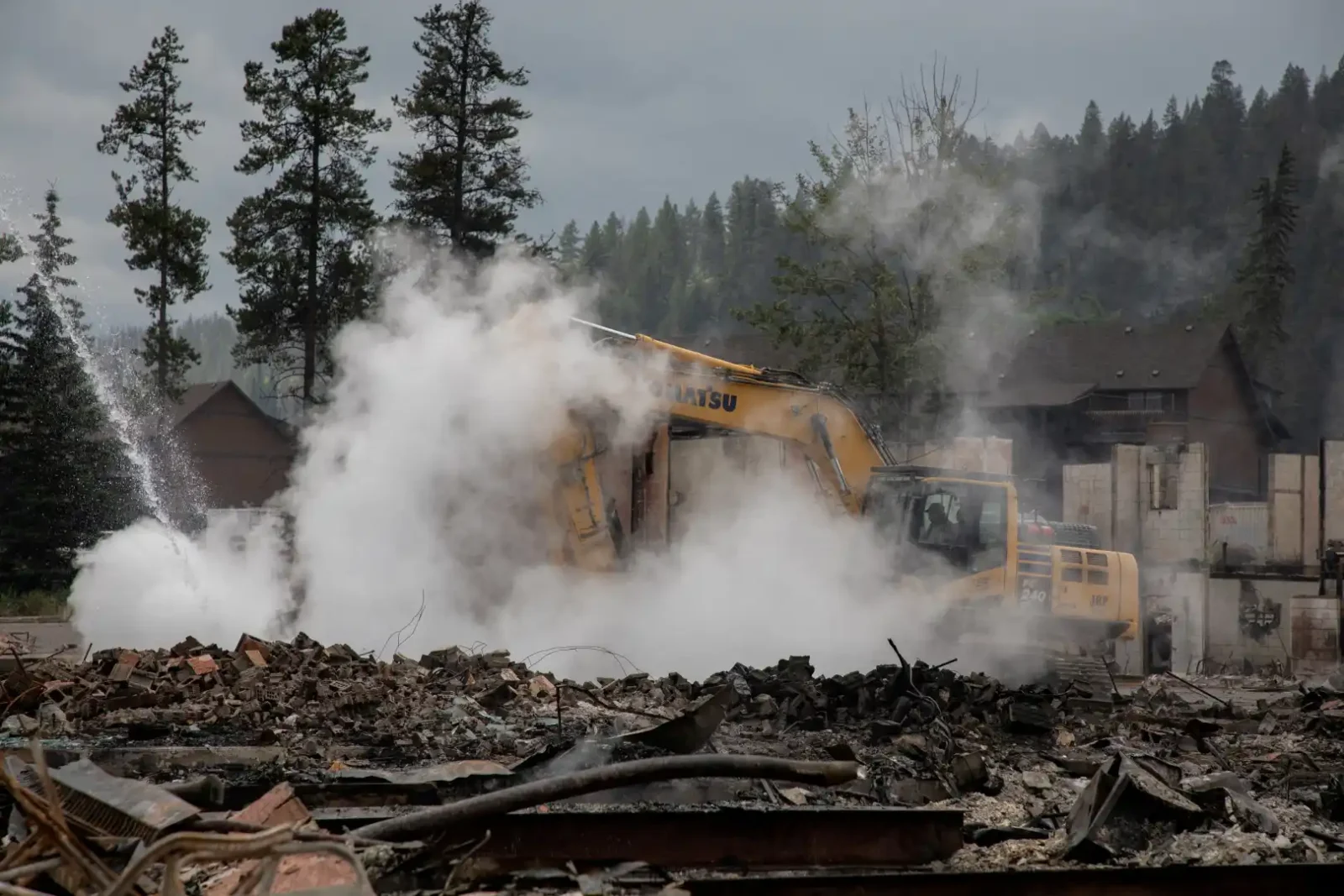
The single most destructive weather event in 2024 was an August hailstorm in Calgary, Alberta, that caused $3 billion in insured losses in just over one hour, ranking as the second-costliest natural catastrophe event in Canada’s history. The remnants of Hurricane Debby traveling across southern Quebec inflicted $2.9 billion in insured damages. The Jasper wildfire in Alberta caused approximately $1.3 billion in insured losses, with recovery efforts including a coordinated debris-removal program that cleared the vast majority of properties to enable reconstruction. Flooding in the Greater Toronto Area accounted for an additional $1 billion in insured losses during the summer months.
According to Catastrophe Indices and Quantification Inc., total insured losses in 2024 surpassed $9.2 billion, shattering the previous annual record of $6 billion set in 2016 following the Fort McMurray wildfires. This dramatic escalation reflects a fundamental shift in Canada’s climate risk profile. Between 2006 and 2015, Canada’s annual insured losses from catastrophic weather and wildfires totaled $14 billion in inflation-adjusted dollars. Between 2016 and 2025, that figure jumped to $37 billion—nearly triple the previous decade—with the average number of claims almost doubling over the same period.
The pattern extends beyond 2024. In 2025, severe weather cost Canadian insurers more than $2.4 billion, making it the tenth-costliest year on record for insured catastrophe losses despite being relatively “calm” compared to the previous year. Events included a late-March ice storm in Ontario and Quebec causing $342 million in insured damage, May wildfires in Manitoba and Saskatchewan, a July hailstorm in Calgary, severe hail across the Prairies in August, and December floods linked to an atmospheric river in British Columbia.
Shift From Primary to Secondary Perils
A particularly significant dimension of Canada’s evolving climate risk landscape is the growing dominance of what the insurance industry terms “secondary perils”—floods, wildfires, hailstorms, and post-tropical storms that occur frequently but have historically been less severe than primary perils like earthquakes and hurricanes. Swiss Re’s analysis of 2024’s record losses notes that much of the damage was driven by secondary perils, with the Calgary hailstorm and Hurricane Debby combined nearly equaling total annual catastrophe losses in Canada from 2021-2023.
This shift has profound implications for climate risk modeling. While primary perils modeling has kept pace with key loss drivers like inflation, urbanization, and climate change, modeling of secondary perils requires continued focus and investment because these events are more frequent, more geographically dispersed, and more sensitive to local conditions than major hurricanes or earthquakes. The term “secondary peril” itself can be misleading—as 2024 demonstrated, these events can generate catastrophic financial losses rivaling any traditional primary peril.
The research project led by Boudreault will specifically address the growing risks posed by floods, wildfires, and other climate-related hazards including transition risks. Transition risks arise from the economic and financial disruptions associated with the shift to a low-carbon economy, including policy changes, technological disruptions, market shifts, and reputational impacts that can affect asset values and business viability. For Canadian financial institutions holding substantial investments in carbon-intensive sectors, accurately modeling transition risks is essential for portfolio management and strategic planning.
Actuarial Science Meets Climate Modeling
The project represents a deliberate effort to bridge disciplinary boundaries between actuarial science and climate modeling, two fields that have historically operated in separate spheres but must now converge to address climate financial risks effectively. An article in the CIA’s publication exploring this collaboration between life and property and casualty actuaries highlights how climate risk modeling is inherently complex and demands a multidisciplinary approach to fully capture its multifaceted impacts.
In 2024 alone, Canada experienced approximately $8.5 billion in insured losses from natural catastrophes, with impacts ranging from flooded basements and vehicle damage to destroyed homes, temporary evacuations, and tragically, loss of life. The actuarial profession is increasingly called upon to lead in assessing the emerging risks and opportunities that arise from climate change as these events become more frequent and more severe. The collaboration brings together expertise in catastrophe modeling, short-term volatility analysis relevant to property and casualty insurance, and long-term modeling approaches and transition risk assessment capabilities traditionally associated with life insurance and pension fund management.
Traditional actuarial approaches rely on historical loss data to predict future claim frequencies and severities, operating under the fundamental assumption that future risk distributions will resemble past patterns in statistically predictable ways. Climate change violates this assumption of stationarity, rendering historical loss distributions increasingly poor guides to future risk as climate conditions shift, extreme events intensify, and previously rare hazards become more frequent. The UQAM research project will develop forward-looking climate risk models that incorporate climate science projections about how temperature, precipitation, sea level, and extreme event patterns will evolve under different greenhouse gas emission scenarios.
Institutional Commitment to Climate Risk Management
The CIA’s involvement in the research project reflects its broader commitment to interdisciplinary collaboration and evidence-based policy development to address climate-related risks. The organization has been developing tools and guidance for actuaries, financial institutions, and policymakers as climate risk has topped the list of emerging risks for many years. The CIA maintains a dedicated Climate Change and Sustainability Committee that provides resources spanning property and casualty insurance, life and health insurance, and pension sectors.
The committee’s work includes developing climate scenario analysis frameworks, providing guidance on integrating climate considerations into pension scheme funding strategies and long-term strategic asset allocation, and helping actuaries understand how to incorporate climate change into their professional work. The committee has collaborated with organizations like Moody’s Analytics on climate risk modeling and scenario analysis, recognizing that climate-related exercises like the Office of the Superintendent of Financial Institutions’ Standardized Climate Scenario Exercise are evolving from risk exposure and disclosure toward actual risk sizing and quantification.
An important aspect of the CIA’s approach is transparency about the evolving state of climate-related scenario analysis and the modeling challenges that persist. A 2024 article on navigating the climate frontier emphasizes that although significant progress has been made, many modeling challenges remain relevant today, including difficulty in modeling tipping points, market volatility in response to climate change, and the inherently long time horizons over which climate impacts unfold.
Climate-related scenarios are comprised of four integrated components: socioeconomic context, climate policy landscape, technological evolution, and emissions pathways. The interaction between these components must obey strong logic but can create complex ripple effects and tipping points that are difficult to model with precision. Once a scenario’s socioeconomic, regulatory, technological, and energy factors have been defined, they must be translated into impacts on the macroeconomic, financial, and insurance variables that can be used in actuarial modeling. This translation process involves substantial uncertainty and requires sophisticated integration of climate science, economic modeling, and actuarial expertise.
Regulatory Context and Financial Stability Concerns
The research initiative occurs within a broader regulatory context where Canadian financial regulators have become increasingly focused on climate-related financial risks. The Office of the Superintendent of Financial Institutions, Canada’s federal financial regulator, established a Climate Risk Hub in 2022 to build internal expertise and advance supervisory capabilities regarding climate-related financial risks. By 2025, recognizing the growing impacts of extreme weather, the hub had evolved into a permanently mandated Catastrophic Risk Division.
OSFI has conducted climate scenario exercises asking banks, life and health insurers, and property and casualty insurers whether they provide guidance to borrowers or policyholders on how to reduce home flood and wildfire risk, and whether they plan to expand guidance and resources to support future flood and wildfire preparedness. From a property and casualty perspective, catastrophic loss insured claims in Canada typically ranged from $400 to $700 million per year between 1983 and 2008. From 2009 to 2024, this number jumped dramatically, with inflation-adjusted claims averaging $2.8 billion per year, punctuated by the record $9.2 billion in 2024.
These trends have prompted OSFI to recognize that extreme weather—primarily flooding and wildfire—conveys material risk to residential housing and consequently to the financial institutions that provide mortgages and insurance. The economics are compelling for banks and insurers to promote preparedness for extreme weather: every dollar invested in adaptation generates between $2 to $10 in avoided losses per decade. Practical measures such as flood-proofing basements, elevating utilities, improving lot grading, using fire-resistant materials, or creating defensible space against wildfires can significantly reduce damage and financial exposure.
One decision can change your entire career. Take that step with our Online courses in ACCA, HESI A2, ATI TEAS 7, HESI EXIT, NCLEX-RN, NCLEX-PN, and Financial Literacy. Join Serrari Ed and start building your brighter future today.
Broader Economic Impacts Beyond Insurance
The financial toll from climate-related disasters extends far beyond insured losses to encompass broader economic disruption. A 2022 Canadian Climate Institute report showed how climate change is eroding economic growth at both national and sector levels, straining government budgets, reducing household income, and damaging Canada’s competitiveness. Economic damage from climate change was expected to cost the Canadian economy an estimated $25 billion by 2025—equivalent to half a year’s projected growth.
The Canadian Climate Institute developed an online tool at ClimateChangeCosts.ca that tracks estimates of the financial impact of climate-related disasters and extreme weather across the country. The interactive map provides a clear and growing picture of how floods, wildfires, and other events are increasingly straining Canada’s economy, even though Canada does not yet have the capacity to analyze the contribution of climate change to all extreme weather events. The map spotlights financial risks facing Canadians and sounds the alarm on the need for immediate measures to both reduce greenhouse gas emissions and better prepare Canadian communities for climate impacts.
For the business sector specifically, the Insurance Bureau of Canada reported that severe weather in 2024 caused over $1.7 billion in insured losses to commercial properties, representing the second-highest losses to commercial properties in Canadian history. The majority of losses occurred in the summer due to wildfires, floods, and hailstorms, with Jasper, Alberta accounting for nearly 40 percent of weather losses to businesses. These events caused not only physical damage but also disrupted business operations, supply chains, and the flow of goods and services.
According to the Insurance Bureau of Canada’s analysis of severe weather impacts on businesses, non-residential building construction costs have risen 39 percent since the first quarter of 2019, compounding the financial stress on businesses recovering from climate disasters. While commercial insurance remains an important first line of defense, the cost of paying out insured losses is climbing for insurers, meaning that the cost to provide insurance is also increasing and may be passed to business owners as their risk profiles grow, particularly for businesses located in high-risk areas for flooding, wildfire, or hail.
Affordability and Access Challenges
The escalating climate losses are creating significant affordability and access challenges for insurance coverage. Two decades ago, insured losses in Canada seldom surpassed $500 million in a year. The latest data underline how quickly the baseline has shifted, with the ten highest years for severe-weather insured losses all clustered in the past three decades. Industry leaders warn that these numbers represent not just a climate story but an access and affordability story.
As insurers price for risk, increased climate risk is now impacting insurance affordability and availability. Some highly-impacted areas face rising deductibles or reduced coverage for certain perils like hail or floods. The Insurance Bureau of Canada has raised alarms that regions of Canada could potentially face challenges similar to California, where insurability of homes is at real risk following devastating wildfires. While insurance covering wildfires remains widely available in Canada, the increased frequency and severity of weather-related losses continues to create claims pressures that strain the market.
TD Economics analysis of weather disasters and the insurance market in Canada notes that over 60 percent of total insured losses caused by weather disasters between 2008 and 2024 stemmed from damage to personal property. Average insured personal property losses have nearly doubled in the past five years compared to previous years, putting significant pressure on Canada’s home insurance sector for both insurers and households faced with rising home insurance rates. The increase in home insurance costs has been generally higher in areas that have experienced greater insured damages from weather disasters.
Fiscally-constrained governments are also rethinking the level of financial assistance provided through disaster recovery programs to support communities recovering from uninsurable losses as costs of weather disasters rise. A February 2025 Bank of Canada report noted that while both government aid and private insurance are important in disaster recovery and rebuilding, there has been a shift toward greater emphasis on insurance. A key reason for this emphasis is the growing frequency and severity of natural catastrophes in Canada.
Policy Implications and Mitigation Measures
The Canadian insurance industry has been calling for comprehensive policy responses to address climate risk beyond simply improving insurance coverage. Craig Stewart, Vice-President of Climate Change and Federal Issues at the Insurance Bureau of Canada, emphasized that as insurers price for risk, increased risk is now impacting insurance affordability and availability. “Canadian governments must be more proactive to properly manage and mitigate risk,” Stewart stated, calling for investments in infrastructure that defends against floods, adoption of land-use planning rules ensuring homes are not built on flood plains, facilitation of FireSmart initiatives in communities in high-risk wildfire zones, and implementation of long-delayed building code updates that better protect homes and livelihoods.
The Insurance Bureau of Canada has developed a three-point plan for policymakers to make Canada a world leader in resilience, outlining policy solutions—some new, many already in the works—that will help ensure a healthy personal property insurance market for Canadians into the future. Specific recommendations include implementing land-use planning rules that ensure commercial buildings are not built on flood plains, adopting the principles of the Institute for Catastrophic Loss Reduction’s FireSmart wildfire prevention program in communities in high-risk wildfire zones, and implementing updates to building codes that will better protect the structural integrity of buildings and ensure they address climate risks by requiring the use of more resilient methods and materials.
Perhaps most importantly, insurers advocate discouraging new construction in areas that have been identified as being at high risk of natural catastrophe. In June 2024, a coalition of insurance industry representatives, disaster relief organizations, municipalities, Indigenous organizations, environmental NGOs, and research organizations collectively known as Climate Proof Canada began urging the federal government to take action on climate change, including a national climate adaptation strategy to protect against the dangers of increased flooding, wildfires, and heat.
Geographic Distribution of Climate Risk
The geographic distribution of climate risks across Canada shows significant regional variation. Although Ontario has been hit by the highest number of catastrophic events, Alberta accounts for the largest share—42 percent—of insured catastrophic losses incurred since 1983, equivalent to the combined share for Ontario (24 percent) and Quebec (17 percent), the second and third highest ranked regions for losses. As of 2024, Alberta had been hit by five severe weather events including two wildfires, two hailstorms, and a flood that each caused over a billion dollars in insured losses in the province.
These five events represent half of the province’s insured catastrophic losses between 1983 and 2024 and just over a fifth of the national amount, helping explain the gap in insured losses between Alberta and other provinces. Ontario and Quebec are the only other provinces that have had severe weather events resulting in billion-dollar-plus insured losses. This geographic concentration of losses has significant implications for insurance pricing and availability, as insurers must account for regional risk variations when setting premiums and coverage terms.
The regional patterns also reflect different types of climate hazards. Alberta’s losses have been driven substantially by wildfires and hailstorms, while Ontario and Quebec have experienced more flooding events. British Columbia faces significant risks from atmospheric rivers causing flooding, as demonstrated by December 2025 floods linked to such weather patterns. Understanding these regional risk profiles and how they may evolve under different climate scenarios is essential for the climate risk modeling work being undertaken by the UQAM research project.
Research Methodology and Expected Outcomes
The research project “Modelling climate-related risks with statistical and climate models for Canadian financial institutions” will run through March 2030, providing sufficient time to develop, test, and refine sophisticated modeling approaches. The project brings together actuarial science and climate modeling to address the growing risks posed by floods, wildfires, and other climate-related risks such as transition risk. By combining UQAM’s expertise in mathematics and climate sciences with the CIA’s deep knowledge of actuarial practice and risk management, the project aims to produce tools and frameworks that Canadian financial institutions can actually implement in their operations.
The CIA’s role includes providing project oversight, facilitating knowledge integration across different domains of actuarial practice, and building awareness across the actuarial profession about new climate risk modeling capabilities as they emerge from the research. This knowledge translation function is critical—even the most sophisticated climate risk models will have limited impact if actuarial practitioners lack the training and tools to apply them in their work with insurance companies, pension funds, banks, and other financial institutions.
The involvement of three major Canadian property and casualty insurers in funding the ClimACT research chair ensures that research priorities align with practical industry needs while also providing researchers with access to proprietary claims data and operational insights that can inform model development. This close industry-academic collaboration should help avoid the common problem of research outputs that are technically sophisticated but difficult to implement in real-world business contexts.
Integration With International Efforts
Canada’s climate risk modeling initiative exists within a broader international context of efforts to improve climate-related financial risk assessment. The Canadian work can build upon and contribute to global developments in climate scenario analysis, climate stress testing, and climate-related financial disclosure. International frameworks like the Task Force on Climate-related Financial Disclosures and the International Sustainability Standards Board’s climate disclosure standards provide important context for how climate risk information should be structured and communicated.
The research may also contribute to international scientific collaboration on climate impacts and adaptation. NSERC has supported various international research partnerships on climate change, including initiatives focusing on climate modeling, clean energy transitions, and climate adaptation strategies. The actuarial and climate science expertise being developed through the UQAM project could inform international efforts to improve climate risk assessment for financial institutions globally, as many countries face similar challenges in modeling increasingly frequent and severe climate-related disasters.
Conclusion: Navigating the Climate Frontier
The launch of this $1.6 million climate risk modeling research project represents a significant step forward in Canadian efforts to protect financial stability in an era of intensifying climate impacts. The partnership between the Canadian Institute of Actuaries, Université du Québec à Montréal, the Natural Sciences and Engineering Research Council of Canada, and major Canadian insurers demonstrates the recognition across multiple stakeholder groups that traditional approaches to climate risk assessment are no longer adequate.
As one CIA publication framed the challenge, there is only one way to eat an elephant: a bite at a time. Climate change poses far-reaching effects clouded with uncertainty, making consideration of its impacts in day-to-day actuarial practice a substantial challenge. The UQAM research project represents an important bite of this elephant—a focused effort to develop better tools for modeling specific climate risks affecting Canadian financial institutions.
The ultimate success of the initiative will be measured not just by the sophistication of the models developed but by their practical uptake and application across Canada’s financial sector. As climate-related losses continue to escalate—with no indication that the trend will reverse—the need for improved climate risk modeling becomes ever more urgent. The research partnership launched in January 2026 aims to ensure that Canadian financial institutions, policymakers, and society have the tools needed to navigate the climate frontier that lies ahead, translating climate science into actionable risk management strategies that protect Canadian families, businesses, and communities from the mounting financial toll of climate change.
Ready to take your career to the next level? Join our Online courses: ACCA, HESI A2, ATI TEAS 7 , HESI EXIT , NCLEX – RN and NCLEX – PN, Financial Literacy!🌟 Dive into a world of opportunities and empower yourself for success. Explore more at Serrari Ed and start your exciting journey today! ✨
Track GDP, Inflation and Central Bank rates for top African markets with Serrari’s comparator tool.
See today’s Treasury bonds and Money market funds movement across financial service providers in Kenya, using Serrari’s comparator tools.
photo source: Google
By: Montel Kamau
Serrari Financial Analyst
27th January, 2026