The UK government has unveiled its Warm Homes Plan, a £15 billion initiative positioned as the largest public investment in home upgrades in British history. The programme aims to help reduce household energy bills by providing access to clean energy technology and efficiency upgrades including solar panels, batteries, heat pumps and insulation across an estimated five million homes by 2030.
The announcement on January 21, 2026, comes as the nation grapples with persistent energy affordability challenges and seeks to accelerate its transition toward net-zero emissions. Prime Minister Keir Starmer emphasized the fundamental nature of the initiative, stating that “a warm home shouldn’t be a privilege, it should be a basic guarantee for every family in Britain.”
Build the future you deserve. Get started with our top-tier Online courses: ACCA, HESI A2, ATI TEAS 7, HESI EXIT, NCLEX-RN, NCLEX-PN, and Financial Literacy. Let Serrari Ed guide your path to success. Enroll today.
Ambitious Scale and Dual-Track Approach
The £15 billion programme represents a significant increase from the previously announced £13.2 billion figure and includes targeted interventions for low-income households alongside universal offerings accessible to all homeowners. Energy Secretary Ed Miliband described the plan as a means to “wage war on fuel poverty,” targeting up to one million families who could be lifted out of fuel poverty by the decade’s end.
The government projects that the initiative will support upgrades across up to five million properties by 2030, delivering permanent reductions in household energy costs rather than temporary bill support. According to ministers, the programme could save families hundreds of pounds annually on energy bills while simultaneously reducing carbon emissions and strengthening the nation’s energy security through domestic power generation.
The plan’s dual-track structure ensures support reaches households across different income levels and housing tenures. For low-income households, the government has allocated £5 billion to provide free packages of upgrades including insulation, solar panels, batteries, and heat pumps—fully funded installations valued between £9,000 and £12,000 depending on what technologies suit individual homes.
Comprehensive Technology Suite and Solar Revolution
Home upgrades available under the plan’s zero and low-interest loan initiative encompass a comprehensive suite of technologies. Eligible installations include photovoltaic and thermal solar panels, ground source and air source heat pumps (including air-to-air systems capable of cooling homes during summer), home and heat batteries, smart controls, and comprehensive insulation covering walls, floors, and roofs, as well as draught proofing measures.
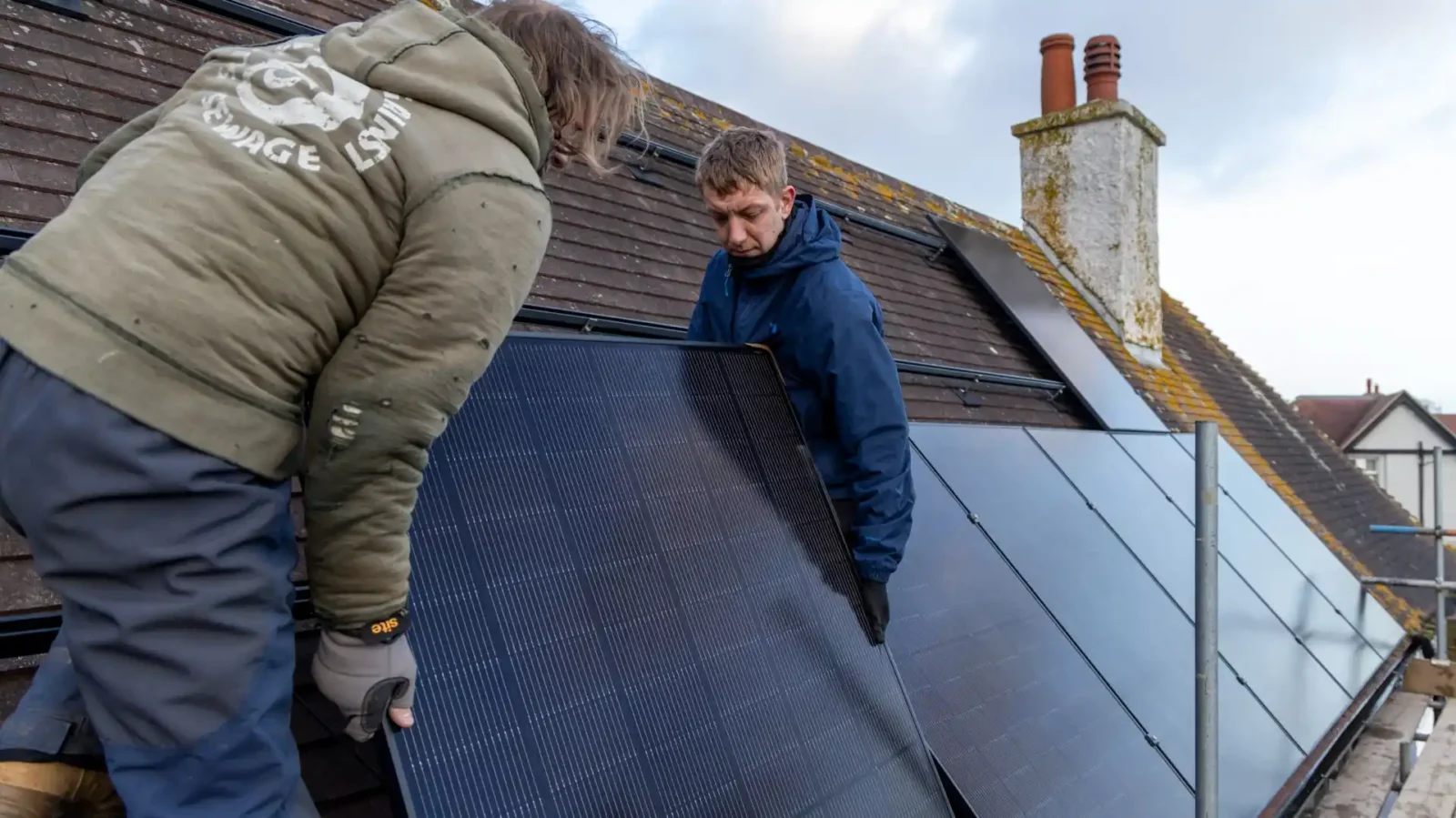
The government has set an ambitious target to triple the number of homes with solar panels on their rooftops by 2030, positioning this expansion as a “rooftop revolution” that will fundamentally transform Britain’s residential energy landscape. This solar acceleration comes as the nation experiences record demand for home clean energy products, with costs declining but still remaining beyond reach for many households without financial support.
Solar panels will become standardized under the Future Homes Standard, set to be implemented in early 2026, which will require new builds to incorporate solar installations by default. This regulatory change marks a significant shift in construction requirements and reflects growing recognition that rooftop solar represents not merely an environmental benefit but a practical means of reducing long-term housing costs for new homeowners.
According to government estimates, a typical existing UK home could save around £530 annually from installing rooftop solar based on current energy price caps. For new builds equipped with solar from the outset, these savings become embedded in the property’s ongoing operating costs, making homes more affordable to run from day one of occupancy.
Heat Pump Strategy and Domestic Manufacturing Goals
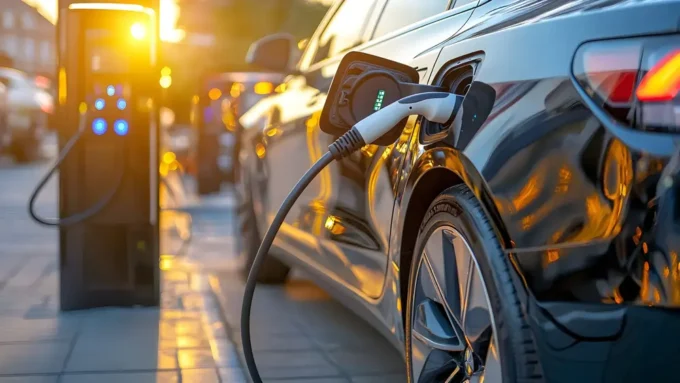
The universal programme maintains the £7,500 heat pump grant through the Boiler Upgrade Scheme, which will be extended to 2029/30 following increased demand. The scheme was recently expanded to cover heat batteries, providing additional flexibility for households transitioning away from gas heating systems. Additionally, the plan includes specific support for air-to-air heat pumps that can cool homes during summer months, addressing both heating and cooling needs as climate patterns shift.
Alongside the deployment targets, the government has established a strategic industrial policy objective: ensuring that at least 70% of heat pumps installed in the UK are manufactured domestically. To support this ambition, the government is tripling its investment in the heat pump supply chain to £90 million, aiming to build domestic manufacturing capacity while creating skilled employment opportunities across the country.
This domestic manufacturing emphasis addresses both economic and energy security objectives. By building UK-based production capacity for heat pumps and related technologies, the government aims to reduce dependence on foreign supply chains while creating high-quality jobs in advanced manufacturing sectors. The approach mirrors similar strategies being pursued across Europe as nations seek to onshore critical clean energy technology production.
However, the programme’s heat pump targets have drawn some criticism. Instead of aiming to install 600,000 heat pumps annually by 2030—in line with expert recommendations—the government is targeting approximately 450,000 per year. This more conservative target reflects practical considerations around installer capacity, supply chain readiness, and consumer acceptance, though climate advocates argue the pace may be insufficient to meet broader decarbonization objectives.
Detailed Funding Breakdown and Financial Architecture
The £15 billion total investment breaks down across multiple streams designed to address different aspects of the home energy transition challenge. The largest single allocation—£5 billion—covers the full cost of installations for low-income households, replacing the Energy Company Obligation scheme that ends in March 2026.
An additional £2 billion is earmarked for consumer loans, providing zero and low-interest financing for households that can afford to pay but need support with upfront costs. The £2.7 billion allocated to the Boiler Upgrade Scheme extends heat pump grants through 2029/30, while another £2.7 billion goes toward the Warm Homes Fund, an innovative financing facility that could include mechanisms such as green mortgages offering preferential rates for energy-efficient properties.
The programme also allocates £1.1 billion for heat networks—district heating systems serving multiple properties—and £1.5 billion for other initiatives including funding for devolved administrations in Scotland, Wales, and Northern Ireland. This comprehensive financial architecture reflects recognition that different households face different barriers to energy upgrades and require tailored support mechanisms.
The government stated it would provide more detailed guidance later in 2026 on how consumers can access low-interest loans, following further consultation with the finance sector and consumer groups. This engagement process aims to ensure that financing mechanisms are designed to be accessible and appropriate for diverse household circumstances while managing risks for participating lenders.
Social Housing and Area-Based Delivery Innovation
For social housing, the Warm Homes Plan introduces an innovative area-based delivery approach that could see entire streets or estates upgraded simultaneously. This coordinated approach enables shared solutions, reduces per-unit costs, achieves better quality outcomes, and minimizes disruption for residents compared to piecemeal property-by-property interventions.
Marion Baeli, a sustainability and transformation partner at 10 Design, praised this strategic shift: “The Warm Homes Plan marks a quiet but decisive shift towards a whole building approach, recognizing that insulation, heating, ventilation and energy systems must work together for homes to be warm, affordable and resilient.” She emphasized that by prioritizing street and area-based delivery, particularly in social housing where dense urban areas and mixed tenure streets make piecemeal approaches ineffective, the programme treats retrofit as infrastructure rather than isolated household measures.
This infrastructure-oriented perspective represents a fundamental reconceptualization of home energy upgrades. Rather than viewing improvements as individual consumer purchases, the area-based approach recognizes retrofit as a systematic challenge requiring coordinated planning, staged implementation, and integrated solutions that address multiple properties simultaneously. This methodology has proven successful in pilot programmes and is now being scaled nationally.
The coordinated delivery model also creates opportunities for local employment and skills development. By concentrating work in specific areas, the programme can support the development of local supply chains, provide consistent work for installation businesses, and create apprenticeship and training opportunities that build long-term capacity in the retrofit sector.
Private Rented Sector Reforms and Tenant Protections
The Warm Homes Plan establishes new protections for renters while supporting landlords to upgrade properties suffering from cold, damp, or mould conditions. Currently, 1.6 million children live in rented homes plagued by these conditions, creating serious health risks and contributing to fuel poverty among tenant families.
Under new regulations, landlords will face tougher energy efficiency standards, though support will be phased to help cover upgrade costs over several years. The government projects that these measures alone could lift half a million families out of fuel poverty by the end of the decade, addressing one of the most vulnerable segments of the housing market.
The Warm Homes Plan establishes clear direction of travel for England and Wales’ domestic private rented sector, reflecting recognition that too many tenants endure homes that are cold, damp, or prone to mould. The phased approach aims to balance tenant protection with landlord viability, ensuring properties improve while avoiding market disruption that could reduce rental housing availability.
Ben Beadle, Chief Executive of the National Residential Landlords Association, welcomed “the announcement of a clear roadmap for the reform of PRS MEES,” noting it “gives landlords and those living in the private rented sector some certainty and allows businesses to plan for the future.” This clarity contrasts with previous uncertainty that left both landlords and tenants unsure about requirements and timelines.
Energy Company Obligation Transition and Supply Chain Concerns
The Warm Homes Plan serves as the successor to the Energy Company Obligation (ECO), a long-standing scheme that ends in March 2026. ECO, which began in 2013 and ran through multiple phases, required large energy suppliers to fund energy efficiency improvements in fuel-poor households’ homes through levies on consumer bills.
Since 2013, approximately 2.5 million homes have benefited from ECO funding, with 4.6 million energy efficiency measures installed. However, the scheme was thrust into the spotlight by a National Audit Office report published in October 2025, which uncovered serious failings in ECO and the linked Great British Insulation Scheme, including widespread poor-quality installation of solid wall insulation.
The revelation that 98% of homes that had external wall insulation installed under ECO or similar schemes needed significant repair or risked significant damp and mould created a major scandal that undermined confidence in the programme. This quality crisis contributed to the government’s decision not to create a like-for-like replacement, instead developing the Warm Homes Plan with enhanced quality assurance mechanisms.
The transition from ECO to the Warm Homes Plan has created anxiety within the retrofit sector. ECO currently installs energy-saving measures in approximately 5,000 homes monthly and delivers £1.3 billion annually in home improvement work, supporting an estimated 10,000 jobs across hundreds of small and medium enterprises. The scheme’s sudden termination without an immediate successor in place created what industry representatives describe as a “cliff edge” threatening supply chain collapse.
Anna Moore, CEO of retrofit consultancy Domna, argued for extending ECO by twelve months to ensure orderly transition: “Extending ECO by one year allows an orderly transition while the Warm Homes Plan is finalised, piloted and mobilised. Without that extension, the sector falls off a cliff in March 2026 and we will be rebuilding capacity from scratch at exactly the moment the government needs to accelerate delivery.”
One decision can change your entire career. Take that step with our Online courses in ACCA, HESI A2, ATI TEAS 7, HESI EXIT, NCLEX-RN, NCLEX-PN, and Financial Literacy. Join Serrari Ed and start building your brighter future today.
Quality Assurance and New Governance Structure
Learning from ECO’s quality failures, the Warm Homes Plan introduces strengthened oversight mechanisms. The government has confirmed it will use new procurement arrangements for capital-funded schemes from April 2026 and will attach conditions to additional funding ensuring grant recipients procure work through the existing ECO supply chain during the transition period. This approach aims to prevent capacity loss while establishing higher quality standards.
A New Warm Homes Agency will be established to support energy efficiency upgrades, bringing together existing functions from across government bodies to remove duplication and improve coordination. The agency represents an attempt to create more coherent governance compared to the fragmented delivery of previous schemes, which involved multiple departments, agencies, and delivery partners with overlapping responsibilities.
Local mayors will be placed “in the driving seat” for rolling out improvement programmes in their areas, reflecting the government’s commitment to devolution and recognition that local authorities best understand their communities’ specific housing challenges and opportunities. This localization of delivery creates potential for programmes tailored to regional variations in housing stock, climate conditions, and existing energy infrastructure.
Stuart Fairlie, Managing Director at Elmhurst Energy, welcomed the plan’s scale and ambition but stressed that “lasting success will depend on strong consumer protections and a well-managed transition for the retrofit supply chain.” He emphasized that lifting one million households out of fuel poverty by 2030 represents an inspiring target, while committing £15 billion to upgrading homes marks a major step in the right direction.
Energy Performance Certificate Reforms
Alongside the Warm Homes Plan, the government released details on significant reforms to Energy Performance Certificates (EPCs). From October 2026, EPCs in England, Wales and Northern Ireland will diverge significantly from those used in Scotland, with different headline metrics shown on certificates and a different approach to validity.
The government also released a consultation on EPC banding in relation to the Home Energy Model (HEM), the calculation methodology that will eventually power EPCs behind the scenes. These reforms aim to create more accurate and useful assessments of home energy performance, providing better information for homeowners, prospective buyers, renters, and policymakers.
The EPC reforms respond to longstanding criticisms that current certificates poorly represent actual energy performance and fail to account for newer technologies and integrated systems. Updated methodologies should better capture the value of comprehensive retrofits that combine multiple measures, potentially incentivizing whole-house approaches rather than piecemeal improvements.
Industry and Stakeholder Reception
The Warm Homes Plan received broadly positive reception from energy and climate stakeholders, though with calls for the programme to go further. Jonathan Brearley, Chief Executive Officer of Ofgem, stated that “the government’s Warm Homes Plan is an important step towards the UK realising its goals in improving energy efficiency in our nation’s buildings. Creating warmer, more energy efficient homes is in all our interests.”
Ed Matthew, UK Programme Director for independent climate change think tank E3G, emphasized the geopolitical dimension: “The increase in oil and gas prices following the Russian invasion of Ukraine cost the UK £183 billion, three times the UK’s annual defence budget. It is time to cut our dependence on fossil fuels and the dictators who are profiting from them.”
Adam Scorer, Chief Executive at National Energy Action, noted that “people struggling in fuel poverty desperately need the Warm Homes Plan,” while acknowledging that effective implementation would require sustained commitment and proper resource allocation. Madeleine Gabriel, Director of Sustainable Future at Nesta, highlighted broader benefits: “Increasing access to technologies that can help people live more sustainably comes with significant additional benefits. Solar panels and batteries are smart choices for people looking to cut their bills, and heat pumps also ensure people can enjoy a more comfortable, consistently warm home.”
However, some environmental advocates expressed concern about the programme’s scope. Mike Childs, head of policy at Friends of the Earth, welcomed the plan as “a welcome step forward, with tougher standards for rental homes and £5 billion to help councils and social landlords install insulation and clean energy like solar panels,” but cautioned that “without more investment it will fall far short of what’s needed to protect people’s health and end the scandal of families forced to live in cold, damp homes.”
Projected Economic and Environmental Impacts
Government estimates project that a typical three-bedroom semi-detached home equipped with solar panels, heat pump, and battery storage could reduce annual energy bills by approximately £500. Across millions of homes, these individual savings aggregate into substantial household cost reductions while simultaneously decreasing national energy demand and carbon emissions.
Research by Savills found that equipping 1.5 million homes with solar panels could save consumers approximately three-quarters of a billion pounds by 2030. With average household energy bills for gas and electricity at £1,800, the projected savings represent approximately 30% reduction—a substantial financial boost to homeowners struggling with cost-of-living pressures.
From an environmental perspective, each typical home solar PV system can offset over one tonne of CO2 emissions annually. With thousands of new homes built in England each year, plus retrofits of existing properties, the cumulative environmental impact will be significant. The programme supports the UK’s commitment to achieving net-zero emissions by 2050 by embedding renewable energy generation into residential property stock.
The MCS Foundation estimated that installing solar PV, battery storage, and heat pump technologies could save the average UK household up to £1,300 annually on energy bills, though actual savings will vary based on household size, energy consumption patterns, technology configurations, and local conditions.
Skills Development and Employment Implications
The scale of the Warm Homes Plan creates significant opportunities and challenges for the renewable energy installation sector. The programme is expected to accelerate demand for solar PV, battery, and heat pump installations substantially beyond current levels, providing opportunities for businesses operating in these markets to scale operations.
However, successful delivery depends on adequate installer capacity and skills. Charlie Mercer, Policy Director at Startup Coalition, characterized the plan as “a clear statement that the government wants the UK to be home of the next generation of innovative technologies that cut bills, makes homes warmer, and unlock economic growth,” but noted that realizing this vision requires substantial workforce development.
Industry observers have expressed concern about the scarcity of qualified installers, particularly for heat pumps which require different installation approaches compared to traditional gas boilers. One analyst noted: “Heat pumps just don’t work the same way as gas boilers, with different ways of installation, which can significantly impact their performance and operational cost. We need skilled technicians whose training has incorporated the different nuances of installing heat pumps compared to gas boilers.”
Programmes such as the Solar Installer Accelerator, Ventilation Installer Accelerator, and upcoming Heat Pump Installer Accelerator are working to upskill individuals and ensure local supply chains are equipped to meet increasing demand. These initiatives, operating in regions like Greater Manchester and West Yorkshire, aim to build the workforce capacity necessary to deliver the Warm Homes Plan’s ambitious targets.
Future Homes Standard and New Build Requirements
The Warm Homes Plan operates alongside the Future Homes Standard, which the government announced will require virtually all new build homes to have solar panels installed by default when published in autumn 2025. Energy Secretary Ed Miliband described this as “common sense,” emphasizing that solar panels can save people hundreds of pounds on energy bills.
The Future Homes Standard, planned since 2019 but delayed and modified through multiple consultations, represents a fundamental shift in new home construction requirements. Building regulations will be amended to explicitly promote solar for the first time, subject to practical limits with flexibility for homes surrounded by trees or with significant overhead shading.
Housing and Planning Minister Matthew Pennycook emphasized that “as part of the government’s Plan for Change to build 1.5 million homes, we are maximising the use of renewable energy to cut people’s bills and power their homes. The Future Homes Standard will ensure new homes are modern and efficient with low-carbon heating, while our common-sense planning changes will now make it easier and cheaper for people to use heat pumps and switch to EVs.”
The standard will require new homes to reduce carbon emissions by up to 80% compared to pre-2022 building efficiency standards, effectively mandating heat pumps alongside solar installations. While some analysts initially feared the heat pump requirement might reduce solar deployment—since builders could meet carbon targets through heat pumps alone—the explicit solar mandate ensures both technologies become standard features.
Charles Wood, Deputy Director of Policy at Energy UK, stated that “the addition of rooftop solar to the Future Homes Standard is welcome and necessary in ensuring that homes built today are fit for the future,” emphasizing the long-term value of embedding renewable generation in new construction.
Implementation Timeline and Next Steps
The Warm Homes Plan will begin rolling out in earnest following the March 2026 termination of ECO, though exact implementation timelines for various components will be specified in detailed guidance released throughout 2026. The government committed to providing comprehensive programme documentation, application processes, and delivery mechanisms as implementation approaches.
For low-income households eligible for fully funded upgrades, the transition from ECO should be relatively seamless, though there may be temporary disruption during March-April 2026 as new procurement arrangements and delivery partnerships are established. The government’s commitment to using existing ECO supply chains during the transition period aims to minimize this disruption.
For homeowners seeking zero or low-interest loans, detailed application processes and eligibility criteria will be published following consultation with finance sector participants and consumer groups. This consultation process aims to ensure financing mechanisms are accessible, transparent, and designed to reach diverse household types while managing lender risk appropriately.
The extended Boiler Upgrade Scheme through 2029/30 provides continuity for heat pump deployment, with the £7,500 grant remaining available to all eligible households throughout this period. Recent increases in BUS funding reflect rising demand as awareness grows and costs decline, suggesting the scheme successfully reduces barriers to heat pump adoption.
Conclusion: Balancing Ambition with Implementation Realities
The £15 billion Warm Homes Plan represents the UK government’s most comprehensive attempt to address residential energy efficiency, transitioning millions of homes toward clean energy technologies while tackling fuel poverty and reducing carbon emissions. The programme’s scale, funding levels, and integrated approach across multiple housing tenures mark a significant policy commitment to home decarbonization.
Success will depend on numerous factors: managing the transition from ECO without supply chain disruption; developing adequate installer capacity and skills; ensuring quality assurance prevents repeating past failures; making financing mechanisms accessible and appropriate; coordinating delivery across national, regional, and local levels; and maintaining political and funding commitment through 2030 and beyond.
The programme arrives at a critical juncture. Energy security concerns heightened by geopolitical tensions, persistent cost-of-living pressures affecting millions of households, accelerating climate change impacts, and the 2050 net-zero commitment all create urgency for transforming Britain’s housing stock. The Warm Homes Plan provides the policy framework and financial resources; effective implementation will determine whether these ambitious goals translate into warmer homes, lower bills, and meaningful emissions reductions across the nation.
Ready to take your career to the next level? Join our Online courses: ACCA, HESI A2, ATI TEAS 7 , HESI EXIT , NCLEX – RN and NCLEX – PN, Financial Literacy!🌟 Dive into a world of opportunities and empower yourself for success. Explore more at Serrari Ed and start your exciting journey today! ✨
Track GDP, Inflation and Central Bank rates for top African markets with Serrari’s comparator tool.
See today’s Treasury bonds and Money market funds movement across financial service providers in Kenya, using Serrari’s comparator tools.
photo source: Google
By: Montel Kamau
Serrari Financial Analyst
27th January, 2026