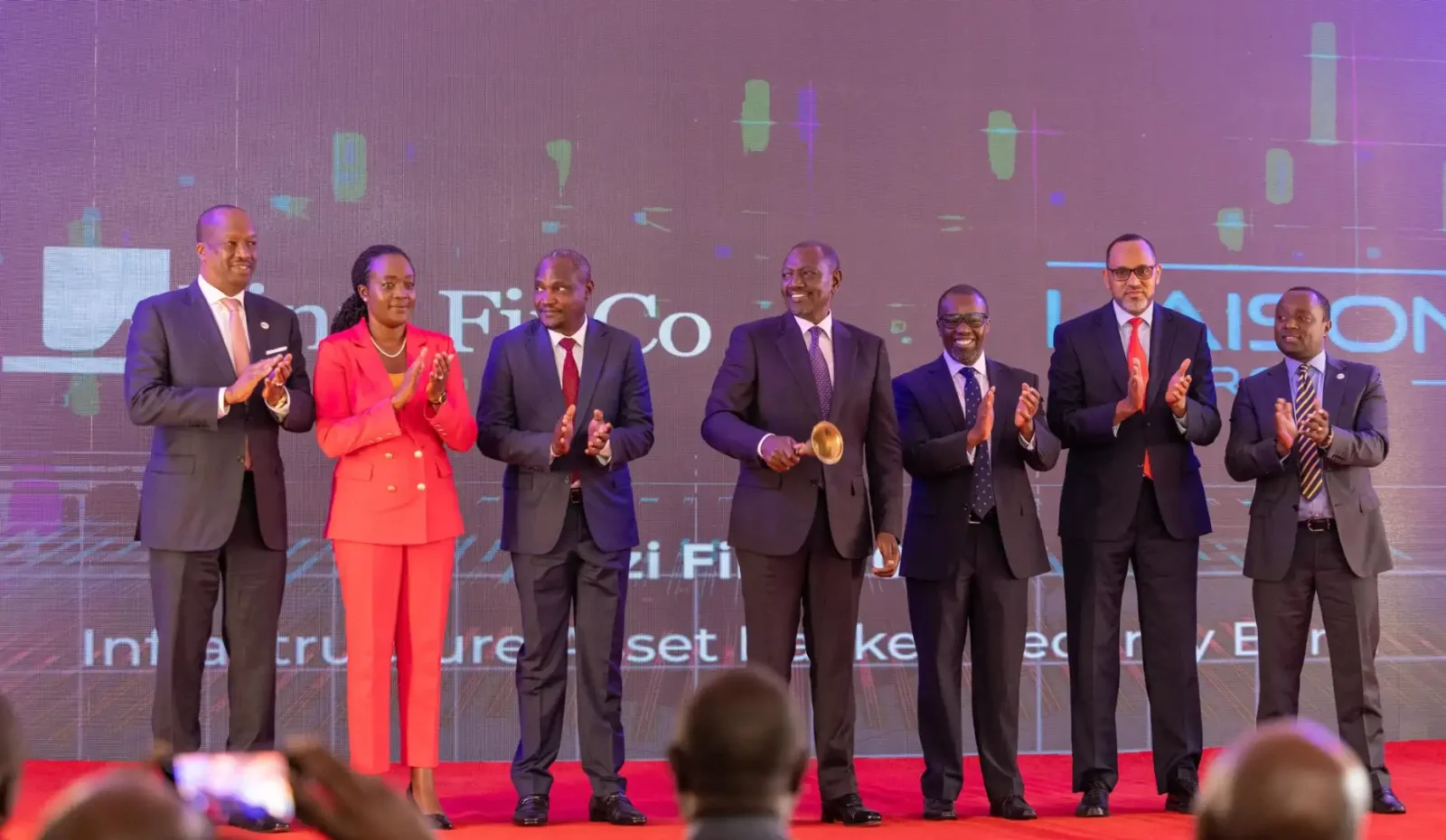
Kenya launched the sale of a 65 percent stake in state-owned Kenya Pipeline Company on January 19, 2026, seeking to raise 106.3 billion shillings ($825 million) in what represents East Africa’s biggest initial public offering in local-currency terms and a watershed moment for President William Ruto’s ambitious privatization agenda. The landmark transaction comes as Kenya grapples with a debt crisis that consumes 40 percent of government revenues in annual repayments, forcing the administration to seek innovative financing mechanisms beyond traditional taxation and borrowing.
The offering, priced at nine shillings per share with trading scheduled to commence on the Nairobi Securities Exchange on March 9, 2026, surpasses the historic 2008 Safaricom IPO that raised just over 50 billion shillings in local-currency terms. While the Safaricom transaction may still rank larger in dollar terms due to the Kenyan shilling’s substantial depreciation over the intervening 17 years, the Kenya Pipeline Company float represents the most significant equity capital markets event in the region for more than a decade and signals Kenya’s determination to monetize state assets to address fiscal pressures that have brought the country to the brink of default.
Build the future you deserve. Get started with our top-tier Online courses: ACCA, HESI A2, ATI TEAS 7, HESI EXIT, NCLEX-RN, NCLEX-PN, and Financial Literacy. Let Serrari Ed guide your path to success. Enroll today.
Debt Crisis Forces Dramatic Policy Pivot
President William Ruto’s government faces an acute fiscal squeeze that has left traditional budget financing methods exhausted. Finance Minister John Mbadi, speaking at the IPO launch ceremony, acknowledged that Kenya has reached the limits of conventional revenue mobilization. “We must turn to innovative financing mechanisms to fund our infrastructure and public service projects,” Mbadi stated bluntly. “The traditional methods of financing our budget, taxation and debt, there is no longer any space.”
The stark reality behind this admission is captured in Kenya’s debt servicing burden, which has escalated dramatically over recent years. According to verified government data, debt service consumed 47.9 percent of tax revenue in the 2021/22 financial year, with projections indicating the figure would climb to 55.7 percent and 58.9 percent in subsequent fiscal years. Some analysts estimate the burden has now exceeded 60 percent of collected revenues, meaning that for every 10 shillings Kenya raises through taxation, six shillings immediately flow out to service existing debt obligations.
This crushing debt dynamic has left Kenya’s government with severely constrained fiscal space for essential public services, infrastructure development, and social programs. The country’s total public debt stands at approximately 10.6 trillion shillings as of December 2024, representing 63 percent of GDP—well above the prudential threshold of 55 percent and far exceeding the International Monetary Fund’s comfort zone of 40 percent for emerging economies. With limited capacity to raise additional taxes following the violent anti-tax protests of 2024 that left dozens dead and forced Ruto to withdraw his controversial Finance Bill, and with international credit markets offering increasingly expensive terms, asset privatization has emerged as one of the few remaining options for raising fiscal resources.
The pivot to privatization represents a dramatic policy shift for a country where state ownership of strategic assets has long been sacrosanct. Critics have questioned the timing and transparency of the asset sales, with some arguing that external pressure from multilateral lenders including the IMF has forced Kenya to dispose of crown jewels at potentially undervalued prices. However, the Ruto administration has defended the strategy as essential for reducing the fiscal burden of loss-making state enterprises while attracting private sector capital and expertise that could improve operational efficiency.
Kenya Pipeline Company: Strategic Asset at Heart of Energy Infrastructure
Kenya Pipeline Company operates as the backbone of East Africa’s petroleum products distribution system, managing an extensive network of pipelines and storage facilities that transport refined fuels from the port of Mombasa to consumption centers across Kenya and neighboring countries. The company’s infrastructure is considered strategically vital, handling the bulk of petroleum imports that power Kenya’s transportation sector, industrial operations, and electricity generation.
According to the IPO prospectus, KPC plans to triple its capital expenditure to 110 billion shillings ($852.6 million) over the next five years, compared with 34 billion shillings spent between 2021 and 2025. This ambitious expansion program includes construction of a new pipeline from the Rift Valley city of Eldoret to Uganda’s capital Kampala and onward to Rwanda, extending KPC’s regional footprint and positioning the company to capture growing fuel demand in landlocked East African markets. Additional planned investments include development of an oil trading hub in Mombasa and modernization of existing pipeline infrastructure.
The company will finance these capital projects through “a combination of internally generated cash flows and innovative financing structures including access to debt capital markets, special purpose vehicle project financing, joint ventures and partnerships,” according to the prospectus. Critically, KPC will retain none of the $824 million raised from the IPO—the entire proceeds will instead flow to the Kenyan government to capitalize an infrastructure fund for planned mega projects, underscoring the transaction’s primary purpose as a fiscal resource mobilization exercise rather than a capital raising for the pipeline company itself.
This structure highlights a key tension in Kenya’s privatization program. While the government touts improved efficiency and private sector participation as benefits of divestment, the immediate priority is clearly generating cash to address fiscal pressures. Whether this approach will deliver sustainable improvements in state enterprise performance or merely represent a fire sale of assets to meet short-term financing needs remains a subject of intense debate among economists and policy analysts.
Allocation Structure Balances Diverse Stakeholder Interests
The IPO’s allocation framework reflects Kenya’s attempt to balance multiple policy objectives while ensuring broad-based participation. Of the total 65 percent stake being offered, 15 percent is reserved for oil marketing companies—the downstream petroleum distributors that are KPC’s primary customers. This allocation recognizes the strategic importance of these companies to KPC’s business model and provides them with an ownership stake that could align interests and facilitate long-term commercial relationships.
An additional 5 percent of shares have been reserved for KPC employees, a common feature in privatization transactions intended to secure workforce buy-in and address concerns about job security. The remaining stake will be distributed among local retail investors, local institutional investors, East African investors, and foreign investors, with each category receiving 20 percent. This carefully calibrated structure aims to achieve broad domestic ownership while also attracting regional and international capital that could bring expertise and governance standards.
The government will retain a 35 percent stake following the transaction, maintaining significant influence over the company’s strategic direction and protecting what officials describe as national security interests. This retained stake reflects a compromise between the desire to raise maximum proceeds and concerns about ceding control of critical energy infrastructure entirely to private hands. Kenyan investment bank Faida serves as lead transaction adviser, providing domestic expertise in structuring what represents the country’s most complex capital markets transaction in more than a decade.
Eric Musau, head of research at Standard Investment Bank in Nairobi, noted that the accessible nine-shilling share price is “set to draw in retail participants, while we are also likely to see significant interest from institutional energy sector players” who recognize KPC’s strategic position and growth prospects. The subscription period runs until February 19, 2026, giving potential investors approximately one month to evaluate the opportunity and submit applications.
Regional and Global Capital Markets Context
The Kenya Pipeline IPO arrives amid a broader recovery in global equity capital markets following several challenging years. According to LSEG data, global equity capital markets activity totaled $738.4 billion in 2025, representing a 15 percent year-on-year increase and the strongest annual performance in four years. Just over one-fifth of that total was raised by issuers in Europe, the Middle East, and Africa, indicating renewed risk appetite among international investors for emerging market equities.
African IPOs specifically showed marked improvement in 2025, with six transactions raising a combined $882.1 million—57 percent more than the previous year and the highest annual total since 2018. This resurgence reflects improving macroeconomic conditions in several African economies, greater investor familiarity with the continent’s growth opportunities, and successful execution of high-profile transactions that have restored confidence in African capital markets.
The timing of Kenya’s pipeline offering therefore appears strategically advantageous, capitalizing on this improved sentiment while stock markets globally trade near record highs. However, the transaction also faces headwinds including lingering concerns about Kenya’s debt sustainability, questions about the valuation and pricing of state assets being privatized, and recent political instability that culminated in deadly protests against tax increases.
Nairobi Securities Exchange Rally Provides Favorable Backdrop
Perhaps most importantly for the transaction’s success, the Kenya Pipeline IPO benefits from exceptional recent performance at the Nairobi Securities Exchange, where shares have risen more than 50 percent in the past year—significantly outperforming the MSCI Frontier Africa index and representing one of the strongest equity market rallies in the exchange’s history.
The NSE 20 Share Index surged 56.13 percent during 2025 to close the year at 3,139.19 points, marking one of the best annual performances in the bourse’s modern era. The NSE All-Share Index, which tracks all listed equities regardless of market capitalization, gained over 50 percent during 2025—its strongest annual performance since 2013 and clear evidence that the market rally extended well beyond a handful of heavily traded blue chips.
Total market capitalization increased by approximately 1 trillion shillings during 2025, rising from 1.968 trillion shillings at year-end 2024 to approach the psychologically significant 3 trillion shilling threshold in early 2026. This 48 percent expansion in aggregate market value reflects both price appreciation in existing listings and renewed investor confidence in Kenyan equities as an asset class.
The rally has been broad-based, with 13 listed companies delivering returns exceeding 100 percent during 2025. Kenya Power and Lighting Company led performance with 139.1 percent gains, while KenGen advanced 128.6 percent, benefiting from tariff adjustments and improved cash flow expectations in the power sector. Car & General rose 126.4 percent on improved margins and demand for power and equipment solutions, while Kenya Reinsurance recorded 124.2 percent gains reflecting improved underwriting discipline.
Perhaps most significantly, telecommunications and mobile money giant Safaricom saw its market capitalization exceed 1 trillion shillings during the rally—a psychological milestone that reinforced the company’s status as East Africa’s most valuable publicly traded corporation. The strong performance of this household name has attracted retail investor attention to the stock market, potentially expanding the investor base available for the pipeline IPO.
One decision can change your entire career. Take that step with our Online courses in ACCA, HESI A2, ATI TEAS 7, HESI EXIT, NCLEX-RN, NCLEX-PN, and Financial Literacy. Join Serrari Ed and start building your brighter future today.
Macroeconomic Factors Driving Market Strength
The NSE’s exceptional 2025 performance occurred against a backdrop of improving macroeconomic fundamentals in Kenya. The Central Bank of Kenya revised its benchmark rate downward to 9.50 percent in August and September 2025 from 12.75 percent in September 2024, creating a more accommodative monetary environment that supported both economic activity and equity valuations. GDP growth averaged 4.7 percent for the year, while the Kenyan shilling stabilized after years of depreciation, helping to bolster investor confidence.
Lower yields on fixed-income instruments, particularly Treasury bills and bonds, prompted a rotation of capital into equities as investors sought higher returns. This shift from fixed income to equities provided a sustained bid for stocks and contributed to the breadth of the market rally. Blue-chip counters including Safaricom, Equity Group, KCB, East African Breweries Limited, and NCBA accounted for a significant share of investor wealth gains, reinforcing their appeal as core portfolio holdings.
The introduction of new trading infrastructure has also democratized market access. From January 2026, investors have been able to buy and sell NSE shares directly via M-Pesa through the new Ziidi Trader mobile platform—a collaboration between Safaricom and the NSE designed to expand participation beyond traditional brokerage channels. This innovation could prove particularly important for the Kenya Pipeline IPO’s retail tranche, allowing ordinary Kenyans to participate through their mobile phones without navigating complex brokerage account opening procedures.
Broader Privatization Program Faces Legal and Political Headwinds
The Kenya Pipeline IPO represents the flagship transaction in President Ruto’s broader privatization program, which has faced significant legal and political obstacles since its announcement. In September 2024, Kenya’s High Court overturned the Privatization Act 2023 on constitutional grounds, ruling that the government had passed the legislation without proper public participation. The decision dealt a major blow to Ruto’s economic plans and followed an earlier court ruling in late 2023 blocking the sale of 11 state-owned entities that were due to form the first wave of privatization.
Justice Chacha Mwita’s ruling found that the government’s attempts to involve stakeholders through newspaper advertisements and invitations to key industry players did not satisfy constitutional requirements for public participation. The decision added weight to opposition claims that such fundamental changes to state asset ownership should face a referendum, particularly given the strategic importance of enterprises being privatized.
The 11 companies whose sale was initially blocked included National Oil Corporation of Kenya, Kenya Seed Company, New Kenya Cooperative Creameries, Mewa Rice Mills, Western Kenya Rice Mills, Kenyatta International Convention Centre, Vehicle Manufacturers Kenya, Numerical Machining Complex, Rivatex East Africa, and Kenya Literature Bureau. Kenya Pipeline Company was subsequently added to the privatization list, leading to the current IPO despite the legal uncertainties surrounding the broader program.
Critics of the privatization drive, including opposition political parties and civil society organizations, argue that the timing appears suspicious and may be influenced by external pressures from multilateral lenders including the World Bank and International Monetary Fund. These same institutions pushed for fiscal consolidation measures that were incorporated in the controversial and ultimately withdrawn Finance Bill 2024. The perception that Kenya is being forced to sell strategic assets to satisfy foreign creditors has fueled public skepticism about the privatization program.
There are also concerns about job losses should certain entities be privatized, particularly in labor-intensive sectors like agriculture and manufacturing where state enterprises employ thousands of workers. Members of Parliament have raised questions about valuation methodologies, with some claiming that state assets are being undervalued—potentially depriving the public of fair value for collectively owned resources. Transparency concerns have also been prominent, with critics demanding more detailed disclosure about valuation processes, adviser selection, and allocation decisions.
Government Defense of Privatization Strategy
President Ruto has vigorously defended the privatization program as essential for reducing the fiscal burden of loss-making state enterprises while fighting corruption and improving service delivery. He argues that many state-owned companies have become vehicles for patronage and rent-seeking rather than efficient service providers, and that private sector ownership and management can unlock value while reducing demands on the Treasury for operating subsidies and bailouts.
The administration points to successful privatization experiences in other countries where private capital and management expertise transformed inefficient state monopolies into competitive, customer-focused businesses. Officials argue that retaining minority government stakes in privatized entities, as planned for Kenya Pipeline Company and other assets, allows the state to maintain strategic influence while benefiting from improved governance and performance that typically accompanies private ownership.
Finance Minister John Mbadi has emphasized that privatization proceeds will be channeled into an infrastructure fund dedicated to financing new projects rather than covering recurrent expenditure. This commitment is intended to address concerns that asset sales represent a short-term fix that sacrifices long-term revenue streams for immediate cash. However, skeptics note that given Kenya’s acute fiscal pressures, there are few mechanisms to ensure privatization proceeds are not fungible with general government revenues that inevitably flow toward debt servicing and recurrent costs.
International Monetary Fund Engagement and Conditionality
Kenya’s privatization push occurs in the context of ongoing engagement with the International Monetary Fund, which approved a 38-month program in April 2021 designed to help Kenya manage its debt and create a conducive economic environment for private sector investment. The program, worth $3.9 billion with an additional $542 million climate fund, conditioned IMF support on hiking taxes, reducing subsidies, and cutting government waste—measures the Fund argued would increase revenue while reducing spending.
These conditions sparked the violent June 2024 protests during which demonstrators denounced both President Ruto and the IMF, holding the multilateral institution partially responsible for austerity policies that protesters argued disproportionately burdened ordinary Kenyans while leaving elite wealth and government profligacy untouched. Placards reading “IMF, World Bank, Stop the Modern Day Slavery” reflected deep public anger at perceived external dictation of economic policy without adequate consideration of social costs.
While some criticism of the IMF’s role is warranted, analysts note that African leaders often bear primary responsibility for debt crises through borrowing decisions driven by domestic political considerations rather than sound economic analysis. “African leaders are the sellouts,” economist Dumebi Oluwole told Al Jazeera. “We all know that IMF loans come with conditions, but some leaders, when asked to raise revenue, will choose taxation rather than cut costs.”
The IMF has maintained that its primary goal in supporting Kenya is “to help it overcome the difficult economic challenges it faces and improve its economic prospects and the wellbeing of its people.” However, the Fund’s initial miscalculation of Kenya’s debt-to-GDP ratio—projecting 73 percent instead of the actual 65.6 percent—drove harsher fiscal adjustment demands than Kenya’s actual position warranted and contributed to the political crisis that nearly toppled Ruto’s government.
Privatization of Safaricom Stake Sets Precedent
The Kenya Pipeline IPO follows the government’s recent reduction of its stake in telecommunications operator Safaricom during December 2025, which raised more than $2 billion for the Treasury. While the Safaricom transaction ultimately fell short of initial targets that envisioned raising $1.15 billion, it nonetheless represented a historic capital markets event and demonstrated the government’s commitment to executing asset sales despite political opposition and legal challenges.
The Safaricom divestment provided a template for structuring subsequent privatizations including the Kenya Pipeline offering. Both transactions feature retention of significant government minority stakes, broad-based allocation structures designed to maximize domestic participation, and use of local advisers with deep knowledge of Kenyan capital markets. The relative success of the Safaricom transaction, despite controversy surrounding pricing and allocation, has emboldened the government to proceed with additional asset sales on an accelerated timeline.
Looking ahead, the privatization pipeline includes potentially transformative transactions involving the Kenya Ports Authority—which manages the strategic port of Mombasa—multiple sugar milling companies that have been chronic loss-makers despite repeated government bailouts, and further stake reductions in Safaricom. The Kenya Ports Authority privatization in particular would represent a geopolitical as well as economic decision, given the port’s critical role in serving not just Kenya but also landlocked neighbors including Uganda, Rwanda, Burundi, South Sudan, and eastern Democratic Republic of Congo.
Market Reception and Outlook
Early market reaction to the Kenya Pipeline IPO has been cautiously positive, with equity analysts highlighting the company’s strategic position, planned expansion into regional markets, and the accessible pricing that should attract retail investor participation. However, questions remain about whether sufficient demand exists to fully subscribe the offering at the target size, particularly given the substantial capital commitment required and lingering uncertainty about Kenya’s macroeconomic trajectory.
The transaction’s success will likely hinge on several factors. First, sustained strength in the Nairobi Securities Exchange through the subscription period will be critical for maintaining investor confidence and risk appetite. Second, clarity on the legal status of the privatization program following the High Court’s September 2024 ruling will be essential—any suggestion that the Kenya Pipeline sale could be subsequently challenged in court would deter potential investors. Third, the government’s ability to articulate a compelling narrative about how privatization proceeds will be deployed to generate sustainable economic benefits rather than simply servicing existing debt will influence investor enthusiasm.
If successfully executed, the Kenya Pipeline IPO could catalyze additional equity capital markets activity in East Africa and encourage other governments in the region facing fiscal constraints to consider asset monetization as an alternative to continued borrowing or harsh austerity. However, failure to fully subscribe the offering—or subsequent performance problems at the privatized company—could set back Kenya’s capital markets development and make future transactions more difficult to execute.
For President Ruto, the stakes could hardly be higher. With traditional financing avenues exhausted and public tolerance for tax increases demonstrated to be limited, successful execution of the privatization program may represent his best opportunity to address Kenya’s debt crisis while mobilizing resources for infrastructure and development. The Kenya Pipeline IPO will serve as a crucial test of whether Kenyan and international investors share the government’s assessment that privatization offers a viable path forward—or whether the transaction represents a desperate fire sale of strategic assets that future governments may come to regret.
Ready to take your career to the next level? Join our Online courses: ACCA, HESI A2, ATI TEAS 7 , HESI EXIT , NCLEX – RN and NCLEX – PN, Financial Literacy!🌟 Dive into a world of opportunities and empower yourself for success. Explore more at Serrari Ed and start your exciting journey today! ✨
Track GDP, Inflation and Central Bank rates for top African markets with Serrari’s comparator tool.
See today’s Treasury bonds and Money market funds movement across financial service providers in Kenya, using Serrari’s comparator tools.
photo source: Google
By: Montel Kamau
Serrari Financial Analyst
21st January, 2026