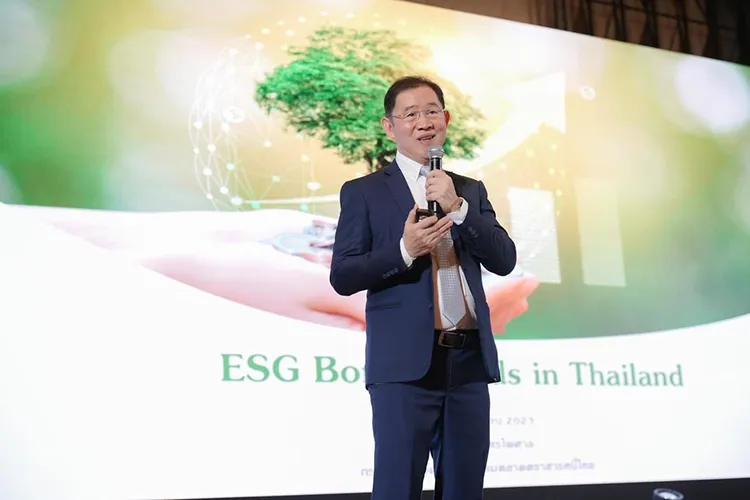
Thailand’s environmental, social, and governance bond market has emerged as one of the fastest-expanding segments of the country’s capital markets, reflecting a fundamental structural transformation in how both public and private sectors approach long-term sustainable financing amid accelerating global climate commitments.
At the end of 2025, the outstanding value of ESG bonds reached 978 billion baht, placing the market within striking distance of the psychologically significant 1-trillion-baht milestone and accounting for 5.46 percent of the total Thai bond market, according to the Thai Bond Market Association (ThaiBMA). This remarkable growth trajectory from a modest beginning just six years earlier demonstrates the rapid evolution in scale, sophistication, and issuer diversity across Thailand’s sustainable finance ecosystem.
Build the future you deserve. Get started with our top-tier Online courses: ACCA, HESI A2, ATI TEAS 7, HESI EXIT, NCLEX-RN, NCLEX-PN, and Financial Literacy. Let Serrari Ed guide your path to success. Enroll today.
Exponential Growth from Experimental Beginnings
The Thai ESG bond market commenced operations in 2019 with a total outstanding value of merely 23 billion baht, when the market remained largely experimental and driven by a small cohort of pioneering issuers testing investor appetite for green and sustainability-themed debt instruments. According to ThaiBMA president Somjin Sornpaisarn, early issuances concentrated primarily on green bonds designed to fund renewable energy projects, energy efficiency initiatives, and environmentally friendly infrastructure developments.
These initial offerings aligned strategically with Thailand’s national energy transition objectives and established a foundational framework for ESG-labeled debt within the domestic bond market. Regulatory support played a catalytic role in this early development phase, with the Securities and Exchange Commission working collaboratively with ThaiBMA to introduce clearer frameworks aligned with International Capital Market Association principles, improving investor confidence while reducing concerns around greenwashing practices.
Between 2020 and 2022, Thailand’s ESG bond market entered a dramatic acceleration phase. Outstanding ESG bonds expanded substantially to reach 488 billion baht by 2022, supported by three powerful reinforcing forces that transformed the market landscape.
First, government policy alignment became increasingly explicit and coordinated. Thailand’s long-term national strategies, including climate commitments, infrastructure modernization programs, and social development initiatives, progressively relied on sustainable finance as a primary funding channel for capital deployment.
Second, institutional investor demand surged dramatically as pension funds, insurance companies, and asset managers began systematically integrating ESG criteria into portfolio construction processes. These institutional allocations were driven by both evolving fiduciary considerations and growing client expectations around sustainable investment mandates.
Third, issuer diversification expanded significantly beyond initial participants. While the public sector maintained its dominant position, large corporations particularly in energy, infrastructure, and food industries increasingly entered the ESG bond market to finance capital expenditures aligned with corporate sustainability goals and transition strategies.
Market Composition and Segment Analysis
By the conclusion of 2025, Thailand’s ESG bond market had evolved substantially beyond its early focus on green project finance. Sustainability bonds, which combine environmental and social objectives within a single instrument, have emerged as the dominant segment with an outstanding value of 571 billion baht. These hybrid bonds have proven particularly attractive for large-scale infrastructure projects and public sector initiatives requiring integrated environmental and social impact frameworks.
The most striking development in recent years represents the rapid ascent of sustainability-linked bonds, which reached outstanding value of 252 billion baht in 2025. This growth reflects a fundamental shift toward performance-based financing structures where borrowing costs are explicitly linked to the issuer’s achievement of predefined ESG targets and key performance indicators.
Unlike traditional use-of-proceeds bonds where capital is earmarked for specific green or social projects, sustainability-linked bonds provide issuers with greater operational flexibility while maintaining robust accountability through performance metrics. This characteristic has become increasingly important for both sovereign and corporate issuers navigating complex economic and environmental transitions across multiple time horizons.
Meanwhile, conventional green bonds totaled 128 billion baht, continuing to support renewable energy infrastructure and environmental projects, while social bonds reached 26.7 billion baht, playing a more targeted role in funding social infrastructure and inclusive growth initiatives including affordable housing, healthcare facilities, and education programs.
According to ThaiBMA analysis, ESG bonds continue to expand rapidly but still constitute only a modest share of total outstanding bonds in Thailand, underscoring considerable room for future market growth and development. In contrast, ESG bonds account for substantially larger portions of bond markets in several European countries, highlighting Thailand’s strong potential for expansion on both supply and demand sides in alignment with global shifts toward decarbonization and net-zero emissions ambitions.
Public Sector Dominance and Leadership
A defining characteristic of Thailand’s ESG bond market ecosystem is the overwhelmingly dominant role played by the public sector in establishing market credibility, scale, and liquidity. At the end of 2025, government-issued ESG bonds accounted for 713 billion baht, representing nearly three-quarters of total outstanding ESG bonds across all issuer categories.
This public sector leadership has provided essential market infrastructure benefits including scale, credibility, price discovery, and secondary market liquidity, effectively encouraging broader participation from private investors while paving pathways for expanded private-sector issuance in subsequent periods. The Thai government’s increasing utilization of sustainability-linked bonds marks a strategic evolution in sovereign finance methodology.
By explicitly linking government funding costs to achievement of national sustainability targets such as greenhouse gas emissions reductions, renewable energy transition milestones, or social development indicators, the public sector has established an accountability benchmark for outcome-driven financing that extends beyond traditional government bond structures.
In November 2024, the Finance Ministry issued Asia’s first sovereign sustainability-linked bond valued at 30 billion baht, a landmark transaction that positioned Thailand as the first country in Asia and only the third globally after Chile and Uruguay to deploy this innovative financial instrument aimed at advancing climate and environmental goals through direct fiscal incentives.
Corporate Sector Participation and Evolution
Although smaller in absolute size compared to government issuance, the corporate ESG bond segment continues gaining strategic importance within Thailand’s capital markets. Outstanding corporate ESG bonds amounted to 265 billion baht in 2025, representing 6.15 percent of long-term corporate bond outstanding value across all Thai corporate debt categories.
Corporate issuance patterns have exhibited greater cyclicality compared to sovereign issuance, reflecting prevailing economic conditions, interest rate volatility, and shifting corporate capital allocation priorities. However, the fundamental composition of corporate ESG bonds has shifted decisively toward sustainability-linked bonds and green bonds, particularly concentrated in specific sectors including energy and utilities, tourism and hospitality, food and agribusiness, as well as real estate investment trusts and infrastructure funds.
This sectoral concentration trend suggests that ESG financing has evolved from a reputational or marketing tool into a core strategic capital management instrument for corporations seeking to align financing structures with operational sustainability transformations. According to ThaiBMA analysis, large corporations with established sustainability-linked strategies have already accessed the ESG bond market extensively in previous years, contributing to periodic fluctuations in corporate issuance volumes.
One decision can change your entire career. Take that step with our Online courses in ACCA, HESI A2, ATI TEAS 7, HESI EXIT, NCLEX-RN, NCLEX-PN, and Financial Literacy. Join Serrari Ed and start building your brighter future today.
Institutional Investor Demand and Market Infrastructure
Thailand’s ESG bond market expansion continues to be supported by a combination of mutually reinforcing factors that have strengthened market foundations and infrastructure over successive years. At the market’s core exists a clear and increasingly consistent policy framework, with regulators actively promoting sustainable finance through comprehensive rules aligned with evolving international standards and best practices.
Transparency requirements have progressively increased, with enhanced disclosure obligations helping build confidence among both issuers seeking capital and investors evaluating sustainable investment opportunities. The regulatory architecture now encompasses guidelines from the Securities and Exchange Commission covering bond issuance procedures, external review requirements, and ongoing reporting obligations for ESG bond issuers.
Investor demand has transitioned from cyclical opportunistic allocations to more structural long-term commitments across institutional portfolios. Domestic institutional investors including government pension funds, private pension schemes, insurance companies, and mutual fund complexes are systematically incorporating ESG considerations into long-term investment strategies and asset allocation frameworks.
Simultaneously, international investors increasingly view Thailand as a credible and investable emerging market destination for sustainable assets, supported by improving governance standards, expanding market depth, and growing secondary market liquidity. Win Phromphaet, executive chairman of Kasikorn Asset Management, emphasized that ESG investing and financial instruments emphasizing risk management and sustainability are gaining particular traction with younger investor demographics seeking long-term return opportunities while supporting corporate ESG objectives.
Transition Finance and Future Growth Drivers
The market’s continued expansion is fundamentally driven by Thailand’s increasing requirements for transition financing as the national economy shifts toward lower carbon intensity, enhanced climate resilience, and more inclusive social development models. These structural economic transformations require significant pools of long-term capital, areas where ESG bonds prove particularly effective in mobilizing funding at scale while explicitly aligning financial returns with measurable sustainability outcomes.
According to market observers, transition bonds representing debt instruments specifically financing companies’ operational shifts toward greener business models could constitute a significant growth segment, especially in emerging markets like Thailand. Sornchai Suneta, first executive vice-president of Siam Commercial Bank, noted rising investment in green technologies across multiple industries that will naturally generate greater demand for transition bonds beyond traditional green bonds.
S&P Global estimates that transition-related capital needs could exceed $1 trillion annually, representing approximately one-third of all sustainable finance required globally to limit warming to less than 2 degrees Celsius by 2050 under Paris Agreement commitments. This massive capital requirement suggests substantial headroom for market expansion across developing economies including Thailand.
Moreover, the ESG bond market demonstrates increasing sophistication among both issuers and investors. The growing preference for sustainability-linked bonds reflects an important shift in market focus away from simply tracking how bond proceeds are deployed toward measuring tangible sustainability outcomes and performance achievements, marking a more advanced developmental phase in Thailand’s sustainable finance ecosystem.
Policy Support and Regulatory Initiatives
The Thai government has implemented multiple policy initiatives designed to accelerate ESG bond market development and lower barriers to sustainable finance issuance. The Securities and Exchange Commission has provided regulatory support including waivers of application and filing fees for ESG bond issuances, reducing transaction costs for potential issuers testing market receptivity.
Additionally, ThaiBMA and the Capital Market Development Fund established the ESG Bond Issuance Grant Scheme, a collaborative program supporting expenses incurred from external reviews, auditing processes, or credit rating determinations for sustainability bonds. For qualifying ESG bonds, the fund supports actual expenses up to 2 million baht per bond type, materially reducing issuance costs particularly for smaller corporate issuers.
The introduction of Thai ESG X funds in 2025 created additional demand-side stimulus for sustainable investments. These specialized investment vehicles offer tax incentives to retail investors, with refund amounts for new investments capped at 300,000 baht for the 2025 tax year. The initiative aims not only to deliver long-term returns to participating investors but also to enhance capital market stability while promoting sustainable economic development.
According to Chavinda Hanratanakool, chairwoman of the Association of Investment Management Companies, Thai ESG X funds should help listed companies and bond issuers achieve carbon neutrality and net-zero emissions goals by channeling retail capital toward sustainability-focused securities. All asset management companies offering these funds must integrate environmental, social, and governance factors into investment selection and risk assessment processes including climate-related risk evaluations.
Comparative International Context
Thailand’s ESG bond market growth trajectory aligns with broader global trends in sustainable finance while exhibiting certain unique characteristics shaped by domestic policy frameworks and economic structures. Globally, ESG bond issuance reached approximately $870 billion during comparable periods, with green bonds leading overall issuance volumes and highlighting the worldwide push to fund environmental projects and climate transition initiatives.
However, Thailand’s market composition differs notably from mature ESG bond markets in several dimensions. The predominance of government issuance in Thailand contrasts with more balanced public-private mixes observed in European markets. Additionally, the relatively recent emergence of sustainability-linked bonds as a major segment demonstrates Thailand’s rapid adoption of innovative sustainable finance structures.
The Securities and Exchange Commission has emphasized that sustainable finance and ESG bonds specifically represent key mechanisms to channel capital toward impactful projects addressing climate change, social inequality, and governance challenges. According to SEC Secretary-General Pornanong Budsaratragoon, ESG finance fundamentally involves re-engineering financial systems, business models, and public policy rather than merely changing consumer behavior patterns.
Market Outlook and Growth Projections
With cumulative ESG bond issuance exceeding 1.06 trillion baht since market inception in 2019 and 43 distinct issuers having entered the market, industry analysts project continued robust growth across multiple dimensions in coming years. ThaiBMA president Somjin Sornpaisarn anticipates several key developments including greater utilization of transition finance instruments, more sector-specific sustainability targets and key performance indicators, increased participation from mid-sized corporate issuers, and closer integration with carbon markets and ESG disclosure frameworks.
As sustainability considerations become increasingly inseparable from capital allocation decisions across institutional investor bases, ESG bonds are positioned to evolve from a thematic market segment into a core structural pillar of Thailand’s broader bond market ecosystem. The market’s evolution from niche experimental issuances to approaching 1 trillion baht in outstanding value within just six years represents a remarkable transformation reflecting global sustainable finance trends, deliberate domestic policy choices, rising investor sophistication, and Thailand’s long-term economic transition trajectory.
Looking forward, ESG bonds appear set to fundamentally shape how Thailand finances economic growth, links capital markets with measurable sustainability outcomes, and redefines relationships between finance, public policy, and long-term value creation across both public and private sectors. The approaching 1-trillion-baht milestone represents not merely a numerical achievement but rather a signal of Thailand’s commitment to sustainable development financing and its emerging role as a regional leader in ESG capital markets within Southeast Asia.
Ready to take your career to the next level? Join our Online courses: ACCA, HESI A2, ATI TEAS 7 , HESI EXIT , NCLEX – RN and NCLEX – PN, Financial Literacy!🌟 Dive into a world of opportunities and empower yourself for success. Explore more at Serrari Ed and start your exciting journey today! ✨
Track GDP, Inflation and Central Bank rates for top African markets with Serrari’s comparator tool.
See today’s Treasury bonds and Money market funds movement across financial service providers in Kenya, using Serrari’s comparator tools.
photo source: Google
By: Montel Kamau
Serrari Financial Analyst
20th January, 2026