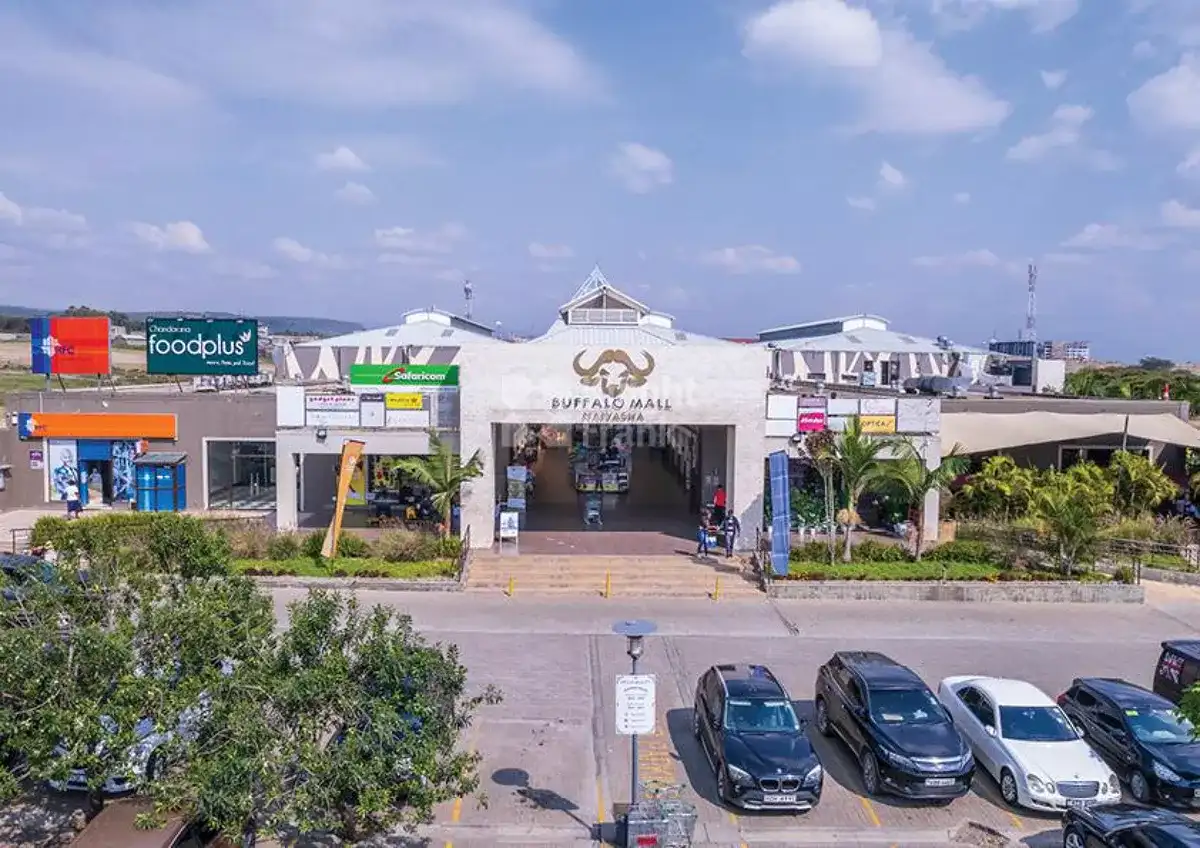
Along the heavily trafficked Nairobi–Nakuru Highway, a corridor that links Kenya’s capital to the Rift Valley and western regions, stands one of the country’s most strategically positioned retail developments: Buffalo Mall Naivasha. More than a decade after opening its doors, the mall has evolved from a regional shopping centre into a symbol of how location, timing, and structured capital can transform retail real estate in secondary urban markets.
Buffalo Mall’s story is not merely about shops and square footage. It is about land banking, phased development, foreign capital participation, asset recycling, and the gradual maturation of Kenya’s retail property sector. From its origins under the ownership of the late Tom Cholmondeley to its eventual consolidation under a Mauritius-based real estate investment group, the mall reflects broader shifts in how large-scale commercial property is developed, financed, and managed in Kenya.
Build the future you deserve. Get started with our top-tier Online courses: ACCA, HESI A2, ATI TEAS 7, HESI EXIT, NCLEX-RN, NCLEX-PN, and Financial Literacy. Let Serrari Ed guide your path to success. Enroll today.
A Strategic Location at the Heart of Growth
Buffalo Mall’s greatest advantage has always been its location. Situated directly along the Nairobi–Nakuru Highway, the mall benefits from one of Kenya’s busiest transport corridors. This road serves not only daily commuters and long-haul travelers, but also commercial logistics, tourism traffic, and agricultural supply chains moving between Nairobi, Naivasha, Nakuru, and onward to western Kenya.
Naivasha itself has undergone a remarkable transformation over the past two decades. Once primarily known for agriculture, geothermal energy, and tourism, the town has increasingly become a logistics and residential hub, buoyed by infrastructure upgrades, industrial investment, and population growth. Buffalo Mall entered this market at a moment when formal retail infrastructure lagged behind demand, positioning it as a first-mover in organized shopping within the region.
The mall’s visibility from the highway, ease of access, and ample surrounding land made it a natural stop for both local residents and transient consumers—an important distinction from urban malls that rely primarily on neighborhood footfall.
Scale and Design: Built for Regional Impact
Spanning approximately 85,000 square feet, Buffalo Mall ranks among Kenya’s larger out-of-town retail complexes. Unlike compact urban malls constrained by surrounding developments, Buffalo Mall sits on an expansive 45-acre parcel, allowing for low-density construction, generous parking, and long-term expansion potential.
When it officially opened in February 2015, the mall introduced a modern retail environment to Naivasha, featuring:
- Over 25 retail outlets
- A mix of local and international brands
- Essential services, food outlets, and lifestyle offerings
The design emphasized convenience and accessibility rather than luxury. This positioning proved critical. Buffalo Mall was never intended to compete with Nairobi’s high-end shopping centres. Instead, it targeted mass-market consumers, families, travelers, and workers, aligning tenant mix with purchasing power and daily needs.
One decision can change your entire career. Take that step with our Online courses in ACCA, HESI A2, ATI TEAS 7, HESI EXIT, NCLEX-RN, NCLEX-PN, and Financial Literacy. Join Serrari Ed and start building your brighter future today.
The Cholmondeley Legacy and Land Ownership
The land on which Buffalo Mall stands was owned by the late Tom Cholmondeley, a prominent Kenyan landowner and the great-grandson of Lord Delamere, one of the most influential settler-era figures in Kenya’s agricultural history. The Delamere family’s land holdings in Naivasha and the Rift Valley have long been central to farming, conservation, and commercial development.
Cholmondeley’s involvement in the project highlights an important pattern in Kenyan real estate: large-scale retail developments often originate from legacy landowners who convert underutilized agricultural or idle land into income-generating commercial assets.
Rather than developing the project alone, Cholmondeley opted for a partnership model that would bring in foreign capital, technical expertise, and professional project management.
Phase One: Partnering with Lloyd Capital Partners
For the first phase of Buffalo Mall’s development, Cholmondeley partnered with Lloyd Capital Partners, a British real estate investment firm with experience in emerging market retail developments.
The initial phase involved the construction of approximately 22,000 square meters of retail space and required a capital outlay of about KSh 715 million. Under the partnership structure:
- Lloyd Capital Partners held a 75 percent stake
- The Delamere family retained the remaining interest
This joint venture structure reflected a pragmatic approach: local landowners contributed land and local knowledge, while foreign partners supplied capital, development expertise, and access to international tenants.
The success of the first phase validated the commercial logic of the project and laid the groundwork for future expansion.
A Vision Beyond Retail: The Multi-Phase Master Plan
From inception, Buffalo Mall was never envisioned as a single-structure retail box. The long-term master plan envisaged a mixed-use commercial ecosystem that would transform the site into a regional destination.
Planned components for later phases included:
- Additional shopping malls and specialty retail
- Restaurants and leisure facilities
- Residential apartments
- Office blocks
- Warehousing and logistics space
- Fuel stations
- Hotel developments
This vision aligned with global trends in retail property, where standalone malls increasingly struggle unless integrated into broader lifestyle and mixed-use environments.
Although not all phases have been executed to date, the availability of land and infrastructure keeps these options open, enhancing the asset’s long-term strategic value.
Entry of South African Capital
The growing maturity of the asset soon attracted interest from institutional investors. In 2015, South African firm Delta Africa Property Holdings acquired a 45.5 percent stake in Buffalo Mall for approximately KSh 418 million.
This transaction marked an important milestone:
- It validated Buffalo Mall as an investable, income-generating asset
- It brought regional institutional capital into the project
- It signaled confidence in secondary-market retail in Kenya
Delta Africa’s entry reflected a broader wave of South African property funds seeking yield in East Africa at a time when domestic South African returns were under pressure.
Consolidation of Ownership
Delta Africa did not stop at a minority stake. Over the following years, the firm steadily increased its exposure to the asset. After acquiring an initial 50 percent interest in 2016, Delta Africa moved to purchase the remaining stake in April 2023 for KSh 262.8 million, achieving full ownership of the 85,000-square-foot retail centre.
This consolidation simplified governance, streamlined decision-making, and positioned the mall for eventual inclusion in a larger property portfolio.
Such step-by-step acquisition strategies are common among institutional investors, allowing them to:
- Enter at manageable risk levels
- Observe asset performance
- Increase ownership once cash flows stabilize
Transition to Grit Real Estate Income Group
Following portfolio restructuring, Buffalo Mall ultimately came under the ownership of Grit Real Estate Income Group, which now owns 100 percent of the Naivasha retail complex.
Grit specializes in income-generating real estate across Africa, focusing on assets with long-term leases, defensive tenant profiles, and exposure to essential consumer services. Buffalo Mall fits squarely within this strategy, offering:
- Stable foot traffic
- Exposure to domestic consumption
- Location-driven demand rather than discretionary luxury spend
The acquisition underscores the growing role of Mauritius-domiciled property vehicles in African real estate, leveraging favorable regulatory frameworks while investing directly on the continent.
Retail Performance in a Secondary City
Buffalo Mall’s performance highlights a critical insight about Kenyan retail: secondary cities can sustain large formal malls if location and tenant mix are right.
Naivasha benefits from:
- A growing resident population
- Industrial and logistics activity
- Tourism traffic linked to Lake Naivasha and nearby parks
- Highway-driven transient consumers
Unlike urban malls that compete intensely within limited catchment areas, Buffalo Mall enjoys a hybrid demand profile, blending local repeat customers with pass-through traffic.
This resilience became particularly evident during economic downturns, when neighborhood-oriented malls with essential retail proved more stable than destination luxury centres.
The Broader Context: Kenya’s Retail Real Estate Evolution
Buffalo Mall’s journey mirrors broader trends in Kenya’s commercial property market:
- Early development driven by local landowners
- Mid-stage expansion financed by foreign private equity
- Stabilization and consolidation under institutional real estate funds
As the market matures, assets increasingly move from entrepreneurial ownership to professionally managed portfolios, improving transparency, governance, and long-term sustainability.
At the same time, investor interest has shifted away from oversupplied urban luxury retail toward pragmatic, necessity-driven formats in growth corridors.
Challenges and Competitive Pressures
Despite its strengths, Buffalo Mall is not immune to challenges:
- E-commerce growth is reshaping consumer behavior
- Rising operating costs affect tenant margins
- New retail developments in nearby towns increase competition
However, its highway frontage, land bank, and early-mover advantage continue to differentiate it from newer entrants that lack scale or visibility.
Looking Ahead: Untapped Potential
With 45 acres at its disposal, Buffalo Mall’s future lies beyond its current footprint. Opportunities remain in:
- Hospitality developments to serve tourists and business travelers
- Logistics and warehousing tied to Naivasha’s industrial growth
- Residential components to capture urban expansion
If executed carefully, these additions could transform Buffalo Mall from a retail centre into a self-sustaining mixed-use node, reinforcing its relevance for decades to come.
Conclusion: More Than a Mall
Buffalo Mall Naivasha is more than a shopping destination. It is a case study in how strategic land, phased development, and cross-border capital can reshape retail landscapes outside major cities.
From its origins under Tom Cholmondeley, through partnerships with Lloyd Capital Partners and Delta Africa Property Holdings, to its current ownership by Grit Real Estate Income Group, the mall reflects the lifecycle of modern African commercial property assets.
As Kenya’s secondary cities continue to grow, Buffalo Mall stands as an early example of how infrastructure corridors—not just city centers—will define the next generation of retail and mixed-use development.
photo source: Google
By: Elsie Njenga
20th January, 2026