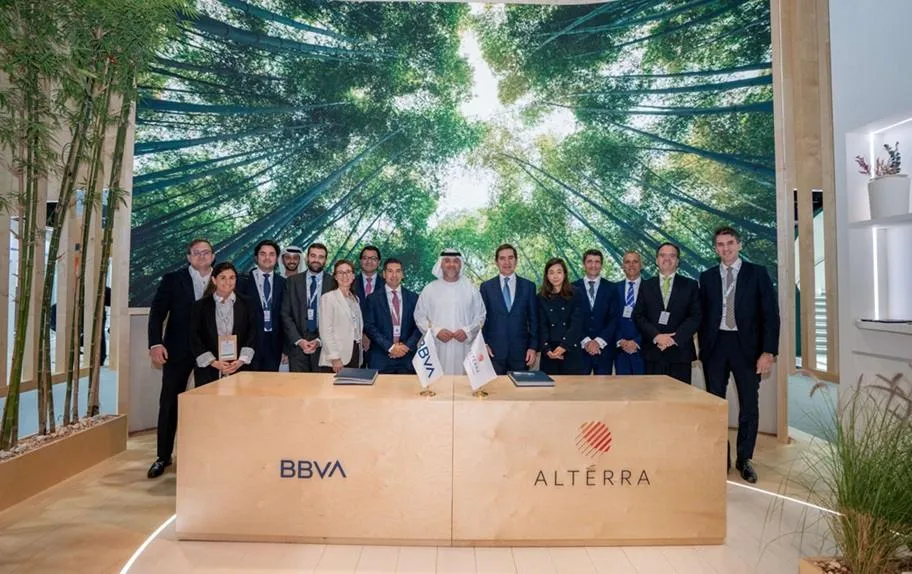
The United Arab Emirates climate investment platform ALTERRA and Spanish financial institution BBVA have unveiled plans to establish a $1.2 billion co-investment fund dedicated to financing climate-aligned assets across global markets. The partnership, announced on January 15, 2026, represents a significant expansion of the emerging climate finance architecture linking Gulf sovereign capital with European banking expertise.
The newly formed ALTERRA Opportunity Fund will channel capital into energy transition projects, industrial decarbonization initiatives, climate technologies, and sustainable living infrastructure across North America, Latin America, and Europe, with additional allocations planned for other growth markets. BBVA has committed $250 million as a proposed strategic limited partner in the vehicle, marking one of the Madrid-headquartered bank’s most substantial climate finance commitments to date.
Build the future you deserve. Get started with our top-tier Online courses: ACCA, HESI A2, ATI TEAS 7, HESI EXIT, NCLEX-RN, NCLEX-PN, and Financial Literacy. Let Serrari Ed guide your path to success. Enroll today.
Strategic Partnership Between Gulf Capital and European Banking
The collaboration between ALTERRA and BBVA reflects a broader transformation in how climate transition capital is structured and deployed globally. Dr. Sultan Al Jaber, Minister of Industry and Advanced Technology and chairman of ALTERRA, characterized the fund as marking a new chapter for the platform as it moves into its next stage of growth. The initiative accelerates ALTERRA’s ambition to mobilize third-party capital at scale and expand its global network of institutional collaborators.
For BBVA, the partnership aligns with the bank’s strategy to make sustainability a key driver of differential growth globally and to deepen its presence in fast-growing climate finance hubs such as Abu Dhabi. Carlos Torres Vila, Chair of BBVA, emphasized that the bank sees ALTERRA as a long-term partner to mobilize capital at scale, reflecting confidence in their climate-focused strategy and track record.
BBVA recently received In-Principle Approval from the Abu Dhabi Global Market’s Financial Services Regulatory Authority to open a new branch in Abu Dhabi, enabling the bank to expand its wholesale banking offering in the region and strengthen its ability to serve corporate and institutional clients locally. This development positions BBVA to connect Middle Eastern corporate clients with its international network while advancing its sustainable finance agenda.
ALTERRA’s Evolving Climate Finance Architecture
Launched during COP28 in Dubai in December 2023, ALTERRA was established by the UAE with an initial $30 billion commitment and an overarching ambition to mobilize $250 billion globally by 2030 to finance projects supporting the global energy transition. The platform operates through a dual-arm structure designed to enhance its impact across different market segments.
The $25 billion ALTERRA Acceleration Fund directs capital towards projects crucial for accelerating the global transition to a net-zero and climate-resilient economy at scale. The $5 billion ALTERRA Transformation Fund incentivizes investment flows in high-growth climate opportunities in underserved markets by providing catalytic capital designed to reduce risk for private investors.
Since its inception, ALTERRA has primarily invested through climate and transition funds managed by leading global investment firms including BlackRock, Brookfield, and TPG. At COP28, the platform committed $6.5 billion to climate-dedicated funds offered by these inaugural launch partners, establishing itself as an anchor investor for large private vehicles targeting decarbonization.
BlackRock received up to $2 billion from ALTERRA, split between $1 billion for a climate transition-oriented private debt strategy and $1 billion for investment in BlackRock’s infrastructure equity business. An additional $650 million was allocated to BlackRock Global Infrastructure Fund IV, which invests in climate transition-related infrastructure projects, with another $350 million invested in BlackRock’s Climate Finance Partnership focusing on climate-related infrastructure in emerging markets.
Brookfield Asset Management announced a $2 billion commitment for the Brookfield Global Transition Fund II, the firm’s flagship fund focused on energy transition. ALTERRA also committed to Brookfield’s Catalytic Transition Fund, which has a differentiated mandate to raise and deploy capital exclusively for emerging and developed markets with dedicated focus on the four key pillars of COP28’s agenda: Energy Transitions, Industrial Decarbonization, Sustainable Living, and Climate Technologies.
TPG received approximately $1.5 billion in commitments from ALTERRA, including $1 billion to TPG Rise Climate II and $500 million to the firm’s new Global South Initiative. The Global South Initiative leverages TPG’s decades of experience investing across industries in developing regions, having driven over $4 billion of investment in more than 20 climate solutions companies across nearly 20 countries.
BBVA’s Expanding Sustainable Finance Commitment
The $250 million commitment to ALTERRA represents a continuation of BBVA’s aggressive expansion in sustainable finance. The bank has invested approximately €300 million in climate funds focused on decarbonization as part of its ongoing global climate strategy. This commitment forms part of BBVA’s broader goal to channel €700 billion in sustainable business between 2025 and 2029, after having met its previous €300 billion target one year in advance.
BBVA’s sustainable finance mobilization has accelerated significantly. The bank channeled around €97 billion into sustainable business in the first three quarters of 2025 alone, representing a 48 percent increase compared with the same period of the previous year. In the third quarter of 2025, BBVA mobilized upward of €34 billion, setting a new quarterly record for the institution.
The bank’s sustainable finance strategy focuses on three strategic pillars that guide capital allocation. Climate and natural capital initiatives receive the largest share, with 77 percent of sustainable finance directed towards combating climate change and preserving natural resources. Social development projects account for the remaining 23 percent, supporting inclusive growth initiatives across BBVA’s operational geographies.
By business lines, 59 percent of BBVA’s sustainable financing has been generated from its Corporate and Investment Banking unit through investment and corporate banking transactions for large clients. Companies account for 27 percent of sustainable finance volumes, while retail customers represent 14 percent of the total. This distribution reflects BBVA’s strategic emphasis on large-scale infrastructure and corporate transition projects that can achieve significant emissions reductions.
Javier Rodríguez Soler, Global Head of Sustainability and Corporate and Investment Banking at BBVA, has stated that the bank continues to view sustainability as a strategic priority and a key driver of differential growth. The bank believes that business opportunities in the second part of the decade will be driven by solid investment in infrastructure and the maturity of certain new clean technologies that will make many currently unprofitable solutions economically viable.
Institutional Structure and Regulatory Framework
Once launched and approved, the ALTERRA Opportunity Fund will be domiciled in the Abu Dhabi Global Market financial center, one of the region’s most advanced international financial centers. ADGM operates across Al Maryah Island and Al Reem Island, making it one of the largest financial districts globally. The center reported a 31 percent increase in company registrations in 2024, with over 2,200 active companies and assets under management rising over 200 percent year-on-year.
ADGM provides a common law legal and regulatory ecosystem for global financial and non-financial institutions operating in the United Arab Emirates. The jurisdiction applies English common law directly, including precedent from England and Wales, making it the only jurisdiction in the Middle East to adopt a similar approach to Singapore and Hong Kong. This legal framework offers international investors familiar regulatory structures and transparent dispute resolution mechanisms.
The fund will consolidate existing co-investments from the ALTERRA Acceleration Fund into a dedicated structure managed by the Emirati firm. This consolidation represents a pivotal step in ALTERRA’s transition into its next phase of growth, moving from a pure fund-of-funds model toward direct investment capabilities and specialized co-investment vehicles.
The ALTERRA Opportunity Fund will pursue a diversified global investment strategy across climate-aligned infrastructure, private equity, and private credit. The strategy reflects ALTERRA’s investment approach of seeking superior risk-adjusted returns and positive climate impact in both advanced and emerging markets. Investment focus areas include energy transition projects such as renewable energy generation and grid modernization, industrial decarbonization initiatives targeting emissions-intensive sectors, climate technology development and commercialization, and sustainable living infrastructure including green buildings and sustainable transportation.
Multi-Regional Investment Strategy and Market Opportunities
The fund’s geographic scope spanning North America, Latin America, and Europe reflects careful consideration of regional policy frameworks, resource endowments, and market dynamics. Each region presents distinct opportunities and challenges for climate-aligned investment that will influence capital deployment strategies.
North America offers substantial policy support for clean energy investment through mechanisms like tax credits and federal incentives. The United States Inflation Reduction Act has exceeded expectations in the amount of capital committed from the private sector, pioneering a “government-enabled, private-sector led” model that many contributors point to as successful. This supportive policy environment has catalyzed significant private capital flows into renewable energy, electric vehicle infrastructure, and clean technology manufacturing.
Europe provides regulatory clarity on disclosures and carbon pricing through its comprehensive climate policy framework. European lenders like BBVA are navigating an evolving regulatory landscape that includes climate-related stress testing and nascent interoperability between EU standards and global reporting initiatives. The region’s established carbon pricing mechanisms and stringent climate disclosure requirements create predictable policy environments that reduce regulatory risk for long-term infrastructure investments.
Latin America presents high renewable resource potential with significant solar, wind, and hydroelectric capacity waiting to be developed. However, the region also faces challenges including uneven permitting processes and variable political risk across different countries. Public and private investment in clean technologies in the region must increase significantly to reach decarbonization targets aligned with the Paris Agreement, creating substantial opportunities for patient capital providers willing to work through regulatory complexities.
One decision can change your entire career. Take that step with our Online courses in ACCA, HESI A2, ATI TEAS 7, HESI EXIT, NCLEX-RN, NCLEX-PN, and Financial Literacy. Join Serrari Ed and start building your brighter future today.
The Role of Sovereign Wealth Funds in Climate Finance
The ALTERRA-BBVA partnership exemplifies a broader trend of sovereign wealth funds playing increasingly prominent roles in climate finance. Sovereign wealth funds collectively manage over $13 trillion in assets globally, giving them enormous potential influence over financial markets and development outcomes. The largest funds in China, UAE, Norway, Singapore, and Saudi Arabia account for three-quarters of these assets.
Despite their scale, sovereign wealth funds have historically committed less than $10 billion to climate initiatives, facing obstacles including mandates that require predictable returns that make it hard to find enough sustainable projects in which they can invest. However, a recent survey by the International Forum of Sovereign Wealth Funds found that 91 percent of respondents said addressing climate change was consistent with their mandate, while 74 percent said it was actively part of their mandate.
The survey also indicated that 60 percent of sovereign wealth funds believe that taking climate change into account will improve their long-term returns. This growing recognition of climate-related risks and opportunities is driving sovereign wealth funds to integrate environmental considerations into their investment decision-making processes and develop specialized climate investment capabilities.
Sovereign wealth funds with strategic development mandates are particularly well-positioned to channel capital into sectors critical for sustainable development, including clean energy, infrastructure, digital connectivity, and social protection. Unlike private investors who often focus on short-term returns, sovereign wealth funds typically plan for decades, aiming to preserve wealth for future generations while supporting national economic objectives.
The required climate transition finance to meet 1.5-degree goals is estimated at $6.5 trillion per year by 2030, which exceeds the capacity of any single financial entity. This massive funding requirement necessitates innovative partnership models that combine public and private capital, blend different risk profiles, and leverage the unique capabilities of various institutional investors.
Emerging Market Focus and Blended Finance Structures
Emerging markets will require approximately $2 trillion annually by 2030 to achieve net zero by 2050, yet only one-fifth of the needed financing is currently planned. This enormous gap between required investment and committed capital creates both challenges and opportunities for climate finance vehicles like the ALTERRA Opportunity Fund.
Climate investment platforms with sovereign backing are seeking to crowd in private money by reducing early-stage risk and aggregating project-level deal flow that would be difficult for single investors to access alone. ALTERRA’s structure as a fund-of-funds with catalytic capital capabilities enables it to provide first-loss protection and other risk mitigation tools that make projects more attractive to commercial investors.
The UAE has agreed to retain a smaller portion of some profits generated by ALTERRA investments as a sweetener to attract more private finance. In some cases, outside investors stand to receive as much as 5 percentage points of additional returns as a result of the UAE’s agreement to cap its returns. This innovative structure is designed to channel institutional investor cash into markets where perceived risk would normally lead them to demand higher returns, often beyond levels that borrowers in those markets can afford.
Blended finance transactions, which combine public and private capital for sustainable development, can play a significant role in emerging markets. The increased provision of blended finance from development finance institutions helps ensure projects meet high climate and compliance standards while providing leverage in setting up viable contractual and financing frameworks for renewable energy projects.
European Banking and Middle Eastern Climate Finance Convergence
The growing climate finance corridor linking European banks and Gulf sovereign platforms reflects a fundamental shift in how transition capital is pooled and deployed. Sovereign wealth funds in the Middle East are positioning themselves as scale climate allocators with multi-decade investment horizons, while European lenders see opportunities to extend their sustainable finance strategies into higher-growth jurisdictions where transition assets are emerging.
BBVA has maintained a long-standing presence in Abu Dhabi through its Representative Office, established in 2013, reflecting the bank’s interest in the Middle East as a strategic region for its Corporate and Investment Banking activity. The region’s growing importance in global markets and its economic transformation make it an important area for BBVA as it seeks to accompany institutional clients and corporations with a global footprint.
By becoming a proposed strategic limited partner in ALTERRA’s new climate fund, BBVA deepens its relationship with one of the Middle East’s most influential investors, supporting the bank’s strategy to broaden its presence and visibility in the region while delivering on its sustainability ambitions. The partnership provides BBVA with access to deal flow and investment opportunities across ALTERRA’s global network while offering ALTERRA access to BBVA’s European client relationships and sustainable finance expertise.
BBVA and its European peers are navigating increasingly complex regulatory frameworks related to climate risk and sustainable finance. European banking regulators have intensified scrutiny of financed emissions and transition planning, requiring banks to demonstrate credible pathways to climate-aligned lending portfolios. This regulatory pressure is driving European banks to develop more sophisticated climate risk assessment capabilities and expand their sustainable finance offerings.
The convergence of European banking expertise and Gulf sovereign capital creates potential for scaled climate investment vehicles that combine different comparative advantages. European banks bring deep understanding of regulatory frameworks, established client relationships, and sophisticated financial structuring capabilities. Gulf sovereign platforms provide patient capital, risk appetite for emerging markets, and alignment with national economic diversification strategies.
Investment Focus Areas and Sectoral Opportunities
The ALTERRA Opportunity Fund’s investment mandate spans four primary thematic areas that align with global decarbonization priorities. Energy transition investments will target renewable energy generation including solar, wind, and hydroelectric projects, as well as energy storage systems, grid modernization and transmission infrastructure, and green hydrogen production and distribution.
Industrial decarbonization initiatives will focus on emissions-intensive sectors including steel, cement, chemicals, and heavy manufacturing. These sectors face significant technical and economic challenges in reducing emissions but represent substantial portions of global greenhouse gas emissions. Investment opportunities include process innovations, electrification of industrial heat, carbon capture and storage technologies, and circular economy business models that reduce material intensity.
Climate technology investments will support the development and commercialization of innovative solutions across the climate value chain. This includes clean technology hardware such as heat pumps, advanced batteries, and carbon capture equipment, as well as software platforms for energy management, climate risk assessment, and supply chain optimization. The fund may also invest in agricultural technology that reduces emissions or enhances carbon sequestration.
Sustainable living infrastructure encompasses green buildings with advanced energy efficiency features, sustainable transportation systems including electric vehicle charging networks and public transit, water management and wastewater treatment facilities, and waste management and recycling infrastructure. These investments directly impact quality of life while reducing environmental footprints in urban and rural areas.
Market Structure and Investor Implications
Institutional allocators will closely monitor how quickly the ALTERRA Opportunity Fund can deploy capital into energy transition assets at scale. Variable policy certainty across different markets creates both opportunities and risks that will influence deployment speed and sectoral allocation. Markets with stable, supportive policy frameworks may receive higher initial allocations, while markets with greater regulatory uncertainty may require additional structuring to achieve acceptable risk-adjusted returns.
Infrastructure and private credit are drawing particular interest from institutional allocators who view project-level decarbonization as a hedge against policy and carbon price volatility. As governments implement carbon pricing mechanisms and climate disclosure requirements, assets with lower carbon intensity may benefit from relative valuation advantages. This dynamic creates incentives for institutional investors to increase allocations to climate-aligned infrastructure and credit strategies.
The fund structure as a co-investment vehicle allows BBVA and potentially other strategic limited partners to participate directly in investment opportunities alongside ALTERRA’s management team. This alignment of interests between capital providers and investment managers can enhance governance and decision-making quality while providing strategic partners with valuable insights into climate investment markets.
For the wider environmental, social, and governance investment ecosystem, the BBVA-ALTERRA partnership reinforces a trend toward blended private market vehicles that target decarbonization through infrastructure and credit rather than public markets alone. Public equity markets provide liquidity and price discovery but may not be optimal for long-duration infrastructure assets that require patient capital and sophisticated operational management.
Policy Environment and Regulatory Considerations
Provincial and national regulators globally are sharpening their rules on climate disclosures and transition planning, creating rising demand for transition finance instruments. The European Union’s Corporate Sustainability Reporting Directive, the Task Force on Climate-related Financial Disclosures framework, and various national climate disclosure requirements are increasing transparency around corporate climate impacts and transition strategies.
Banks face closer scrutiny from investors and supervisors to demonstrate credible pathways to climate-aligned lending portfolios. This scrutiny manifests in climate stress tests conducted by central banks, enhanced disclosure requirements around financed emissions, and regulatory expectations for transition plan development. Financial institutions that can demonstrate robust climate risk management and meaningful sustainable finance volumes may benefit from improved stakeholder perceptions and potentially favorable regulatory treatment.
The Task Force on Climate-related Financial Disclosures has fostered transparent disclosure of climate risks across financial institutions globally. BBVA has been reporting in accordance with TCFD recommendations, providing stakeholders with detailed information on climate-related risks and opportunities, governance structures for climate issues, and metrics used to assess and manage climate considerations.
BBVA is a member of several key sustainable finance initiatives including the Net Zero Banking Alliance steering group, the sustainable finance working group at the European Banking Federation, and the Alliance of CEO Climate Leaders at the World Economic Forum. These memberships signal BBVA’s commitment to collaborative approaches to climate finance challenges and provide platforms for sharing best practices across the global banking industry.
Future Outlook and Scaling Potential
If the ALTERRA Opportunity Fund meets deployment expectations, it could strengthen the case for sovereign anchor models that pool European banking liquidity and private equity expertise with Gulf capital. Such structures are gaining momentum as governments and financial institutions seek ways to overcome the scale and speed gap in global climate finance.
The initiative’s success will partly depend on its ability to demonstrate that profitable, climate-positive investments are achievable in both advanced and emerging markets. Proving this investment thesis at scale could catalyze additional capital formation from other institutional investors who have been hesitant to allocate to climate infrastructure due to perceived risks or unfamiliarity with asset classes.
ALTERRA CEO Majid Al Suwaidi has stated the platform aims to be “the number one climate investment fund globally” and create a hub for climate finance in the UAE that mirrors Silicon Valley’s spirit, where innovation and investment in climate solutions can thrive. This ambition reflects broader UAE economic diversification goals and positions the country as a connector between capital sources in developed markets and investment opportunities in emerging economies.
For policymakers, the BBVA-ALTERRA initiative illustrates how sovereign climate funds and international banks are collaboratively building global transition finance architecture. The UAE has articulated its intention to catalyze private capital toward climate-aligned investments as part of its economic diversification and sustainability strategy, viewing climate finance as both a moral imperative and an economic opportunity.
The broader climate finance ecosystem continues to evolve with increasing recognition that achieving global climate goals requires unprecedented levels of capital mobilization across public and private sources. Innovative partnership structures that combine sovereign backing, institutional investment expertise, and market-based incentive mechanisms will likely play increasingly important roles in closing the climate finance gap and accelerating the global energy transition.
The ALTERRA-BBVA partnership demonstrates that large-scale climate finance can bridge traditional divides between public and private capital, developed and emerging markets, and financial returns with environmental impact. As the vehicle progresses from announcement to deployment, its operational performance will provide valuable insights into the viability of sovereign-anchored climate investment models and their potential for replication across other geographies and institutional configurations.
Ready to take your career to the next level? Join our Online courses: ACCA, HESI A2, ATI TEAS 7 , HESI EXIT , NCLEX – RN and NCLEX – PN, Financial Literacy!🌟 Dive into a world of opportunities and empower yourself for success. Explore more at Serrari Ed and start your exciting journey today! ✨
Track GDP, Inflation and Central Bank rates for top African markets with Serrari’s comparator tool.
See today’s Treasury bonds and Money market funds movement across financial service providers in Kenya, using Serrari’s comparator tools.
photo source: Google
By: Montel Kamau
Serrari Financial Analyst
19th January, 2026