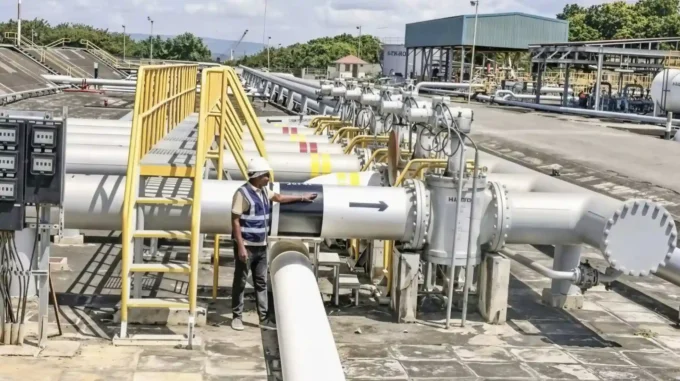
Ethiopian Investment Holdings, the country’s state-owned investment arm managing over $140 billion in assets, has announced plans to develop domestic currency-printing capacity as part of a comprehensive strategy to establish critical national infrastructure under public ownership. The initiative positions Africa’s second-most populous nation among a select group of African countries pursuing monetary sovereignty through local banknote production.
Prime Minister Abiy Ahmed disclosed the plan on Thursday at the Finance Forward Ethiopia 2026 conference, stating the initiative would see EIH assume responsibilities traditionally outsourced to foreign firms as Ethiopia seeks greater control over critical economic infrastructure. The announcement marks a significant expansion of the holding company’s strategic mandate and signals Ethiopia’s determination to reduce dependence on external suppliers for essential state functions.
Build the future you deserve. Get started with our top-tier Online courses: ACCA, HESI A2, ATI TEAS 7, HESI EXIT, NCLEX-RN, NCLEX-PN, and Financial Literacy. Let Serrari Ed guide your path to success. Enroll today.
Africa’s Currency Production Landscape
Of Africa’s 54 countries, only between nine and twelve currently possess domestic currency-printing capacity. This select group includes Nigeria, South Africa, Egypt, Morocco, Algeria, Kenya, Sudan, Zimbabwe, and the Democratic Republic of Congo. The vast majority of African nations continue to outsource banknote production to European and North American firms, a practice that raises questions about economic sovereignty and self-sufficiency decades after independence.
At least 40 African countries print their currency in the United Kingdom, France, and Germany, relying on established security printing companies with decades of experience in banknote production. Countries like Ethiopia, Libya, and Angola place orders from British banknote printing giant De La Rue, while six or seven other nations including South Sudan, Tanzania, and Mauritania utilize Germany’s Giesecke+Devrient for their currency needs.
Most French-speaking African countries print their money through France’s central bank or French printing company Oberthur Fiduciaire, reflecting colonial-era relationships that persist in contemporary financial infrastructure. The currencies of Central African CFA franc and West African CFA franc zones remain tightly pegged to France and are produced in French facilities, illustrating the continued influence of historical economic ties.
Ethiopia’s Current Currency Production Arrangements
Ethiopia’s central bank, the National Bank of Ethiopia, is responsible for issuing the birr but has historically relied on foreign firms to print its banknotes. According to Remitly, a US-based remittance platform, Ethiopia’s currency is currently printed overseas by companies such as UK-based De La Rue, a practice common across Africa where many countries lack secure domestic printing facilities.
The Ethiopian government has changed its currency multiple times over recent decades. In November 1997, the EPRDF government introduced changes to the previous DERG currency with minor feature and color updates. The higher denomination notes, specifically the 50 and 100 birr bills, received enhanced security features as part of this redesign. More recently, on September 14, 2020, the National Bank of Ethiopia introduced new currency notes with enhanced security features and other distinctive elements.
Prime Minister Abiy Ahmed stated that establishing a local printing facility would lower long-term production costs, strengthen control over currency supply and security features, and reduce dependence on foreign contractors and logistics. The move addresses vulnerabilities associated with relying on overseas production, including supply chain disruptions, potential sanctions affecting currency orders, and limited control over security feature development.
Ethiopian Investment Holdings: Africa’s Largest Sovereign Wealth Fund
Established in December 2021, Ethiopian Investment Holdings manages more than 40 state-owned enterprises across key sectors, applying corporate governance and investment principles to improve performance and attract capital. The holding company has built an asset base of 8.2 trillion birr, equivalent to $140 billion, positioning it as Africa’s largest sovereign wealth fund according to the International Forum of Sovereign Wealth Funds.
EIH’s revenues have expanded dramatically since inception, rising from 704 billion birr ($12 billion) to 6.1 trillion birr ($104 billion) over four years. The holding company’s foreign exchange holdings now stand at $48.7 billion, reflecting the scale of operations across its diverse portfolio of state-owned enterprises. The Sovereign Wealth Fund Institute’s latest ranking places EIH as the biggest sovereign wealth fund in Africa, surpassing the Libyan Investment Authority for the top spot on the continent.
Prime Minister Abiy described the currency printing initiative as one of several strategic functions being developed by Ethiopian Investment Holdings, which oversees the government’s commercial enterprises. “The institution will build many key, untold strategic arms,” Abiy said at the conference. He added that EIH is expected to expand significantly over the coming years, with its contribution to gross domestic product projected to reach 20 percent by 2030.
“If this target is achieved, Ethiopia will have created a structure that can be transferred to the next generation,” the Prime Minister added, emphasizing the intergenerational wealth preservation aspect of the sovereign fund’s mission. The ambitious GDP contribution target would represent one of the highest ratios of sovereign wealth fund economic impact globally, underscoring the central role EIH plays in Ethiopia’s economic transformation strategy.
Reforming State-Owned Enterprise Management
Abiy noted that many state-owned enterprises had previously suffered from weak oversight and poor management despite controlling substantial national wealth. Some failed to pay taxes, while revenues and expenditures were poorly documented and operating costs excessive. The lack of professional management and transparent governance structures resulted in underperformance across much of the state enterprise sector, limiting their contribution to national development objectives.
EIH was created to place these enterprises under a corporate framework, improve profitability and diversify operations. The holding company encompasses close to thirty state-owned enterprises and holds flagship enterprises such as Ethiopian Airlines and Ethio Telecom in its portfolio. Its subsidiaries span multiple sectors and employ approximately a quarter of a million employees, making it one of the largest institutional employers in the country.
In December 2024, EIH announced that eight new enterprises were added to its portfolio, including Ethio Post, Ethio Engineering Group, the Ethiopian Industrial Inputs Development Enterprise, Ethiopian Railway Corporation, Industrial Parks Development Corporation, Development Bank of Ethiopia, and the Ethiopian Electric Power Corporation. This expansion broadened the holding company’s reach across critical infrastructure and development finance sectors.
The holding company reported 9.3 billion dollars in foreign currency earnings over a nine-month period, representing a 10.5 percent increase from the previous year. It paid a total of 98 billion birr in taxes, demonstrating its significant contribution to government revenues. The state-owned enterprises under EIH generated 19 billion birr in state dividends, nearly 30 percent higher than the previous year’s figure, with 14.5 billion birr deposited with the Ministry of Finance.
Strategic Diversification Initiatives
Beyond currency printing, Prime Minister Abiy revealed that Ethiopian Investment Holdings is pursuing several strategic initiatives aimed at capturing more value from national resources and developing new revenue streams. The holding company is working with crypto-mining firms, an initiative Abiy said is expected to deliver returns in the coming years. While specific details about these cryptocurrency ventures were not disclosed, the initiative aligns with global trends of countries exploring digital asset mining as a revenue diversification strategy.
Ethiopia has licensed vast data-center and crypto-mining ventures under banners such as “Digital Ethiopia 2025” and “Home-grown Economic Reform.” These ventures promise modernization and revenue diversification, though they have raised questions about transparency and the convergence between state power and private commercial interests in Ethiopia’s rapidly evolving digital economy.
Perhaps most significantly, Abiy disclosed that EIH has begun constructing a gold refinery, marking what he described as a shift away from exporting raw gold. “For many years, Ethiopia has been selling gold in its raw form,” he said. “For the first time, EIH is building a gold refinery, and it will be finalised in the coming months. This will help preserve national wealth and create additional value.”
The gold refinery initiative addresses a longstanding challenge in Ethiopia’s mining sector, where the country has exported unprocessed gold for decades, forgoing the value-added benefits of domestic refining. Prime Minister Abiy has previously stated that Ethiopia could achieve a historic milestone by generating up to two billion dollars in gold revenue, which would represent a dramatic increase from historical export levels.
Ethiopia’s gold mining industry has emerged as a significant driver of economic growth, with the Shakiso and broader Guji regions offering rich gold deposits and prime locations for mining activities. Recent developments include the inauguration of several new mining operations employing advanced technology, including environmentally friendly processes that avoid the use of harmful chemicals in extraction.
One decision can change your entire career. Take that step with our Online courses in ACCA, HESI A2, ATI TEAS 7, HESI EXIT, NCLEX-RN, NCLEX-PN, and Financial Literacy. Join Serrari Ed and start building your brighter future today.
Existing Security Printing Partnership
While the currency printing announcement represents a new initiative, Ethiopia has already taken steps toward localizing secure document production through a partnership with Japanese security printing firm Toppan Holdings. In partnership with Japan’s Toppan Gravity, EIH established a security printing company called Toppan Security Ethiopia, a joint venture that includes EIH subsidiary companies such as Berhanena Selam Printing Enterprise and Educational Materials Production and Distribution Enterprise.
The joint venture, established in July 2023, held a groundbreaking ceremony for a new passport manufacturing and issuance plant in Addis Ababa on May 8, 2024. The TOPPAN Group maintains a 51 percent ownership stake in the company through its UAE-based subsidiary, while the Ethiopian government holds a 49 percent stake through Ethiopian Investment Holdings.
The partnership was divided into three phases when initially announced in December 2023. The first phase involved the printing of e-passports, followed by currency printing in the second phase. The ambitious third phase encompassed the printing of various tradable securities, intended to support the stock market officials planned to introduce. Toppan Gravity Ethiopia was to shell out a $15 million investment to provide capital for the printing of passports, currency, ATM cards, cheques, National ID cards, and tradable securities.
However, subsequent clarifications from Ethiopian authorities indicated that the agreement with Toppan focused specifically on secure documents rather than currency production. Mamo Mihretu, governor of the National Bank of Ethiopia, verified that the agreement does not include printing the Ethiopian currency, addressing misinformation that had circulated about the scope of the Toppan partnership.
The new passport manufacturing plant, built at an estimated cost of $55 million at the Bole Lemi Industrial Park on the outskirts of Addis Ababa, draws on the TOPPAN Group’s accumulated security printing and data processing technologies. The facility produces biometric passports with integrated microchips and anti-counterfeiting technology, replacing the old-generation passports of Ethiopian citizens.
Ethiopia officially launched its first electronic passport in a landmark event held at the Science Museum on February 21, 2025. The initiative, spearheaded by Immigration and Citizenship Services, Ethiopian Investment Holdings, and TOPPAN Security Ethiopia, represents a major step forward in modernizing the country’s travel documentation system and enhancing national security.
Economic Rationale for Domestic Production
The decision to pursue domestic currency printing reflects several economic and strategic considerations that extend beyond simple cost reduction. While outsourcing currency production can offer economies of scale for countries with smaller populations or lower currency demand, Ethiopia’s growing economy and expanding financial sector create conditions that may favor domestic production.
Mma Amara Ekeruche from the African Center for Economics Research explained to Deutsche Welle that when a country’s currency is not in high demand globally like the US dollar or British pound, it often makes little financial sense to print at home due to high setup costs. Money-printing machines typically churn out millions of notes at a time, and countries with smaller populations would have more currency than needed if they printed domestically.
“If a country prints one banknote for €10 at home and sees that it can print it for about €8 abroad, then why would they incur more costs to do that? It won’t make sense,” Ekeruche explained. This cost differential has driven many African countries to continue outsourcing despite the strategic vulnerabilities this creates.
However, for larger economies like Ethiopia with populations exceeding 120 million people and growing currency circulation needs, the economics of domestic production become more favorable. The high initial capital investment in secure printing facilities can be amortized over larger production volumes, potentially reducing per-unit costs over time compared to ongoing outsourcing arrangements.
Beyond direct cost considerations, domestic currency printing offers several strategic advantages. It provides greater control over currency supply management, enabling more responsive adjustment to changing economic conditions and monetary policy requirements. Local production eliminates shipping delays and logistics complexities associated with international currency orders, ensuring more reliable supply chains for banknote distribution.
Security considerations also favor domestic production. Countries printing their own currency can implement proprietary security features and maintain tighter control over sensitive production processes. This reduces risks of counterfeit note production and unauthorized access to currency designs and specifications that can occur when outsourcing to foreign contractors.
Challenges and Implementation Considerations
Establishing domestic currency printing capacity presents significant technical and financial challenges that EIH will need to address during implementation. Currency printing requires specialized equipment, secure facilities, and highly trained personnel capable of operating sophisticated machinery and maintaining stringent quality control standards.
The technical requirements for modern banknote production include intaglio printing presses, numbering machines, quality inspection systems, and secure storage facilities for paper, inks, and other specialized materials. These technologies involve substantial capital investment, typically running into tens or hundreds of millions of dollars depending on production capacity and security feature sophistication.
Workforce development represents another critical challenge. Operating a currency printing facility requires specialized skills in security printing, quality control, materials science, and facility security management. Ethiopia will need to invest in training programs and potentially recruit international expertise during the startup phase to ensure production meets international standards.
Security and anti-counterfeiting capabilities must match or exceed those of established international currency printers to maintain confidence in the birr. This requires access to cutting-edge security feature technologies, ongoing research and development capabilities, and the ability to stay ahead of evolving counterfeiting techniques.
Supply chain management for specialized materials such as security paper, inks with unique chemical compositions, and holographic elements may initially require continued imports from established suppliers. Developing domestic production capacity for these inputs would represent a further stage of vertical integration requiring additional investment and technical expertise.
The experience of other African countries that have established domestic currency printing provides valuable lessons. Nigeria’s Nigerian Security Printing and Minting produces the Naira domestically, though the country sometimes supplements local production with imports during periods of peak demand. South Africa’s South African Bank Note Company, established in 1958, demonstrates the longevity and viability of domestic currency production when properly managed.
Kenya produces the Kenyan Shilling locally through De La Rue’s Nairobi facility, making it one of the few East African countries with domestic printing capability. This hybrid model, where international firms operate facilities within the country, represents an intermediate approach that combines local production with access to established security printing expertise.
Broader Pan-African Self-Sufficiency Movement
Ethiopia’s currency printing initiative aligns with broader trends toward economic self-sufficiency and reduced dependence on former colonial powers across Africa. The African Union has been promoting greater economic integration and intra-African trade, with local production of essential goods and services representing a key element of this agenda.
The practice of outsourcing currency production has drawn increasing scrutiny as African countries seek to assert greater economic sovereignty. For wealthier countries like Angola and Ghana, continued reliance on overseas currency printing raises questions about real autonomy and economic self-sufficiency that extend beyond simple cost-benefit analysis.
Printing banknotes in Africa would boost profits on the continent and theoretically allow African countries to choose those with printing capabilities since there’s likely some idle capacity among existing facilities. However, this has not happened in practice, possibly due to trust issues since countries have established long-term relationships with overseas firms.
The complicated case of Francophone Africa illustrates the political dimensions of currency production arrangements. The countries using the Central African CFA franc and West African CFA franc have their currencies tightly pegged to France’s euro because of colonial relations, with production occurring in France. Recent moves by some West African countries to reform or replace the CFA franc system reflect growing demand for monetary independence.
Gambia’s inquiry to Nigeria about potentially ordering the Gambian Dalasi from its West African neighbor represents the type of intra-African cooperation that could reduce collective dependence on European and North American currency suppliers. If such partnerships develop at scale, they could dramatically cut shipping costs and strengthen regional economic integration.
Capital Markets and Financial Sector Development
Ethiopian Investment Holdings has played a pivotal role in establishing the Ethiopian Securities Exchange, launched in January 2025 as a landmark achievement in Ethiopia’s financial sector modernization. As the founding shareholder with a 100 percent public stake initially and currently holding a 25 percent stake, EIH partnered with the government and private investors to create a transparent and efficient capital market platform.
The securities exchange represents another critical piece of financial infrastructure that complements the currency printing initiative. Together, these developments strengthen Ethiopia’s monetary and financial systems, reducing dependence on foreign intermediaries and creating domestic capacity for essential financial services.
The establishment of modern capital markets, combined with domestic currency production and an expanding sovereign wealth fund, positions Ethiopia to exercise greater control over its financial destiny. These interconnected initiatives reflect a comprehensive strategy to build institutional capacity across the financial sector rather than isolated improvements in individual areas.
Regional Implications and Future Outlook
Ethiopia’s move toward domestic currency printing could influence neighboring countries facing similar dependence on overseas suppliers. As Africa’s second-most populous nation with a large and growing economy, Ethiopia’s decisions on monetary infrastructure carry regional significance that extends beyond national borders.
The success or failure of Ethiopia’s currency printing initiative will be closely watched by other African governments evaluating their own outsourcing arrangements. A successful implementation demonstrating cost savings, improved security features, and reliable production could encourage additional countries to pursue domestic capacity development.
However, the economics of currency printing may favor regional cooperation over purely national solutions for smaller economies. Collaborative approaches where several countries share production facilities could achieve economies of scale while reducing individual country investment requirements and operating costs.
The timeline for implementing Ethiopia’s currency printing capacity remains unclear, with Prime Minister Abiy providing no specific target dates during his announcement. The complexity of establishing secure printing facilities, training specialized workforce, and obtaining necessary equipment suggests a multi-year implementation period before domestic production can commence at scale.
Ethiopian Investment Holdings’ ambitious target of contributing 20 percent of GDP by 2030 provides context for understanding the scope and pace of expansion planned across the holding company’s diverse initiatives. Currency printing represents one component of this broader transformation, alongside gold refining, cryptocurrency mining, securities exchange development, and continued optimization of existing state enterprise operations.
For Ethiopia, domestic currency printing represents more than a technical infrastructure project. It symbolizes economic sovereignty, national pride, and determination to control critical functions of statehood. Whether the initiative delivers promised benefits of reduced costs, improved security, and greater monetary independence will depend on execution quality, sustained political commitment, and willingness to invest necessary resources over the long term required to build world-class currency production capabilities.
The intersection of traditional monetary infrastructure like currency printing with emerging technologies such as cryptocurrency mining and digital payment systems positions Ethiopia at the crossroads of old and new approaches to money and value exchange. How the country navigates these parallel developments while managing an expanding portfolio of state enterprises will shape its economic trajectory through the remainder of this decade and beyond.
Ready to take your career to the next level? Join our Online courses: ACCA, HESI A2, ATI TEAS 7 , HESI EXIT , NCLEX – RN and NCLEX – PN, Financial Literacy!🌟 Dive into a world of opportunities and empower yourself for success. Explore more at Serrari Ed and start your exciting journey today! ✨
Track GDP, Inflation and Central Bank rates for top African markets with Serrari’s comparator tool.
See today’s Treasury bonds and Money market funds movement across financial service providers in Kenya, using Serrari’s comparator tools.
photo source: Google
By: Montel Kamau
Serrari Financial Analyst
19th January, 2026