










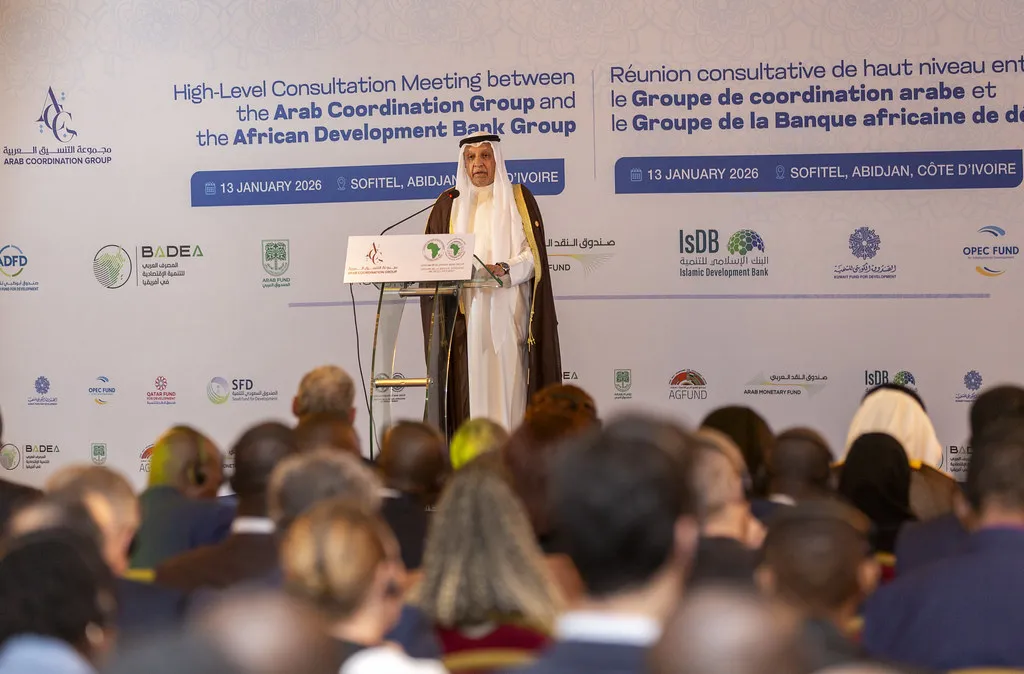
The Arab Coordination Group and the African Development Bank Group have launched an ambitious new strategic partnership aimed at transforming fragmented development cooperation into large-scale, coordinated investment across Africa. The initiative, formalized during a High-Level Consultation Meeting at the AfDB’s headquarters in Abidjan, represents a critical response to Africa’s widening development financing gap and establishes a roadmap for deploying billions of dollars in development capital more effectively.
The partnership announcement comes at a pivotal moment when Africa faces an estimated annual infrastructure financing gap of between $68 billion and $108 billion, according to African Development Bank assessments. With infrastructure needs alone requiring $130 billion to $170 billion annually, the continent’s development trajectory depends critically on mobilizing capital at unprecedented scale and speed.
Build the future you deserve. Get started with our top-tier Online courses: ACCA, HESI A2, ATI TEAS 7, HESI EXIT, NCLEX-RN, NCLEX-PN, and Financial Literacy. Let Serrari Ed guide your path to success. Enroll today.
Strategic Shift from Fragmentation to Coordination
The High-Level Consultation Meeting marked a deliberate pivot from ad-hoc project cooperation toward programmatic, large-scale co-investment aligned with Africa’s development priorities. This strategic recalibration reflects growing recognition among Arab development finance institutions that coordinated deployment of capital can generate significantly greater impact than isolated interventions.
The meeting culminated in the adoption of a Joint Declaration on Strategic Partnership, which articulates a shared political vision and translates it into operational priorities with clear implementation mechanisms. The declaration establishes institutional follow-up frameworks to guide the next phase of Arab-African partnership, moving beyond rhetorical commitments toward measurable outcomes.
Discussions focused on how the ACG and AfDB can jointly anchor Arab-African co-financing by leveraging their combined balance sheets, long-term and counter-cyclical financing capacities, sectoral expertise, and country platforms. Participants explored concrete pathways to enhance joint project preparation, harmonize financing approaches, strengthen policy dialogue, and support country-led development agendas while ensuring investments deliver measurable impact and long-term resilience.
Arab Coordination Group: Five Decades of Development Finance
Established in 1975, the Arab Coordination Group represents a strategic alliance providing coordinated responses to development finance challenges. Since its inception, the ACG has provided more than 13,000 development loans to over 160 countries globally, cementing its position as one of the most important and effective development partnerships at the international level.
The ACG comprises ten national, Arab regional, and international institutions, including the Abu Dhabi Fund for Development, Arab Bank for Economic Development in Africa, Arab Fund for Economic and Social Development, Arab Gulf Programme for Development, Arab Monetary Fund, Islamic Development Bank, Kuwait Fund for Arab Economic Development, OPEC Fund for International Development, Qatar Fund for Development, and Saudi Fund for Development.
In 2023 alone, the ACG collectively extended approximately $17 billion to fund nearly 500 operations across more than 90 countries. About 30 percent of these commitments were dedicated to Africa, aligned with the group’s historic $50 billion pledge made in November 2023 to support Africa’s development through 2030.
The group actively works to adopt best global practices in sustainable development while harmonizing policies governing financing operations across member institutions. This coordination enables the ACG to provide targeted solutions and optimized deployment of resources to meet developing nations’ diverse development needs.
Africa’s Critical Financing Gap
Africa’s development financing challenge extends far beyond infrastructure. The African Development Bank estimates that achieving the Sustainable Development Goals by 2030 in Africa requires approximately $1.3 trillion annually, equivalent to 42% of Africa’s 2023 GDP. This encompasses not only infrastructure but also education, health, climate resilience, and productivity-enhancing technologies.
Transport infrastructure alone accounts for 72.9% of the financing gap, followed by education at 10.4%, energy at 9.9%, and productivity-enhancing technologies at 6.8%. These figures reflect decades of underinvestment in critical development sectors, creating compounding challenges as Africa’s population approaches 1.7 billion by 2030.
The infrastructure deficit manifests in stark statistics: Africa’s median road density stands at approximately 12 kilometers per 100 square kilometers, compared with 42.5 kilometers in high-performing developing countries and 136 kilometers in high-income countries. Only about 27% of African roads are paved, far behind the global average of 49% and other developing countries at 35.4%.
Climate finance adds another layer of urgency, with an estimated gap of $213.4 billion annually through 2030. Insufficient domestic resources, compounded by failures of the global financial architecture to mobilize affordable finance at scale, have driven many African countries toward commercial borrowing on unfavorable terms, resulting in mounting debt vulnerabilities.
As of April 2024, 20 African countries were either in external debt distress or at high risk of it, with debt service payments consuming approximately 11% of the continent’s total revenues. This diverts crucial resources from investments in infrastructure, education, and health—all critical for economic transformation and long-term growth.
New African Financial Architecture: A Strategic Framework
The partnership aligns with the African Development Bank’s agenda to strengthen Africa’s financial sovereignty through a New African Financial Architecture, or NAFA. This initiative aims to better integrate development finance institutions, guarantee providers, insurers, capital markets, and private investors into a cohesive system capable of mobilizing resources at the scale Africa’s transformation requires.
AfDB President Dr. Sidi Ould Tah has championed NAFA as central to his Four Cardinal Points vision, which focuses on unlocking Africa’s capital potential, strengthening financial sovereignty, transforming demographic growth into a dividend, and delivering resilient infrastructure and value chains.
In December 2025, the African Development Bank convened global investors and private sector leaders in London for the inaugural Africa Private Capital Mobilisation Day, bringing together more than 150 senior decision-makers from private equity firms, sovereign wealth funds, pension funds, insurers, philanthropies, and development finance institutions. The event marked what participants described as a decisive shift from dialogue to execution.
Zambia has emerged as a strong supporter of the NAFA initiative, with President Hakainde Hichilema—one of the African Union’s Champions of Global Financial Architecture Reform—endorsing greater coherence and harmonization among Africa’s financial institutions, including multilateral development banks and regional funds, to scale up domestic resource mobilization and blended finance solutions.
Operational Partnership Framework
As a practical next step, the Joint Declaration provides for development of a Financing and Operational Partnership Framework to be considered in 2026. This framework will define specific modalities for co-financing structures, pipeline coordination, mutual reliance mechanisms, and regular joint programming between ACG institutions and the African Development Bank Group.
The framework aims to address persistent bottlenecks that have constrained Africa’s infrastructure financing. Despite annual investment needs estimated at $2.6 trillion globally for emerging markets and developing economies, the pipeline of bankable greenfield projects stands at just $1.2 trillion. The preparation of strong feasibility studies, market analysis, and viable business plans requires resources that often prove inadequate, resulting in high project rejection rates.
Neither major global infrastructure initiatives like the European Union’s Global Gateway nor the G7’s Partnership for Global Infrastructure and Investment have dedicated substantial plans for project preparation, highlighting a critical gap that the ACG-AfDB partnership aims to address through enhanced technical cooperation and knowledge sharing.
One decision can change your entire career. Take that step with our Online courses in ACCA, HESI A2, ATI TEAS 7, HESI EXIT, NCLEX-RN, NCLEX-PN, and Financial Literacy. Join Serrari Ed and start building your brighter future today.
African Development Fund: Supporting Vulnerable Countries
The Joint Declaration recognizes the central role of the African Development Fund, the AfDB Group’s concessional financing arm, in supporting low-income and fragile countries. The ADF serves 37 beneficiary countries across Africa, providing concessional resources critical for nations unable to access market-rate financing.
The recently concluded 17th replenishment of the African Development Fund mobilized $11 billion for Africa’s most vulnerable countries, demonstrating sustained donor commitment despite global economic headwinds. The declaration calls for exploring closer collaboration between ACG institutions and the ADF, potentially expanding the pool of concessional resources available to Africa’s poorest nations.
Recent ADF impact demonstrates the fund’s transformational potential. In 2024, climate action became a core priority, with the Climate Action Window successfully mobilizing $442 million and 99% of new ADF-funded projects incorporating climate resilience measures. Additionally, over 290,000 direct and indirect jobs were created for youth between ages 15 and 35 in 2024, while all ADF-supported operations now incorporate gender equality components.
Priority Investment Areas
The partnership will focus on critical sectors where Africa faces the most acute development challenges and where coordinated financing can generate maximum impact. Energy access emerges as a paramount priority, with nearly 600 million people in sub-Saharan Africa lacking access to grid electricity.
The African Development Bank’s Mission 300 initiative, developed in partnership with the World Bank, aims to extend electricity to 300 million Africans by 2030, with commitments exceeding $55 billion from the two institutions and other development partners. The ACG partnership could substantially accelerate progress toward this goal by channeling coordinated Arab development finance toward strategic energy projects.
Climate resilience represents another critical investment frontier. Africa contributes minimally to global greenhouse gas emissions yet suffers disproportionately from climate change impacts, including droughts, floods, desertification, and ecosystem degradation. The ACG has already demonstrated commitment to climate action, with a collective pledge of $24 billion for climate action financing by 2030, announced at COP27.
Food security challenges have intensified across the continent, exacerbated by climate variability, conflict, and global economic disruptions. The ACG previously announced a $10 billion initiative for food security, covering import costs for basic commodities like seeds, grains, and fertilizers while supporting medium and long-term food supply security in partner countries.
Regional integration and cross-border infrastructure development form another strategic priority. Transport, energy, and digital infrastructure connecting African nations remain inadequate, constraining intra-African trade and economic integration. The African Continental Free Trade Area’s success depends critically on improved connectivity, making cross-border infrastructure investment essential to unlocking Africa’s economic potential.
Private sector-led growth requires enabling infrastructure, access to finance, and supportive policy environments. The partnership aims to catalyze private capital mobilization alongside public finance, recognizing that achieving Africa’s development goals requires leveraging private sector resources and expertise at unprecedented scale.
Mobilizing Private Capital
A defining feature of the new partnership is its explicit focus on mobilizing private capital to complement public development finance. The African Development Bank estimates approximately $2.5 trillion in assets under management by pension funds, insurance companies, sovereign wealth funds, and other institutional investors on the African continent. The challenge lies in inducing these entities to allocate more resources to financing African infrastructure.
Blended finance has emerged as a critical tool for closing viability gaps. By combining concessional funding from development finance institutions with commercial capital, blended finance platforms reduce risk and unlock investment opportunities that might otherwise struggle to attract financing. Innovative mechanisms including green bonds, infrastructure debt funds, credit-enhancement instruments, and project preparation facilities are helping bridge the bankability divide.
According to the Global Infrastructure Hub, project preparation costs can represent up to 10% of total project value, making early-stage support essential for converting concepts into investment-ready opportunities. The ACG-AfDB partnership’s emphasis on joint project preparation directly addresses this bottleneck.
Governments across Africa are modernizing procurement regulations, improving public-private partnership frameworks, and strengthening investor protection policies to signal long-term stability. Countries including Rwanda, Kenya, Ghana, Morocco, and Senegal have made significant strides in adopting pro-investment legal reforms, creating more favorable environments for the type of large-scale, long-term infrastructure investment the partnership aims to catalyze.
Historical Context of Arab-African Cooperation
Arab-African development cooperation possesses deep historical roots extending beyond formal institutional frameworks. Cultural, religious, commercial, and geographical ties have connected Arab and African peoples for centuries, creating foundations for contemporary development partnerships.
The Arab Coordination Group’s commitment to Africa has grown substantially over recent decades. In recent years, approximately 30% of ACG commitments have been dedicated to African countries, reflecting recognition of the continent’s strategic importance and development potential. Individual ACG members have established specialized institutions focused on Africa, including the Arab Bank for Economic Development in Africa.
The partnership represents evolution from bilateral and project-specific cooperation toward systematic, programmatic engagement at scale. This transition reflects maturation of institutional relationships and growing sophistication in understanding Africa’s development challenges and opportunities.
Implementation Challenges and Risk Mitigation
Despite ambitious objectives, the partnership faces significant implementation challenges. Coordinating among multiple sovereign institutions with different mandates, operational procedures, and decision-making processes requires sustained commitment and innovative institutional arrangements. The Financing and Operational Partnership Framework must establish clear protocols for pipeline coordination, risk sharing, and project supervision to prevent bureaucratic friction from undermining efficiency gains.
Political and economic volatility in some African countries complicates long-term infrastructure investment. Fragile states and conflict-affected regions require specialized approaches balancing development imperatives with risk management. The partnership’s effectiveness will depend partly on its capacity to develop instruments suitable for diverse country contexts, from stable middle-income nations to fragile low-income countries.
Currency risks and exchange rate volatility present perennial challenges for infrastructure financing in Africa. Most African currencies lack depth and stability, while infrastructure projects generate revenues in local currency but may require hard currency for imported inputs or debt service. The partnership must develop hedging mechanisms and local currency financing solutions to mitigate these risks and make projects financially viable.
Climate change itself poses risks to infrastructure investments, potentially undermining assets through extreme weather events, rising sea levels, or changing precipitation patterns. Climate-resilient design and construction require upfront investments that may strain already tight budgets, yet omitting such provisions courts greater long-term losses. The partnership’s emphasis on climate resilience suggests awareness of these trade-offs.
Strategic Significance
The ACG-AfDB partnership arrives at a crucial juncture in global development finance. Traditional bilateral aid budgets face pressure in many donor countries, while the architecture of international development cooperation undergoes fundamental reassessment. South-South cooperation and innovative financing mechanisms gain prominence as complements to or partial substitutes for traditional North-South aid flows.
For Africa, the partnership represents opportunity to diversify development finance sources and strengthen bargaining power in negotiations with traditional partners. Arab development finance institutions bring not only capital but also experience with rapid infrastructure development, knowledge of operating in challenging environments, and cultural familiarity with many African contexts.
For ACG members, deeper engagement with Africa aligns with economic and strategic interests. Africa’s demographic trajectory, natural resource endowments, and economic growth potential create compelling investment opportunities. Systematic, coordinated engagement through the AfDB platform enables ACG institutions to deploy capital more effectively while managing risks through multilateral frameworks.
The partnership also signals African agency in shaping development finance architecture. Rather than passively receiving aid on terms dictated by external partners, African institutions increasingly broker strategic partnerships mobilizing resources aligned with African priorities. The AfDB’s convening power and technical expertise position it as an effective partner for coordinating diverse financing sources toward common objectives.
Looking Ahead
The success of the ACG-AfDB strategic partnership will ultimately be measured not by declarations or framework documents but by concrete outcomes: gigawatts of new electricity generation capacity, kilometers of paved roads, millions of people with improved access to clean water, jobs created, and poverty reduced.
The partnership’s ambitious scope—spanning energy, climate resilience, food security, regional integration, and private sector development—reflects the multifaceted nature of Africa’s development challenge. No single intervention or sector can unlock transformation; rather, coordinated investment across mutually reinforcing areas creates conditions for sustained, inclusive growth.
The Financing and Operational Partnership Framework scheduled for consideration in 2026 will provide critical early indication of whether institutional commitments translate into operational reality. The framework’s design will reveal whether partners can overcome bureaucratic and procedural obstacles to achieve the efficiency gains that motivate closer coordination.
Beyond immediate operational questions, the partnership raises larger questions about the future architecture of development finance. If Arab and African institutions demonstrate capacity for large-scale, effective cooperation outside traditional multilateral frameworks, it could inspire similar South-South partnerships globally. Conversely, if coordination proves too complex or impact disappoints, it may reinforce skepticism about alternatives to established institutions.
For millions of Africans facing daily realities of inadequate infrastructure, energy poverty, food insecurity, and limited economic opportunities, the partnership represents hope for accelerated progress. The next phase will determine whether that hope transforms into tangible improvements in living standards, economic prospects, and sustainable development across the continent.
The African Development Bank and Arab Coordination Group have set an ambitious agenda. Implementation will test institutional capacity, political commitment, and operational innovation. The stakes extend beyond the immediate participants to encompass Africa’s development trajectory and the evolving landscape of international development cooperation in the twenty-first century.
Ready to take your career to the next level? Join our Online courses: ACCA, HESI A2, ATI TEAS 7 , HESI EXIT , NCLEX – RN and NCLEX – PN, Financial Literacy!🌟 Dive into a world of opportunities and empower yourself for success. Explore more at Serrari Ed and start your exciting journey today! ✨
Track GDP, Inflation and Central Bank rates for top African markets with Serrari’s comparator tool.
See today’s Treasury bonds and Money market funds movement across financial service providers in Kenya, using Serrari’s comparator tools.
photo source: Google
By: Montel Kamau
Serrari Financial Analyst
16th January, 2026
Article, Financial and News Disclaimer
The Value of a Financial Advisor
While this article offers valuable insights, it is essential to recognize that personal finance can be highly complex and unique to each individual. A financial advisor provides professional expertise and personalized guidance to help you make well-informed decisions tailored to your specific circumstances and goals.
Beyond offering knowledge, a financial advisor serves as a trusted partner to help you stay disciplined, avoid common pitfalls, and remain focused on your long-term objectives. Their perspective and experience can complement your own efforts, enhancing your financial well-being and ensuring a more confident approach to managing your finances.
Disclaimer: This article is for informational purposes only and does not constitute financial advice. Readers are encouraged to consult a licensed financial advisor to obtain guidance specific to their financial situation.
Article and News Disclaimer
The information provided on www.serrarigroup.com is for general informational purposes only. While we strive to keep the information up to date and accurate, we make no representations or warranties of any kind, express or implied, about the completeness, accuracy, reliability, suitability, or availability with respect to the website or the information, products, services, or related graphics contained on the website for any purpose. Any reliance you place on such information is therefore strictly at your own risk.
www.serrarigroup.com is not responsible for any errors or omissions, or for the results obtained from the use of this information. All information on the website is provided on an as-is basis, with no guarantee of completeness, accuracy, timeliness, or of the results obtained from the use of this information, and without warranty of any kind, express or implied, including but not limited to warranties of performance, merchantability, and fitness for a particular purpose.
In no event will www.serrarigroup.com be liable to you or anyone else for any decision made or action taken in reliance on the information provided on the website or for any consequential, special, or similar damages, even if advised of the possibility of such damages.
The articles, news, and information presented on www.serrarigroup.com reflect the opinions of the respective authors and contributors and do not necessarily represent the views of the website or its management. Any views or opinions expressed are solely those of the individual authors and do not represent the website's views or opinions as a whole.
The content on www.serrarigroup.com may include links to external websites, which are provided for convenience and informational purposes only. We have no control over the nature, content, and availability of those sites. The inclusion of any links does not necessarily imply a recommendation or endorsement of the views expressed within them.
Every effort is made to keep the website up and running smoothly. However, www.serrarigroup.com takes no responsibility for, and will not be liable for, the website being temporarily unavailable due to technical issues beyond our control.
Please note that laws, regulations, and information can change rapidly, and we advise you to conduct further research and seek professional advice when necessary.
By using www.serrarigroup.com, you agree to this disclaimer and its terms. If you do not agree with this disclaimer, please do not use the website.
www.serrarigroup.com, reserves the right to update, modify, or remove any part of this disclaimer without prior notice. It is your responsibility to review this disclaimer periodically for changes.
Serrari Group 2025