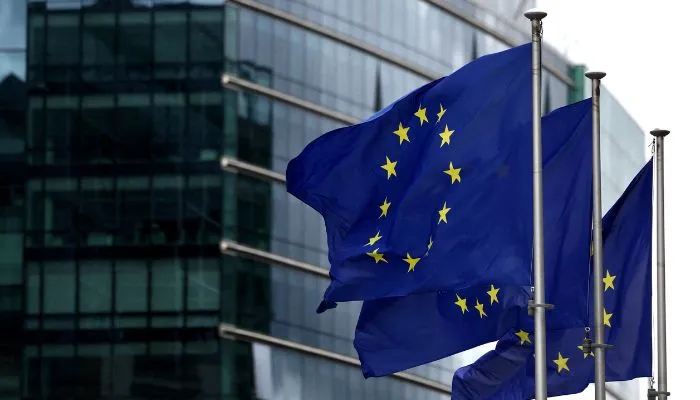












The European Union has officially removed South Africa from its list of “High-Risk Third Country Jurisdictions,” marking a significant milestone in the nation’s efforts to rehabilitate its financial compliance reputation and restore international confidence in its anti-money laundering and counter-terrorism financing frameworks. The decision, published on January 9, 2026, will take effect on January 29, 2026, and arrives as a direct consequence of South Africa’s successful exit from the Financial Action Task Force (FATF) grey list in October 2025.
National Treasury welcomed the development on Tuesday, January 13, 2026, describing it as the latest vote of confidence in the country’s sustained reform efforts to combat money laundering, terrorist financing, and strengthen the overall integrity of its financial system. The removal means that financial transactions between South Africa and EU member states will no longer be subjected to the heightened levels of regulatory scrutiny that have complicated trade flows, cross-border payments, and investment activity since the country’s addition to the high-risk list in August 2023.
Five other African countries—Burkina Faso, Mali, Mozambique, Nigeria, and Tanzania—were simultaneously removed from the EU’s high-risk list following their own exits from the FATF grey list during 2025. This collective delisting represents a notable moment for the African continent, where compliance reputations have often lagged behind actual reform efforts, and signals improving financial governance across multiple jurisdictions.
Build the future you deserve. Get started with our top-tier Online courses: ACCA, HESI A2, ATI TEAS 7, HESI EXIT, NCLEX-RN, NCLEX-PN, and Financial Literacy. Let Serrari Ed guide your path to success. Enroll today.
Understanding the EU High-Risk Designation
Under EU law, specifically Article 9(1) of Directive (EU) 2015/849, countries deemed to have strategic deficiencies in their systems for combating money laundering and terrorism financing must be identified to protect the proper functioning of the EU’s internal market. Financial institutions operating within the European Union are legally required to apply “enhanced due diligence” to transactions involving parties in countries classified as high risk.
Treasury officials explained that these enhanced measures result in more rigorous and intrusive checks, increased documentation requirements, continuous monitoring of transactions, and mandatory senior management approval for dealings with entities in listed jurisdictions. For businesses engaged in cross-border trade, these compliance obligations translate into slower transaction processing, higher operational costs, occasional delays in payment settlements, and in some cases, outright refusal by European banks to facilitate certain transactions deemed too risky or administratively burdensome.
“EU law requires that financial institutions in the EU must apply a higher level of scrutiny to transactions involving parties in countries deemed to be high risk (‘enhanced due diligence’), resulting in more rigorous and intrusive checks, increased documentation requirements, continuous monitoring and senior management approval for transactions,” Treasury stated in its announcement.
Such regulatory friction can significantly curb financial flows between affected countries and EU member states, creating disincentives to investment and complicating trade relationships at a time when South Africa can least afford additional economic headwinds. The designation affects not just large corporate transactions but also smaller businesses, exporters, and even individual South Africans receiving payments from European sources.
The Path from FATF Grey List to EU Delisting
South Africa’s placement on the EU high-risk list in August 2023 occurred as an automatic consequence of its grey-listing by the Financial Action Task Force in February 2023. The FATF, a global intergovernmental body that sets standards for combating money laundering, terrorist financing, and proliferation financing, identified strategic deficiencies in South Africa’s anti-money laundering and counter-financing of terrorism (AML/CFT) regime that warranted placing the country under increased monitoring.
The grey-listing reflected systemic weaknesses that had been exacerbated during the era of state capture, which saw a hollowing out of law enforcement capacity and the compromise of key financial institutions. Lax anti-money laundering measures had allowed wrongdoers to move money through the financial system without triggering adequate alarm bells, while failures to pursue prosecutions of individuals linked to state capture further undermined the country’s compliance credibility.
In response, a multidisciplinary team led by National Treasury embarked on an intensive reform program to address 22 specific action items identified by the FATF. These reforms included passing major legislative amendments in 2022, introducing strict requirements for identifying beneficial ownership to prevent the use of shell companies and trusts to hide illicit funds, improving risk-based supervision of designated non-financial businesses and professions, demonstrating sustained increases in mutual legal assistance requests to facilitate cross-border investigations, and strengthening law enforcement agencies’ capacity to investigate and prosecute financial crimes.
By June 2025, South Africa had substantially addressed all 22 items in the FATF action plan. A follow-up on-site assessment in July 2025 confirmed the sustainability of the reforms implemented, with senior government officials reaffirming their political commitment to maintaining and deepening the AML/CFT framework. This progress paved the way for South Africa’s removal from the FATF grey list on October 24, 2025, alongside Burkina Faso, Mozambique, and Nigeria.
The EU’s decision to delist South Africa follows directly from this FATF determination. In announcing the removal, the European Commission acknowledged that South Africa and the other five African states had “strengthened the effectiveness of their AML/CFT regimes and addressed technical deficiencies to meet the commitments in their action plans on the strategic deficiencies identified by the FATF.”
Practical Implications for Trade and Investment
The removal from the EU high-risk list carries both symbolic and practical significance for South Africa’s economic prospects. Symbolically, it represents international validation of the country’s reform efforts and a restoration of credibility that had been damaged by the state capture era and subsequent compliance failures. Practically, it eliminates mandatory enhanced due diligence requirements that had added friction to economic relationships with one of South Africa’s most important trading partners.
European banks and financial institutions are no longer legally obligated to apply the heightened scrutiny measures to South African transactions, though they retain the discretion to maintain their own risk assessment policies based on other factors. Treasury has been careful to manage expectations on this point, noting that “the removal of legislative obligations on EU financial institutions to conduct enhanced due diligence on South African-related transactions does not compel any financial institutions to rescind their risk assessment policies towards South Africa but allows willing EU financial institutions to adjust their risk assessment policies as they see fit.”
Nevertheless, the lifting of mandatory enhanced due diligence is expected to reduce compliance costs, accelerate transaction processing times, and improve investor confidence in South Africa as a destination for European capital. For exporters, particularly those in agriculture, manufacturing, and services sectors where European markets represent significant revenue sources, the delisting should ease payment processing and reduce instances where transactions are delayed or flagged for additional review.
The timing carries particular significance given uncertainties surrounding South Africa’s participation in the African Growth and Opportunity Act (AGOA), the U.S. trade preference program that provides eligible African countries with duty-free access to American markets for most exports. Should South Africa lose AGOA benefits—a possibility given ongoing tensions with the United States over various policy matters—the country may need to further strengthen trade ties with Europe to compensate for reduced access to U.S. markets. The EU delisting positions South Africa more favorably to pursue such deepened economic engagement.
One decision can change your entire career. Take that step with our Online courses in ACCA, HESI A2, ATI TEAS 7, HESI EXIT, NCLEX-RN, NCLEX-PN, and Financial Literacy. Join Serrari Ed and start building your brighter future today.
Remaining Challenges and Future FATF Evaluation
Despite the celebrations surrounding the delistings, National Treasury has been pointed in acknowledging that significant work remains. The removal from the FATF grey list and EU high-risk roster does not signify that all challenges in implementing South Africa’s AML/CFT system have been resolved. “Much work still needs to be done to strengthen deficiencies in the prevention, identification, investigation and prosecution of money laundering and terrorism financing,” Treasury stated.
SARS Commissioner Edward Kieswetter emphasized that “removing the designation of grey listing is not a finish line but a milestone on a long-term journey toward building a robust and resilient financial ecosystem.” His comments reflect awareness within government that maintaining the progress achieved requires sustained institutional commitment and operational excellence across multiple agencies.
South Africa will enter a new round of FATF mutual evaluation in the coming months, with the final report scheduled for presentation to the FATF plenary in October 2027. These evaluations assess both technical compliance with FATF recommendations and the effectiveness of implementation in practice. The evaluation will scrutinize whether South Africa has maintained the improvements demonstrated during the grey-listing period and whether promised reforms have become embedded in institutional operations rather than representing temporary compliance theater.
Treasury indicated that “preparation has begun in earnest, incorporating the lessons learnt and experience gained during the process to exit FATF greylisting.” The upcoming evaluation will test whether the legal frameworks enacted, supervisory improvements implemented, and enforcement capacities built during the reform period translate into sustained results in detecting, investigating, prosecuting, and preventing financial crimes.
Broader Economic Context and Outlook
The EU delisting arrives amid a cautiously improving economic outlook for South Africa. Economic growth is expected to reach approximately 1.5% in 2026, supported by lower inflation and declining interest rates—a significant improvement from the 0.7% growth recorded in both 2023 and 2024. Inflation is projected to remain broadly around the South African Reserve Bank’s target of 3%, benefiting from a stronger rand, lower fuel prices, and favorable agricultural conditions.
These macroeconomic improvements should provide the Reserve Bank with room to continue its interest rate cutting cycle, with market observers anticipating two 50-basis-point cuts during 2026 that would bring the repo rate down to 6.25%. Lower borrowing costs would provide relief to consumers and businesses while stimulating credit extension and economic activity more broadly.
However, the manufacturing sector continues to face headwinds, with confidence levels at their lowest since the pandemic and the Absa Purchasing Managers’ Index falling in December to levels that signal contractionary conditions. The sector’s struggles underscore the imperative of maintaining and expanding export markets, making the EU delisting and its potential to facilitate trade flows particularly timely.
The combination of regulatory improvements, macroeconomic stabilization, and the removal of reputational barriers to investment creates what business groups and financial commentators have framed as a credibility boost for South Africa. While the delisting represents neither a silver bullet for economic challenges nor an end to financial crime threats, it removes a symbolic and practical barrier between South Africa and one of its most critical economic partners.
Regional Significance and Continental Progress
The simultaneous delisting of six African countries from the EU high-risk list carries broader significance for the continent’s financial integration and economic development. Burkina Faso, Mali, Mozambique, Nigeria, Tanzania, and South Africa collectively represent substantial economic weight within their respective sub-regions, and their improved compliance status enhances prospects for regional trade, investment flows, and financial sector development.
For Nigeria, Africa’s largest economy by GDP and population, the delisting removes compliance friction in its extensive trading relationships with European partners and should facilitate both portfolio and direct investment flows. For Mozambique and Tanzania, countries with significant natural resource sectors requiring substantial capital investment for development, improved risk profiles may attract greater European participation in major energy and infrastructure projects.
The collective progress also demonstrates that African countries can successfully navigate international compliance frameworks when political will exists and appropriate technical assistance is mobilized. The FATF grey-listing process, while painful for affected countries in terms of reputational damage and practical compliance burdens, does appear to catalyze genuine reforms when national authorities commit to addressing identified deficiencies.
FATF President Elisa de Anda Madrazo described the removal of the four countries from the grey list as “a positive story for the continent of Africa,” highlighting improvements including South Africa’s revamped tools for detecting money laundering and terrorist financing and Nigeria’s enhanced coordination between agencies responsible for financial crime prevention.
Conclusion
South Africa’s removal from the European Union’s list of high-risk third-country jurisdictions, effective January 29, 2026, represents a hard-won achievement reflecting sustained reform efforts across government institutions and regulatory bodies. The delisting validates the work undertaken to strengthen anti-money laundering and counter-terrorism financing frameworks while removing practical barriers to trade and investment flows with European partners.
Yet as Treasury and regulatory authorities have emphasized, the achievement marks a milestone rather than a destination. Maintaining international confidence requires continued vigilance in preventing financial crimes, sustained capacity in investigating and prosecuting violations, and ongoing commitment to regulatory excellence across the financial sector. The upcoming FATF evaluation in 2027 will test whether improvements proven during the grey-listing period have become institutionalized or represent temporary compliance efforts.
For a country seeking to attract capital, rebuild institutions damaged during the state capture era, and reassert itself as Africa’s premier financial hub, the restoration of compliance credibility represents a crucial step. The EU delisting provides tangible evidence that South Africa can deliver on reform commitments when under pressure—a signal that should resonate with international investors, trading partners, and financial institutions as the country navigates complex economic and political challenges in the years ahead.
Ready to take your career to the next level? Join our Online courses: ACCA, HESI A2, ATI TEAS 7 , HESI EXIT , NCLEX – RN and NCLEX – PN, Financial Literacy!🌟 Dive into a world of opportunities and empower yourself for success. Explore more at Serrari Ed and start your exciting journey today! ✨
Track GDP, Inflation and Central Bank rates for top African markets with Serrari’s comparator tool.
See today’s Treasury bonds and Money market funds movement across financial service providers in Kenya, using Serrari’s comparator tools.
Photo source: Google
By: Montel Kamau
Serrari Financial Analyst
15th January, 2026
Article, Financial and News Disclaimer
The Value of a Financial Advisor
While this article offers valuable insights, it is essential to recognize that personal finance can be highly complex and unique to each individual. A financial advisor provides professional expertise and personalized guidance to help you make well-informed decisions tailored to your specific circumstances and goals.
Beyond offering knowledge, a financial advisor serves as a trusted partner to help you stay disciplined, avoid common pitfalls, and remain focused on your long-term objectives. Their perspective and experience can complement your own efforts, enhancing your financial well-being and ensuring a more confident approach to managing your finances.
Disclaimer: This article is for informational purposes only and does not constitute financial advice. Readers are encouraged to consult a licensed financial advisor to obtain guidance specific to their financial situation.
Article and News Disclaimer
The information provided on www.serrarigroup.com is for general informational purposes only. While we strive to keep the information up to date and accurate, we make no representations or warranties of any kind, express or implied, about the completeness, accuracy, reliability, suitability, or availability with respect to the website or the information, products, services, or related graphics contained on the website for any purpose. Any reliance you place on such information is therefore strictly at your own risk.
www.serrarigroup.com is not responsible for any errors or omissions, or for the results obtained from the use of this information. All information on the website is provided on an as-is basis, with no guarantee of completeness, accuracy, timeliness, or of the results obtained from the use of this information, and without warranty of any kind, express or implied, including but not limited to warranties of performance, merchantability, and fitness for a particular purpose.
In no event will www.serrarigroup.com be liable to you or anyone else for any decision made or action taken in reliance on the information provided on the website or for any consequential, special, or similar damages, even if advised of the possibility of such damages.
The articles, news, and information presented on www.serrarigroup.com reflect the opinions of the respective authors and contributors and do not necessarily represent the views of the website or its management. Any views or opinions expressed are solely those of the individual authors and do not represent the website's views or opinions as a whole.
The content on www.serrarigroup.com may include links to external websites, which are provided for convenience and informational purposes only. We have no control over the nature, content, and availability of those sites. The inclusion of any links does not necessarily imply a recommendation or endorsement of the views expressed within them.
Every effort is made to keep the website up and running smoothly. However, www.serrarigroup.com takes no responsibility for, and will not be liable for, the website being temporarily unavailable due to technical issues beyond our control.
Please note that laws, regulations, and information can change rapidly, and we advise you to conduct further research and seek professional advice when necessary.
By using www.serrarigroup.com, you agree to this disclaimer and its terms. If you do not agree with this disclaimer, please do not use the website.
www.serrarigroup.com, reserves the right to update, modify, or remove any part of this disclaimer without prior notice. It is your responsibility to review this disclaimer periodically for changes.
Serrari Group 2025