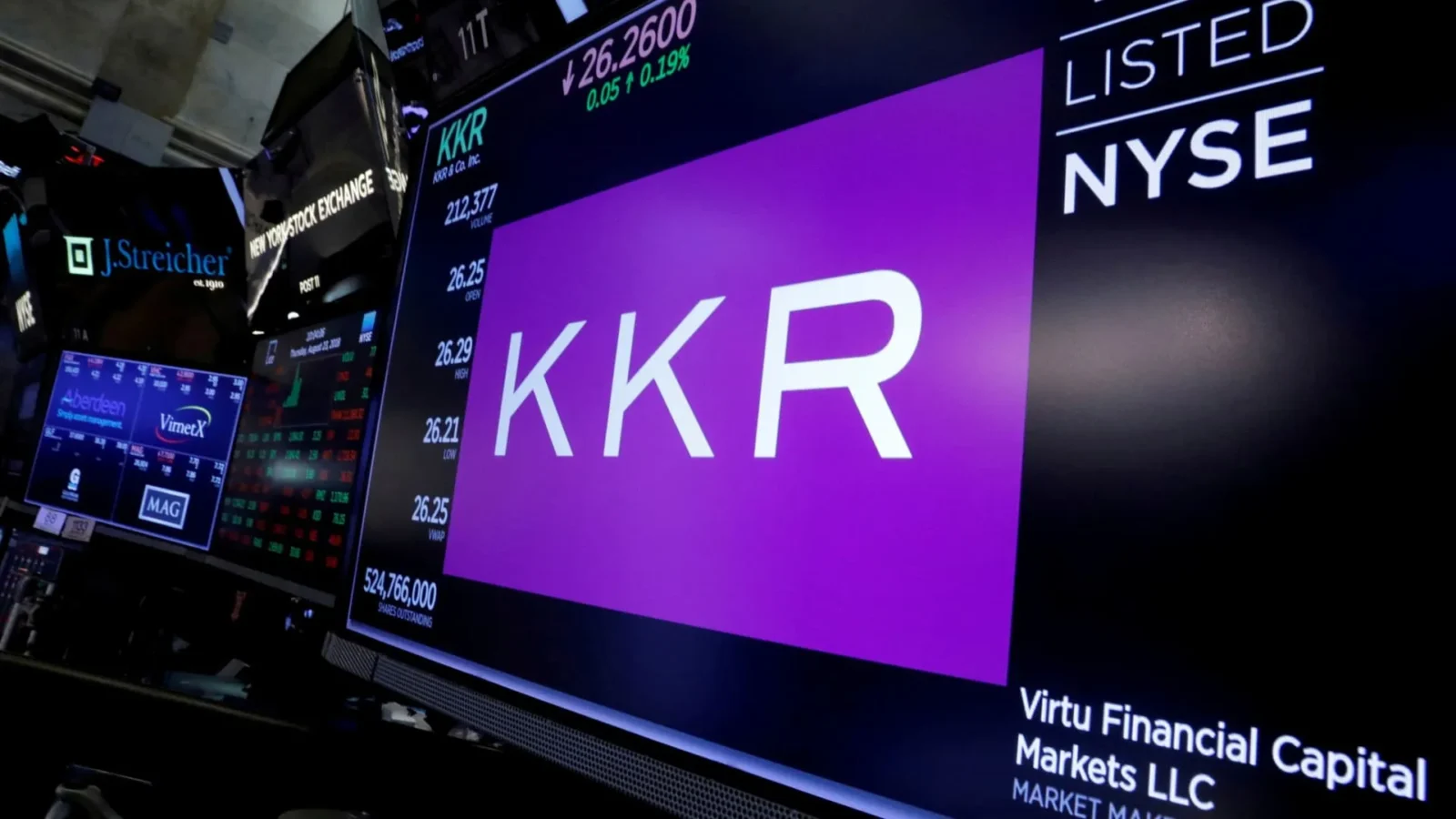
Global investment powerhouse KKR has successfully completed a $2.5 billion fundraise for its second Asia-Pacific private credit fund, marking a significant milestone in the firm’s regional expansion strategy and underscoring the rapidly evolving landscape of alternative financing across the world’s fastest-growing economies. The fundraising achievement, announced on January 15, 2026, demonstrates the increasing appetite among global institutional investors for exposure to Asia-Pacific credit opportunities at a time when traditional financing channels face mounting constraints and economic decoupling trends reshape global capital flows.
The Asia Credit Opportunities Fund II (ACOF II) attracted $1.8 billion in committed capital, complemented by an additional $700 million raised through separately managed accounts targeting similar investment opportunities. This structure positions ACOF II as the largest pan-regional performing private credit fund in Asia-Pacific, surpassing all comparable vehicles focused on performing credit investments across the diverse markets spanning from Japan and Korea to India, Southeast Asia, and Australia.
The successful close follows KKR’s inaugural Asia-Pacific-dedicated private credit fund, which secured $1.1 billion in 2022 and established the firm as a pioneering force in the region’s nascent but rapidly expanding private credit ecosystem. The dramatic increase in fund size—more than doubling the predecessor vehicle—reflects both the proven track record of KKR’s initial regional credit strategy and the structural expansion of private credit opportunities across Asia-Pacific markets as traditional bank lending continues to retreat from certain sectors and transaction types.
Build the future you deserve. Get started with our top-tier Online courses: ACCA, HESI A2, ATI TEAS 7, HESI EXIT, NCLEX-RN, NCLEX-PN, and Financial Literacy. Let Serrari Ed guide your path to success. Enroll today.
Robust Pipeline Demonstrates Execution Capabilities
KKR’s Asia Credit platform has already demonstrated substantial execution momentum, having signed 10 investments through ACOF II representing $1.9 billion in KKR commitments across various capital pools, translating to a total transaction volume of $4.6 billion. This early deployment activity, achieved even before the fund’s final close, illustrates the robust pipeline of opportunities available to specialized private credit providers in the region and validates KKR’s strategic positioning to capture these deals through its extensive local presence and relationships.
The investments span multiple jurisdictions and sectors, with KKR targeting opportunities in healthcare, education, real estate, logistics, and infrastructure—sectors characterized by strong secular growth drivers including rising consumption, urbanization, and digitalization that continue to fuel demand for flexible capital solutions. Since launching its Asia Credit strategy in 2019, KKR has closed over 60 investments in the Asia-Pacific region, accounting for approximately $8.3 billion invested by the firm and generating total transaction value of $27.5 billion.
Leadership Commentary Highlights Strategic Priorities
Diane Raposio, Partner and Head of Asia Credit & Markets at KKR, emphasized the strategic importance of the region in the firm’s global credit operations. “Asia is a key pillar of KKR’s global credit strategy,” Raposio stated. “The close of ACOF II demonstrates the breadth and scale we have built across our Asia credit platform, spanning both private and liquid markets. We are seeing growing investor demand for allocation to credit in the region.”
Raposio’s comments reflect broader market dynamics driving institutional capital toward Asia-Pacific credit opportunities. In a recent interview, she noted that three-quarters of the fund came from new investors, with diversification emerging as a central theme in conversations with global insurance companies, sovereign wealth funds, and pension funds. These institutions are increasingly turning to Asia for yield as pockets of the US and European credit markets become more crowded and competitive, diminishing return potential and creating incentives to explore alternative geographies.
SJ Lim, Managing Director and Head of Asia Private Credit at KKR, provided additional context on the structural drivers underpinning regional growth. “Private credit remains a relatively nascent yet compelling opportunity across the region,” Lim explained. “We see strong demand for private credit as an important tool for sponsors or corporates seeking flexible financing solutions and bespoke, partnership-oriented capital to support growth and meet their diverse needs. Our performing credit strategy is based on the same long term structural themes such as rising consumption, urbanization and digitalization that have underpinned the growth of private markets in Asia.”
Diverse Investor Base Reflects Global Demand
The fund received strong support from a diverse group of both new and existing investors, including insurance companies, public and corporate pension funds, sovereign wealth funds, family offices, banks, corporates, and asset managers. This broad investor composition underscores the appeal of Asia-Pacific private credit across different institutional investor types, each seeking to capture the region’s growth dynamics while diversifying away from increasingly saturated Western markets.
The significant proportion of new investors—75% according to KKR executives—represents a notable validation of the firm’s regional strategy and suggests that institutional allocators are expanding their Asia-Pacific exposure beyond traditional equity and public debt instruments. The participation of regional investors, including sovereign wealth funds and pension schemes from South Korea, Singapore, Hong Kong, and Australia, further demonstrates that local capital is also recognizing the opportunities within their own markets, reducing dependence on Western capital sources and deepening market liquidity.
Investment Strategy and Thematic Focus
ACOF II will pursue investments in performing privately originated credit, targeting opportunities across three primary investing themes: senior and unitranche direct lending, capital solutions, and collateral-backed investments. This multi-faceted approach allows KKR to address diverse financing needs across the capital structure, from senior secured lending to more structured capital solutions that combine debt and equity characteristics.
The senior and unitranche direct lending strategy focuses on providing flexible financing to mid-market companies that may find traditional bank lending too restrictive or unavailable due to regulatory constraints on bank balance sheets. Capital solutions encompass a broader range of financing structures, including acquisition financing, growth capital, and refinancing transactions that help companies navigate complex corporate events or capitalize on market opportunities. Collateral-backed investments leverage specific asset pools—such as receivables, real estate, or equipment—to provide secured financing with enhanced downside protection.
KKR’s Asia Credit platform seeks to provide bespoke private credit solutions to companies and sponsors, harnessing the firm’s investment capabilities and expertise as one of the largest credit managers globally. The Asia Credit team leverages KKR’s local and global resources to source, diligence, and execute investment opportunities, providing borrowers with customized financing and value creation potential while ensuring robust lender capital protections through comprehensive documentation and covenant packages.
Asia-Pacific Private Credit Market: A Region on the Rise
The successful fundraise occurs against the backdrop of explosive growth in Asia-Pacific private credit, with the region emerging as the next frontier for alternative financing. Despite representing the fastest-growing economic region globally and accounting for a significant portion of worldwide GDP growth, Asia-Pacific currently hosts less than 5% of global private credit assets under management, creating a substantial opportunity for expansion as the market matures.
Multiple structural factors are driving the expansion of private credit in Asia-Pacific. Traditional banks face increasing regulatory constraints that limit their ability to provide flexible, customized financing solutions, particularly for mid-market companies, acquisition financing, and transactions requiring rapid execution or complex structuring. The maturation of private equity markets across the region has created a growing pipeline of sponsor-backed transactions requiring debt financing, while corporate borrowers increasingly seek alternatives to bank lending that offer greater flexibility, longer tenors, and partnership-oriented capital providers.
According to industry analysts, Asia-Pacific private credit assets under management reached approximately $120 billion by 2024, representing significant growth from minimal levels just a decade ago but still constituting a fraction of the market size in North America and Europe. This creates substantial runway for continued expansion, particularly as regional companies gain comfort with private credit as a viable financing alternative and as more specialized managers establish dedicated regional platforms.
Industry experts highlight that demand for private credit in 2026 will concentrate in capital-intensive sectors where banks have meaningfully retreated. Real estate remains a core driver, particularly in Australia, South Korea, India, Hong Kong, and Southeast Asia, where significant refinancing walls, tighter bank regulation, and constrained balance sheets have created persistent demand for development finance, bridge loans, and transitional capital. Digital infrastructure, renewable energy projects, and the energy transition more broadly represent additional high-growth areas attracting private credit capital.
One decision can change your entire career. Take that step with our Online courses in ACCA, HESI A2, ATI TEAS 7, HESI EXIT, NCLEX-RN, NCLEX-PN, and Financial Literacy. Join Serrari Ed and start building your brighter future today.
Economic Tailwinds Support Regional Growth
Asia-Pacific’s economic fundamentals provide strong support for private credit expansion. The region is projected to account for more than half of global GDP growth over the coming decade, driven by demographic advantages including a rising middle class, ongoing urbanization that fuels infrastructure and real estate demand, and increasing consumption as household incomes rise. These secular trends create persistent financing needs across multiple sectors, from consumer-facing businesses scaling to meet growing demand to infrastructure projects supporting urban expansion.
Urbanization is rapidly reshaping Asian economies, with countries like India, Indonesia, and Vietnam experiencing substantial population shifts from rural to urban areas. By 2030, over 55% of Asia’s population is expected to live in cities, fueling demand for housing, transportation, utilities, and services while higher education levels and female workforce participation boost productivity and innovation. This urban transformation requires massive capital investment in both physical infrastructure and the businesses that serve urban populations.
Private consumption across Asia is projected to reach $26.4 trillion by 2027, outpacing the United States and creating substantial opportunities for companies serving consumer markets. This consumption growth, combined with rising incomes and expanding access to credit among Asian consumers, underpins demand for private credit financing across retail, healthcare, education, and other consumer-oriented sectors where companies require growth capital to scale operations and capture market share.
Geopolitical Dynamics and Market Diversification
Geopolitical factors are also influencing institutional investor allocation decisions, with economic decoupling between major powers prompting firms to broaden geographic exposure and hedge geopolitical risks. The increasing focus on supply chain resilience and regional trade integration is driving more intra-regional trade within Asia-Pacific, helping the region decouple from US and European markets and creating financing opportunities for companies participating in these evolving trade corridors.
Regional trade agreements and economic integration initiatives are facilitating cross-border commerce and investment flows, while government policies across the region increasingly emphasize domestic consumption and technological self-sufficiency. These dynamics create opportunities for private credit providers who can navigate multiple jurisdictions, understand local market nuances, and structure cross-border transactions that support regional business expansion.
The diversification imperative extends beyond geography to encompass market cycles and correlation patterns. Asia-Pacific credit markets have demonstrated resilience during periods of global volatility, with corporate credit fundamentals remaining sound, leverage levels moderating, and supply remaining disciplined. Even high-yield segments weathered global rate volatility throughout 2025, underscoring the region’s robust credit markets and the careful credit selection practiced by experienced managers.
KKR’s Broader Asia Strategy and Track Record
The private credit fundraise complements KKR’s broader Asia-Pacific investment strategy, which encompasses multiple asset classes including private equity, infrastructure, and real estate. The firm is simultaneously raising a $15 billion fifth Asia private equity fund, which would rank among the region’s largest such fundraisings and demonstrates KKR’s conviction in Asian market opportunities across the capital structure.
KKR has delivered strong performance from its Asian investments, with the third and fourth Asia private equity funds generating internal rates of return above 20%. The firm expects Asia-Pacific to account for half of its global private equity distributions in 2025, highlighting the region’s contribution to overall firm performance and the successful monetization of investments as exit markets improve.
Recent exit activity underscores the vibrant capital markets environment supporting private equity and private credit strategies. KKR has executed major exits including the sale of a 19.9% stake in LOGISTEED to Japan Post for 142 billion yen, the sale of Japanese retailer Seiyu for $2.55 billion, and the exit of its controlling stake in JB Chemicals and Pharmaceuticals in India for $1.4 billion. These transactions demonstrate that robust exit markets—including improving IPO volumes and strategic buyer appetite—are facilitating capital recycling and investor distributions, which in turn supports new fundraising efforts.
Global Credit Platform Provides Competitive Advantage
KKR’s success in Asia-Pacific private credit is underpinned by its global credit platform, which has evolved over two decades into one of the largest in the world. As of September 30, 2025, KKR manages approximately $282 billion of credit assets globally, including approximately $143 billion in leveraged credit, approximately $131 billion in private credit, and approximately $8 billion in strategic investments. This scale provides significant advantages in sourcing opportunities, conducting due diligence, structuring complex transactions, and supporting portfolio companies through various market cycles.
The firm employs approximately 250 credit investment professionals across 12 offices globally, enabling both local market expertise and cross-border coordination on regional and global transactions. This infrastructure allows KKR to leverage insights and relationships from mature markets like the United States and Europe to inform its approach in Asia-Pacific, while also tailoring strategies to local market conditions, regulatory frameworks, and business practices.
KKR’s approach emphasizes proprietary sourcing, capital preservation, and active portfolio management to generate long-term capital appreciation and attractive risk-adjusted returns. The firm’s ability to invest across the capital structure and liquidity spectrum—from senior secured debt to mezzanine financing and special situations—provides flexibility to pursue the most compelling opportunities while managing risk through diversification across structure, industry, and geography.
Regional Market Dynamics and Country-Specific Opportunities
Within Asia-Pacific, KKR targets credit investments across Australia, Greater China, India, Japan, Korea, New Zealand, and Southeast Asia, recognizing that each market presents distinct characteristics, opportunities, and challenges. Australia, for instance, offers risk profiles similar to the United States and Europe but with fewer capital providers locally, resulting in pricing premiums and more robust lender protections in documentation. KKR recently announced an agreement to acquire Westpac’s Rams mortgage portfolio valued at $21.4 billion, demonstrating opportunities to partner with banks seeking balance sheet optimization.
Japan and South Korea present substantial opportunities for corporate carve-outs and restructuring transactions as companies optimize their portfolios and respond to shareholder activism. KKR has completed notable transactions including the privatization of Fuji Soft and Topcon in Japan, as well as the acquisition of SK Group’s waste and water treatment business in Korea. Corporate reforms in both countries, combined with attractive valuations relative to other developed markets, create a favorable environment for private capital deployment.
India and Southeast Asia represent high-growth markets characterized by rapidly expanding middle classes, rising consumption, and substantial infrastructure investment needs. India’s affluent population is expected to increase nearly tenfold between 2010 and 2028, with incremental income increasingly directed toward education and healthcare—two sectors where KKR has built significant exposure. Similar dynamics are evident across Southeast Asian markets including Indonesia, Vietnam, Thailand, and the Philippines, where private healthcare and education have generated compelling investment opportunities.
Greater China, including mainland China and Hong Kong, presents a complex and evolving opportunity set. While regulatory uncertainties and geopolitical tensions create challenges, the market’s scale and the ongoing development of domestic services industries, along with improving IPO exit markets in Hong Kong and mainland exchanges, maintain investor interest in selective opportunities. KKR’s approach emphasizes partnering with quality companies serving domestic consumption and business services markets, areas less exposed to international trade tensions.
Market Outlook and Future Trajectory
Looking ahead to 2026 and beyond, industry participants expect continued growth in Asia-Pacific private credit markets, supported by structural drivers rather than cyclical factors. The retreat of traditional banks from certain lending activities shows no signs of reversing despite potential regulatory relief, while companies increasingly seek flexible financing options that can accommodate growth plans, acquisition strategies, and operational needs without the constraints of traditional bank lending.
Market analysts project that Asia credit markets will deliver moderate returns in 2026, driven by stable fundamentals and selective value in higher-quality issuers rather than broad market rallies. Credit selection and thematic focus will prove increasingly important as valuations in some segments reach elevated levels, requiring disciplined underwriting and careful risk assessment to generate attractive risk-adjusted returns.
Demographic trends favor income-generating assets as populations age across developed Asian markets like Japan, Korea, and Singapore, creating demand from institutional investors including pension funds and insurance companies for yield-bearing investments with downside protection. Simultaneously, emerging markets across the region continue to generate growth-oriented opportunities as economic development proceeds and financing needs expand.
The expansion of private credit in Asia-Pacific is also facilitating market maturation through the development of specialized expertise, standardization of documentation and market practices, and increasing comfort among borrowers with private credit as a viable financing alternative. As more managers establish dedicated regional platforms and demonstrate consistent performance through economic cycles, investor confidence in the asset class should continue strengthening, supporting further capital inflows and market development.
Implications for Stakeholders
For institutional investors, the growth of Asia-Pacific private credit offers diversification benefits beyond traditional fixed income allocations, access to attractive yields in a persistent low-rate environment, and exposure to the region’s economic growth dynamics. The relatively nascent state of the market creates opportunities for early entrants to establish relationships with experienced managers and access transactions with favorable terms before market maturation potentially compresses spreads and reduces pricing premiums.
For corporate borrowers across the region, the expansion of private credit options provides welcome alternatives to traditional bank lending, particularly for companies requiring customized financing structures, longer tenors, or partnership-oriented capital providers willing to support growth initiatives and corporate transformations. The increasing availability of flexible capital should support business expansion, consolidation activity, and infrastructure development across multiple sectors.
For the broader financial ecosystem, the development of private credit markets enhances overall market efficiency by providing additional financing channels, improving price discovery, and creating competition that can benefit borrowers while offering investors risk-adjusted return opportunities. The growth of private credit also represents a structural shift in financial intermediation, with specialized asset managers playing an increasingly important role alongside traditional banks in meeting corporate financing needs.
Conclusion
KKR’s successful $2.5 billion fundraise for its second Asia-Pacific private credit fund represents a significant milestone in the development of regional alternative financing markets and validates the firm’s strategic focus on capturing opportunities across this diverse and dynamic region. The substantial increase in fund size relative to its predecessor, the strong participation from new investors, and the robust early deployment activity all point to growing institutional conviction in Asia-Pacific private credit as an essential component of diversified portfolios.
As traditional banks continue retreating from certain lending activities due to regulatory constraints and capital allocation decisions, private credit providers like KKR are positioned to fill the resulting financing gap while generating attractive returns for investors. The combination of strong economic fundamentals, secular growth drivers, improving exit markets, and structural market expansion creates a compelling backdrop for continued private credit growth across Asia-Pacific.
With its established platform, experienced team, proven track record, and comprehensive global resources, KKR appears well-positioned to capitalize on the region’s evolution as a major private credit market. The successful fundraise and early investment activity through ACOF II demonstrate both the firm’s execution capabilities and the substantial opportunity set available to sophisticated private credit managers operating across Asia-Pacific’s diverse markets. As the region continues its economic ascent and financial market development, private credit is likely to play an increasingly central role in supporting corporate growth, facilitating transactions, and generating returns for institutional investors seeking exposure to Asia’s compelling long-term growth trajectory.
Ready to take your career to the next level? Join our Online courses: ACCA, HESI A2, ATI TEAS 7 , HESI EXIT , NCLEX – RN and NCLEX – PN, Financial Literacy!🌟 Dive into a world of opportunities and empower yourself for success. Explore more at Serrari Ed and start your exciting journey today! ✨
Track GDP, Inflation and Central Bank rates for top African markets with Serrari’s comparator tool.
See today’s Treasury bonds and Money market funds movement across financial service providers in Kenya, using Serrari’s comparator tools.
Photo source: Google
By: Montel Kamau
Serrari Financial Analyst
15th January, 2026