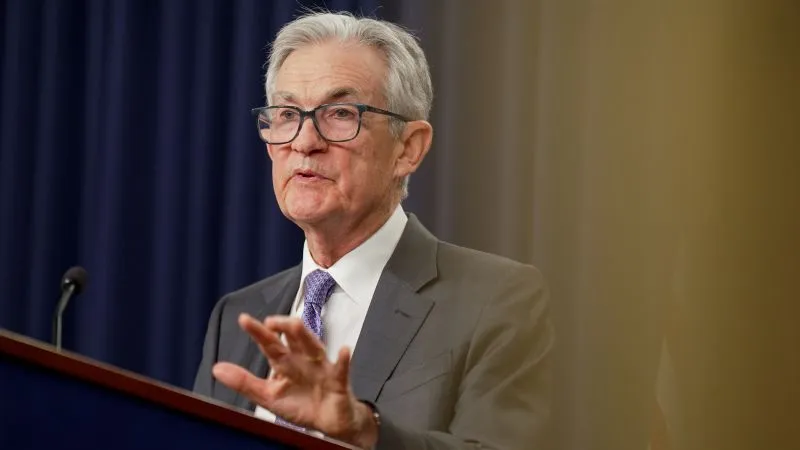
The Department of Justice’s criminal investigation into Federal Reserve Chair Jerome Powell has intensified debate among global investors about the need to diversify portfolios beyond United States assets, as concerns mount over the ongoing independence of the central bank and broader American institutional stability. While many market participants view the probe as political theater likely to fizzle out, the unprecedented nature of the move has nonetheless reinforced arguments for reducing exposure to concentrated U.S. holdings.
News of the DOJ’s criminal probe raised the specter of what some strategists have termed the “Sell USA” trade—a strategy of systematically reducing exposure to American assets amid concerns about economic, political, or institutional stability. This approach was extensively discussed in the wake of last year’s tariff-induced market volatility but ultimately failed to gain significant traction as U.S. markets demonstrated resilience.
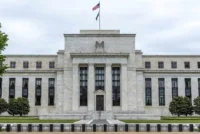
The investigation came to light on Sunday when Powell issued a statement revealing that the Federal Reserve had been served with grand jury subpoenas on Friday, threatening criminal indictment related to his testimony before the Senate Banking Committee in June concerning a multi-year, $2.5 billion project to renovate historic Federal Reserve office buildings in Washington, D.C.
Build the future you deserve. Get started with our top-tier Online courses: ACCA, HESI A2, ATI TEAS 7, HESI EXIT, NCLEX-RN, NCLEX-PN, and Financial Literacy. Let Serrari Ed guide your path to success. Enroll today.
Powell Calls Investigation Political Intimidation
In his strongly worded statement, Powell characterized the investigation as a transparent attempt at political intimidation designed to influence monetary policy. “The threat of criminal charges is a consequence of the Federal Reserve setting interest rates based on our best assessment of what will serve the public, rather than following the preferences of the President,” Powell declared, drawing a direct line between the investigation and President Donald Trump’s persistent criticism of the Fed’s interest rate policies.
“This is about whether the Fed will be able to continue to set interest rates based on evidence and economic conditions—or whether instead monetary policy will be directed by political pressure or intimidation,” Powell continued, framing the investigation as fundamentally a question about central bank independence rather than genuine concerns about his congressional testimony or building management.
The Fed chair emphasized his commitment to institutional independence across political administrations. “I have served at the Federal Reserve under four administrations, Republicans and Democrats alike. In every case, I have carried out my duties without political fear or favor, focused solely on our mandate of price stability and maximum employment. Public service sometimes requires standing firm in the face of threats,” Powell stated.
Swift Backlash from Political and Financial Leaders
The investigation drew immediate and sharp condemnation from a
broad coalition spanning former Federal Reserve chairs, current lawmakers from both parties, global central bank leaders, and prominent Wall Street executives. The breadth of support for Powell underscored the gravity with which many view threats to Fed independence.
Senator Thom Tillis, a North Carolina Republican and member of the Senate Banking Committee, issued one of the most forceful statements, declaring he would oppose any nominee by Trump to replace Powell as chair or to serve on the Federal Reserve Board “until this legal matter is fully resolved.” His stance represented a rare public break between a Republican senator and a Republican president on a matter of executive branch policy.
Other members of Congress expressed similar concerns about the implications for Fed independence. The investigation’s timing—coming just months before Powell’s term as chair expires in May—raised questions about whether it was intended to pressure the central bank on monetary policy or to lay groundwork for justifying his non-reappointment.
Former Federal Reserve chairs, who typically maintain studied neutrality on matters involving their successors, reportedly conveyed private messages of support for Powell, though most refrained from public comment. The rare public alignment of current and former Fed leadership on defending institutional independence reflected the extraordinary nature of the situation.
Trump Denies Knowledge, Continues Criticism
President Trump, when asked about the investigation in a brief interview with NBC News, denied having any knowledge of the Justice Department’s actions. “I don’t know anything about it, but he’s certainly not very good at the Fed, and he’s not very good at building buildings,” Trump said, continuing his pattern of criticizing Powell’s performance even while distancing himself from the investigation.
The president’s denial came despite his well-documented campaign of pressure against Powell over interest rate policy. Trump has repeatedly and publicly criticized the Fed chair for not cutting interest rates more aggressively, at various times calling Fed officials “boneheads” and once referring to Powell—whom Trump himself nominated to the position in 2017—as a golfer who cannot putt.
Trump’s criticisms intensified during his second term, as he hectored the central bank to implement rate cuts even after the Fed had already implemented three consecutive quarter-point reductions beginning in September. The pressure continued despite the Fed’s mandate to set monetary policy based on economic conditions and data rather than political preferences.
The president has made no secret of his intention to replace Powell when his term as chair expires in May. According to reports, the two leading contenders for the position are believed to be former Fed Governor Kevin Warsh and Kevin Hassett, the current director of the National Economic Council. Trump stated in a recent interview with The New York Times that he had already selected a replacement for Powell.
The Renovation Controversy
The specific focus of the DOJ investigation centers on Powell’s June testimony to Congress regarding the Federal Reserve’s headquarters renovation project. The initiative to modernize the Fed’s decades-old buildings—which included necessary upgrades such as removing asbestos and updating electrical and ventilation systems—saw costs escalate significantly from initial projections, drawing criticism from Trump allies.
Trump administration officials, particularly Federal Housing Finance Agency Director Bill Pulte and Office of Management and Budget Director Russell Vought, have accused Powell of mismanaging the project. Representative Anna Paulina Luna, a Florida Republican, first referred Powell to the DOJ nearly six months ago, alleging potential crimes of perjury and false statements to federal officials in connection with his renovation testimony.
The tension over the project spilled into public view in July when Trump joined Powell on a tour of the renovation site. During the visit, Powell corrected Trump in front of reporters about the project’s costs, with the visible tension between the two men becoming a subject of media commentary. Trump subsequently threatened to sue Powell over the renovation, saying in December that he was considering “a suit against Powell for incompetence.”
The Federal Reserve has maintained that the renovations were necessary modernizations of aging infrastructure and that the agency made every effort to keep Congress informed about the project’s evolution through testimony and public disclosures. Powell ordered the Fed’s inspector general to review the building expansion following the criticism, acknowledging legitimate oversight concerns while defending the project’s necessity.
A Justice Department spokesperson declined to comment on the specific investigation but stated that the attorney general had instructed U.S. attorneys to “prioritize investigating any abuse of taxpayer dollars.” This justification drew immediate pushback from critics who noted that the Federal Reserve is not funded through taxpayer appropriations but rather through fees on services and income from its investment portfolio.
One decision can change your entire career. Take that step with our Online courses in ACCA, HESI A2, ATI TEAS 7, HESI EXIT, NCLEX-RN, NCLEX-PN, and Financial Literacy. Join Serrari Ed and start building your brighter future today.
Market Reaction: Muted But Meaningful
Despite the extraordinary nature of a criminal investigation targeting a sitting Federal Reserve chair, initial market reaction was notably restrained. The U.S. dollar slipped modestly following the news, while Treasury yields remained largely unchanged, suggesting investors were viewing the development through a lens of political theater rather than genuine legal jeopardy or immediate policy consequences.
However, several strategists and portfolio managers warned that the muted initial response should not be interpreted as dismissal of potential longer-term implications for U.S. asset allocation. Market participants have grown somewhat accustomed to sweeping and sharp policy changes under the Trump administration, developing what one analyst described as policy shock fatigue.
“The shock factor that comes with the geopolitical and policy uncertainty is reducing,” said Olumide Owolabi, senior portfolio manager at Neuberger Berman, suggesting that markets have adapted to a higher baseline level of political and policy volatility that would have triggered more significant reactions in previous eras.
The Case for Diversification Strengthens
For some institutional investors, however, the Powell investigation represented a data point that reinforced existing convictions about the prudence of geographic diversification. “We maintain a favorable view on international diversification, and this event reinforces that stance,” said Seth Meyer, global head of client portfolio management at Janus Henderson, articulating a perspective shared by numerous asset managers.
Tom Graff, chief investment officer at Facet in Phoenix, Maryland, noted that a Federal Reserve compromised by political pressure would likely prove detrimental to longer-term bonds and the dollar. “We added to non-U.S. equities in December and have been underweight longer-term bonds for the last year, so I feel we are well positioned here,” Graff said, though he emphasized that he did not foresee a mass exodus from U.S. assets similar to the “Sell USA” trade that failed to materialize previously.
Colin Graham, head of multi-asset strategies at Robeco in London, suggested that while immediate market impacts might be limited, cumulative risks could eventually trigger more significant shifts in asset allocation. “It could be one of these things that happens very slowly, glacially for years and then suddenly very quickly,” Graham observed. “At the moment they might not be changing, but as the cumulative risk grows, then you will see people deciding they want to go elsewhere.”
The concern centers not only on potential Federal Reserve policy errors resulting from political pressure but also on broader questions about American institutional stability. Meyer noted that “U.S. equities and the dollar could come under pressure as global investors demand a higher risk premium for U.S. assets” if perceptions of institutional degradation become more widespread.
Fed Independence as Credit Rating Factor
The investigation’s implications extend beyond equity and currency markets to sovereign credit considerations. Fitch Ratings emphasized on Monday that it views the Federal Reserve’s independence as a key supporting factor for its AA+ rating on U.S. sovereign debt, highlighting how central bank autonomy connects directly to creditworthiness assessments.
This connection underscores the broader stakes involved in the Powell investigation. Concerns about Fed independence are emerging alongside questions about U.S. fiscal credibility, with the episode adding to periodic anxieties about American institutional stability that have surfaced in credit markets over recent years.
For international investors, the independence of the Federal Reserve has long been considered a fundamental pillar of U.S. financial system credibility. Any erosion of that independence could theoretically justify demanding higher yields on U.S. government debt to compensate for increased policy risk, potentially raising borrowing costs for the federal government and rippling through the entire economy.
Thierry Wizman, global foreign exchange and rates strategist at Macquarie, suggested that concerns about Fed independence would likely “give investors another excuse to diversify out of dollars,” particularly as questions about monetary policy autonomy compound existing worries about fiscal sustainability and political polarization.
Historical Context and Precedent
The criminal investigation of Powell represents an unprecedented escalation in tensions between the executive branch and the Federal Reserve. While presidents have frequently expressed frustration with Fed policy decisions—and Trump himself repeatedly criticized Powell during his first term—the deployment of criminal investigation tools against a sitting Fed chair crosses into uncharted territory for the modern era of central banking.
Previous episodes of tension between presidents and Fed chairs, including President Richard Nixon’s pressure on Arthur Burns in the 1970s and President George H.W. Bush’s criticism of Alan Greenspan in the early 1990s, never involved criminal investigations or threats of indictment. The current situation thus establishes new precedent regarding the tools available to an administration seeking to influence monetary policy.
Legal scholars have noted that while Powell, like any public official, is subject to criminal law if he committed genuine offenses, the use of criminal investigation as leverage in what appears to be fundamentally a policy dispute raises serious questions about prosecutorial independence and the appropriate scope of Justice Department authority.
Looking Ahead: Succession and Systemic Questions
As Powell’s term as chair approaches its May expiration, the investigation adds another layer of complexity to an already fraught transition period. The probe sends what many observers view as a chilling message not only to Powell but to whoever might next lead the Federal Reserve, suggesting that disagreement with administration preferences on interest rates could trigger aggressive responses.
This dynamic raises concerns about whether qualified candidates might be deterred from accepting the Fed chair position if they believe it requires choosing between professional independence and potential legal jeopardy. The quality and independence of central bank leadership depends partly on the willingness of accomplished individuals to serve in roles that, while influential, can be politically contentious.
Some analysts speculate that Powell might choose to remain as a Federal Reserve governor after his term as chair expires, potentially denying Trump the opportunity to stack the board with another appointee. While unconventional, such a move would be within Powell’s rights, as his term as a governor extends through 2028.
Charles Myers, chairman of advisory firm Signum Global Advisors, captured the uncertainty facing markets: “The risk is that Trump could push too far on this,” suggesting that while markets have so far absorbed the investigation relatively calmly, there exists potential for more severe disruption if the situation escalates further.
Conclusion: Slow-Moving Risk with Potentially Sudden Impact
For now, global financial markets appear to be taking the Powell investigation in stride, pricing in political noise rather than fundamental shifts in U.S. institutional quality. Several factors continue to underpin the case for U.S. asset allocation, including resilient economic growth, declining inflation pressures, and momentum from AI-related capital investments.
However, beneath this surface calm, institutional investors are quietly reassessing their exposure to what they perceive as growing U.S. institutional risk. The investigation of Powell represents one element in a broader pattern of challenges to established norms and institutions, each individually perhaps manageable but collectively raising questions about American exceptionalism in governance and policy credibility.
Whether these concerns translate into actual portfolio shifts—and whether any such shifts prove temporary or mark the beginning of a longer-term reallocation away from U.S. assets—remains to be seen. But the DOJ probe has unquestionably strengthened the hand of those arguing for greater geographic diversification, providing fresh ammunition for the case that concentrated exposure to any single country, even one with America’s historical strengths, carries risks that prudent investors should hedge against.
As one strategist summarized the situation: investors may not be changing their allocations dramatically today, but they are paying closer attention to cumulative risks and considering what might trigger a reassessment tomorrow. In financial markets, such slow-building concerns have a tendency to persist until they don’t—moving, as Colin Graham suggested, glacially for years before suddenly crystallizing into rapid change.
Ready to take your career to the next level? Join our Online courses: ACCA, HESI A2, ATI TEAS 7 , HESI EXIT , NCLEX – RN and NCLEX – PN, Financial Literacy!🌟 Dive into a world of opportunities and empower yourself for success. Explore more at Serrari Ed and start your exciting journey today! ✨
Track GDP, Inflation and Central Bank rates for top African markets with Serrari’s comparator tool.
See today’s Treasury bonds and Money market funds movement across financial service providers in Kenya, using Serrari’s comparator tools.
photo source: Google
By: Montel Kamau
Serrari Financial Analyst
14th January, 2026