










Nigeria is positioning itself as a major destination for green finance and climate investment with President Bola Tinubu unveiling an ambitious $2 billion National Climate Change Fund during the Abu Dhabi Sustainability Week summit on Tuesday, signaling the West African nation’s determination to drive its energy transition through innovative financing mechanisms and international partnerships.
Speaking at the 2026 edition of the summit themed “The Nexus of Next: All Systems Go,” President Tinubu announced that Nigeria’s newly launched Climate Investment Platform is designed to mobilize at least $500 million for climate-resilient infrastructure, while the National Climate Change Fund is targeting a $2 billion capitalization to support projects that cut emissions, strengthen adaptation, and boost economic resilience across Africa’s most populous nation.
The announcement comes as Nigeria works to balance the twin challenges of achieving universal energy access for its estimated 200 million citizens while simultaneously delivering on its commitment to reach net-zero emissions by 2060. The country’s Energy Transition Plan, which underwent a periodic update in 2024, sets out a comprehensive framework for emissions reduction across five key sectors: Power, Cooking, Oil and Gas, Transport, and Industry.
Build the future you deserve. Get started with our top-tier Online courses: ACCA, HESI A2, ATI TEAS 7, HESI EXIT, NCLEX-RN, NCLEX-PN, and Financial Literacy. Let Serrari Ed guide your path to success. Enroll today.
Strong Investor Appetite Demonstrated Through Oversubscribed Green Bonds
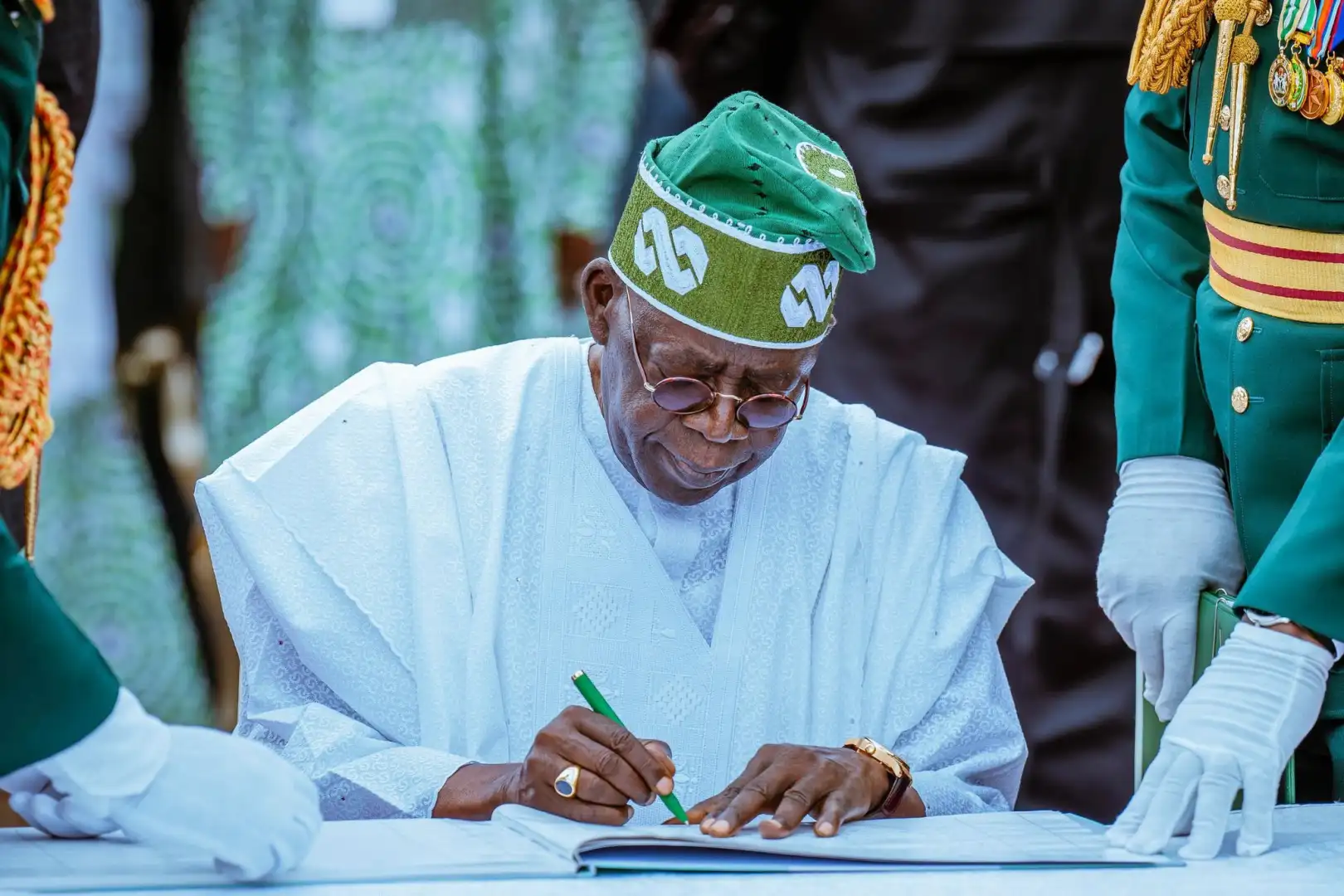
President Tinubu pointed to Nigeria’s green bond program as concrete evidence of growing global investor appetite for climate-aligned assets from the country. A 50 billion naira ($38 million) sovereign green bond issued in 2025 attracted 91 billion naira in subscriptions—representing an oversubscription rate of 82%—while Lagos State’s green bond was oversubscribed by nearly 98%, underscoring sustained institutional demand for Nigerian climate-linked financial instruments.
These successful bond issuances demonstrate that international investors are increasingly confident in Nigeria’s climate governance framework and reform trajectory, even as the country grapples with broader macroeconomic challenges including inflation rates hovering around 25% and currency pressures following the removal of fuel subsidies and floating of the naira.
Beyond public markets, the Tinubu administration is seeking to unlock an ambitious $25 billion to $30 billion annually in climate finance to support the massive infrastructure investments required to transform Nigeria’s energy systems. A forthcoming Climate and Green Industrialisation Investment Playbook will help private investors navigate Nigeria’s manufacturing policies, incentive structures, and regulatory environment, providing a roadmap for capital deployment in renewable energy, clean cooking, electric mobility, and other green sectors.
Historic Trade Agreement with UAE Opens New Markets
In a significant development announced alongside the climate finance initiatives, President Tinubu revealed that Nigeria and the United Arab Emirates have signed a Comprehensive Economic Partnership Agreement (CEPA) that aims to boost trade and investment across multiple sectors including renewable energy, aviation, logistics, agriculture, digital trade, and climate-smart infrastructure.
Under the CEPA, which was signed in the presence of both heads of state, the UAE will eliminate tariffs on over 7,000 Nigerian products immediately, including agricultural and industrial goods such as fish, seafood, cereals, cotton, pharmaceuticals, and chemicals. Nigeria, in turn, will eliminate tariffs on around 6,000 imported products, mainly industrial inputs, capital goods, and machinery, while maintaining its Import Prohibition List to protect sensitive domestic industries.
Nigeria’s Minister of Industry, Trade and Investment, Dr. Jumoke Oduwole, described the agreement as a strategic instrument for economic transformation. “With significant market access secured for value-added and industrial goods, this Agreement incentivizes Nigerian manufacturers to scale production for export,” she said, adding that the CEPA positions Nigeria as a gateway for international investors seeking access to the African Continental Free Trade Area and its 1.4 billion-person market.
The agreement also covers 99 services across 10 sectors, including business, communication, transport, financial services, construction, health, and tourism, while allowing Nigerian businesses to establish operations in the UAE through new corporate entities, branches, or subsidiaries. Business visitors can enter the UAE for up to 90 days within a 12-month period to explore trade opportunities.
Bilateral non-oil trade between Nigeria and the UAE reached $4.3 billion in 2024, representing a 55.3% year-on-year increase compared to 2023. In the first nine months of 2025, trade totaled approximately $3.1 billion, cementing the rapid upward trajectory in economic relations between the two nations.
President Tinubu also announced that Nigeria will co-host Investopia with the UAE in Lagos in February, an initiative aimed at attracting global investors and accelerating sustainable investment inflows into Nigerian infrastructure, renewable energy, and climate-smart sectors.
Building on Previous Climate Finance Initiatives
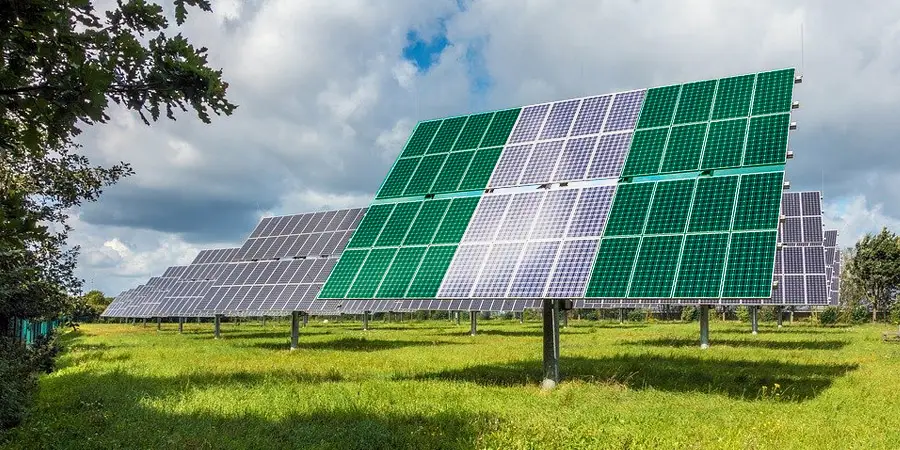
The new climate fund builds on past initiatives that have laid the groundwork for Nigeria’s green finance architecture. The Nigeria Sovereign Investment Authority launched a $500 million Distributed Renewable Energy Fund in March 2025 to catalyze local financing for off-grid and embedded power solutions, addressing one of Nigeria’s most pressing challenges: the approximately 85 million citizens who currently lack access to reliable electricity.
The Energy Transition Office (ETO), established in 2022 within the Office of the Vice President, has been instrumental in coordinating implementation of Nigeria’s Energy Transition Plan. To date, the ETO has helped mobilize more than $3.6 billion in investment and advanced policies to enhance the market and regulatory environment for private sector players across the energy value chain.
Multilateral institutions are also playing a significant role. The World Bank is currently implementing a $750 million program to expand clean electricity access to over 17.5 million Nigerians through distributed renewable energy solutions, designed using data provided by Nigeria’s Integrated Energy Planning tool.
Carbon Market Framework to Generate Additional Revenue
In a complementary announcement, President Tinubu told world leaders that Nigeria is mobilizing climate finance through a newly activated carbon market framework expected to unlock between $2.5 billion and $3 billion annually over the next decade, providing an additional revenue stream to support the country’s energy transition and climate resilience efforts.
The carbon market push is anchored on the National Carbon Market Activation Policy and the launch of the National Carbon Registry, which are intended to improve emissions reporting, verification, and transparency. Nigeria approved the National Carbon Market Framework in October 2025, setting out rules for carbon credit registration, issuance, and verification.
The framework establishes mechanisms to incentivize emissions-reduction projects in areas such as forestry, renewable energy, clean cooking, and agriculture, while creating new revenue streams for communities and businesses. In November 2025, the government operationalized the Climate Change Fund and restored the National Council on Climate Change to the federal budget, demonstrating institutional commitment to climate governance.
Major Environmental and Policy Challenges Remain
Despite the ambitious financial targets and policy frameworks, Nigeria faces significant environmental and climate policy challenges that will require sustained effort and international cooperation to address. Chief among these are reducing gas flaring and methane emissions from its oil and gas sector, which remains a major source of greenhouse gas emissions and environmental degradation.
Nigeria has committed to achieving zero routine flaring by 2030 and a 60% reduction in fugitive methane emissions from oil and gas operations by 2031, as outlined in its updated Nationally Determined Contributions submitted to the United Nations. These targets are conditional on international support through technology transfer, capacity building, and climate finance.
In 2023, the country ranked eighth worst globally for gas flaring, burning approximately 5 billion cubic feet of gas. Since 2016, Nigeria has flared 1.621 billion metric tonnes of gas worth $5.654 billion, resulting in the emission of 86 million metric tonnes of carbon dioxide and 31.3 million tonnes of methane into the atmosphere.
To address this challenge, Nigeria has adopted comprehensive regulatory frameworks including the Gas Flaring, Venting and Methane Emissions Regulations of 2023 and the Guidelines for Management of Fugitive Methane and Greenhouse Gases Emissions in the Upstream Oil and Gas Operations. These regulations mandate that companies implement leak detection and repair measures, utilize high destruction efficiency flares, and implement controls on venting devices or replace them with zero-emissions technology.
The Nigerian Upstream Petroleum Regulatory Commission requires operators to develop and submit greenhouse gas management plans within six months that include inventories of emission sources, accounting methodologies, and plans with timelines to reach net-zero emissions. Flares found to be unlit and venting gas must be repaired within 48 hours, while flare tips that are sputtering or smoking must be replaced within specified timeframes.
Energy Transition Plan Targets Universal Access and Net Zero
Nigeria’s comprehensive Energy Transition Plan integrates climate mitigation, industrial growth, and social development into a single coherent framework, with the ambitious goal of achieving net-zero emissions by 2060 while delivering universal energy access by 2030. The plan was initially created with a 2050 net-zero target, but given the significant financial, social, and technological requirements, the nation concluded that 2060 represents a more realistic pathway to deep decarbonization.
The updated Energy Transition Plan estimates that achieving net-zero by 2060 would require a capital investment of approximately $500 billion above business-as-usual spending. However, this investment would result in fuel savings of $686 billion, demonstrating significant economic and environmental benefits over the transition period.
The plan outlines the need for a total installed power capacity of 277 gigawatts by 2060, emphasizing greater reliance on renewable energy and energy efficiency to drive the net-zero future compared to initial projections. Significant investments are required in energy storage and emerging technologies, with battery energy storage systems needing 137 GW of capacity and hydrogen infrastructure requiring 36 GW.
President Tinubu emphasized that Nigeria’s energy transition plan includes “climate mitigation, industrial growth, and social development into a single coherent framework,” with a target of achieving net-zero emissions while ensuring universal access to modern energy. The transition is expected to result in significant net job creation with up to 340,000 jobs created by 2030 and up to 840,000 jobs created by 2060, driven mainly by the power, cooking, and transport sectors.
One decision can change your entire career. Take that step with our Online courses in ACCA, HESI A2, ATI TEAS 7, HESI EXIT, NCLEX-RN, NCLEX-PN, and Financial Literacy. Join Serrari Ed and start building your brighter future today.
Legislative and Regulatory Reforms Support Transition
Key legislative reforms are providing the foundation for Nigeria’s energy transition. The 2023 Electricity Act represents a watershed moment in Nigeria’s power sector reform, providing for decentralized and inclusive energy delivery to rural communities, off-grid health facilities, educational institutions, markets, and underserved populations.
The Act allows for decentralized electricity generation and distribution, breaking the monopoly that previously constrained sector development and opening opportunities for private investment in mini-grids, solar home systems, and other distributed renewable energy solutions. This regulatory shift is essential for achieving the Energy Transition Plan’s ambitious targets for electricity access.
The Petroleum Industry Act of 2021, an omnibus legislation covering the entire oil and gas value chain, contains provisions on gas flaring that promote minimization and reinforce basic principles for preventing waste and pollution. The Act has been instrumental in strengthening methane mitigation initiatives in Nigeria, providing a legal foundation for the country’s ambitious emissions reduction targets.
Technology Partnerships and Artificial Intelligence Integration
President Tinubu stressed that Nigeria is prioritizing technology partnerships to modernize its grid infrastructure and deploy artificial intelligence for efficiency optimization, alongside pilot projects in electric mobility and green industrialization. “The adoption of artificial intelligence to optimize efficiency is no longer a matter of the future,” the president said, calling for partnerships with developed nations on technology transfer, knowledge exchange, and innovation.
The government is actively seeking partnerships that promote technology transfer and knowledge exchange to accelerate the deployment of clean energy technologies across Nigeria’s vast geography. These partnerships are viewed as essential for leapfrogging outdated energy infrastructure and building a modern, resilient, and low-carbon energy system capable of supporting Nigeria’s industrialization ambitions.
Pilot electric mobility projects are already underway, with plans to deploy thousands of electric buses across the country as part of a broader sustainable transport initiative. National energy efficiency programs are being rolled out across sectors, targeting significant reductions in energy consumption while maintaining or improving service delivery.
Shift Toward Blended Finance Models
In his remarks at Abu Dhabi Sustainability Week, President Tinubu called for a fundamental shift in how climate finance is structured for emerging economies, advocating for greater use of blended finance mechanisms that combine public and philanthropic capital with private investment and can absorb initial losses if projects underperform.
This approach, the president argued, represents a more equitable alternative to traditional sovereign guarantees, which he said “unfairly penalize emerging economies” by placing the full burden of risk on national governments already constrained by limited fiscal space and high debt levels. Blended finance structures can help de-risk investments in renewable energy and climate infrastructure, making them more attractive to private capital while protecting public finances.
The call for blended finance aligns with broader discussions in international climate finance circles about the need for innovative financing mechanisms that can mobilize the trillions of dollars required to support developing countries’ energy transitions without creating unsustainable debt burdens.
Economic Reforms Signal Investment Readiness
President Tinubu emphasized that Nigeria’s broader economic reforms demonstrate the country’s readiness to attract and deploy climate finance effectively. “These reforms show Nigeria is ready for business,” the president said, noting that non-oil exports have grown by 21% and investment commitments now exceed $50 billion across key sectors including manufacturing, agriculture, technology, and infrastructure.
The government has implemented significant macroeconomic reforms over the past year, including the removal of costly fuel subsidies that were draining public finances and the unification of multiple exchange rates into a single, market-determined rate. While these reforms have created short-term economic hardship for many Nigerians through higher prices and reduced purchasing power, they are viewed as necessary steps to stabilize the economy and create a more transparent and predictable environment for investment.
Nigeria has also been working to improve its business environment through regulatory streamlining, enhanced transparency in government procurement, and efforts to reduce bureaucratic obstacles that have historically deterred foreign investment. The signing of the CEPA with the UAE is seen as validation of these reform efforts and evidence of growing international confidence in Nigeria’s economic trajectory.
Regional Leadership and Continental Implications
As Africa’s largest economy and most populous nation, Nigeria’s success or failure in achieving its energy transition goals carries implications for the entire continent. The country has positioned itself as a leader in advocating for African interests in global climate negotiations, emphasizing the need for equitable climate finance, accessible technologies, and robust capacity building support from developed nations.
President Tinubu stressed that “climate action must succeed and grow” and that “developing countries require equitable climate finance, accessible technologies and robust capacity building” to meet their climate commitments while pursuing economic development and poverty reduction.
Nigeria is also working to promote regional collaboration on climate action and energy transition. The government is coordinating with other Sub-Saharan African producers to harmonize standards and share best practices on methane emissions reduction, and is leveraging its role as a Global Methane Pledge Champion to demonstrate leadership on this critical climate issue.
The successful implementation of Nigeria’s Energy Transition Plan could serve as a model for other African nations grappling with similar challenges of energy poverty, economic development pressures, and climate mitigation obligations. Conversely, failure to achieve the plan’s ambitious targets could raise questions about the feasibility of Africa’s broader climate commitments.
Critical Role of Natural Gas as Transition Fuel
A distinctive feature of Nigeria’s energy transition strategy is the prominent role accorded to natural gas as a transition fuel, particularly in the power and cooking sectors. Nigeria possesses substantial gas reserves—approximately 202 trillion cubic feet of proven reserves and an estimated 600 trillion cubic feet of unproven reserves—which the government views as a strategic asset for bridging the gap between fossil fuel dependence and a renewable energy future.
The Energy Transition Plan emphasizes that gas will play a critical role in addressing the clean cooking challenge, which is also linked to deforestation from unsustainable biomass harvesting, and in providing the electric grid with the stability and flexibility needed to integrate renewables at scale. Nigeria’s position is that the country can continue to use gas until 2040 without detracting from the goals of the Paris Agreement, given that gas produces significantly lower emissions than coal or oil.
This gas-centric approach has attracted some criticism from environmental advocates who argue that continued reliance on fossil fuels, even cleaner-burning natural gas, is incompatible with achieving deep decarbonization. However, Nigerian policymakers counter that the country faces an immediate development imperative to provide energy access to its population and that gas represents the most practical pathway to achieving this goal while also reducing emissions relative to current energy sources.
Challenges in Financing and Implementation
Despite the ambitious targets and growing international interest, significant challenges remain in mobilizing and deploying the capital required for Nigeria’s energy transition. The updated Energy Transition Plan projects that achieving the country’s goals will require approximately $1.9 trillion in total investment through 2060, including $410 billion above projected business-as-usual spending.
This additional investment requirement translates to approximately $10 billion annually—a substantial sum that far exceeds Nigeria’s current annual budget allocations for energy and climate-related programs. The government estimates a total annual investment capacity of $27.7 billion, leaving a significant financing gap that must be filled through private investment, multilateral development finance, and innovative financing mechanisms.
The volatility of capital costs in Nigeria presents an additional challenge. The country’s monetary policy rate has increased from 16.50% in 2022, when the Energy Transition Plan was launched, to 24.75% in 2024, significantly changing the levelized cost of electricity for capital-intensive renewable energy projects. Studies have shown that an increase of 2% in cost of capital can increase the levelized cost for renewables by 20%, making project economics more challenging.
Looking Ahead: Opportunities and Uncertainties
Nigeria’s unveiling of the $2 billion climate fund and associated initiatives represents a significant statement of intent from Africa’s largest economy. The combination of domestic resource mobilization through green bonds and the carbon market, international partnership through the UAE trade agreement, and ambitious policy targets creates a framework that could, if successfully implemented, transform Nigeria’s energy landscape over the coming decades.
However, the gap between policy ambition and on-the-ground implementation remains substantial. Nigeria has a history of announcing bold initiatives that subsequently struggle to achieve their objectives due to capacity constraints, governance challenges, funding shortfalls, and competing priorities. Whether the current administration can translate its climate finance and energy transition commitments into tangible outcomes will depend on sustained political will, effective institutional coordination, continued international support, and the country’s ability to maintain macroeconomic stability.
The success of Nigeria’s approach will be closely watched across Africa and beyond, as developing nations worldwide grapple with the challenge of achieving economic development and energy access while meeting climate commitments. If Nigeria can demonstrate that it is possible to mobilize significant climate finance, deploy clean energy at scale, and achieve inclusive development simultaneously, it could provide a replicable model for other nations facing similar challenges.
For now, the announcements from Abu Dhabi represent an important step forward in Nigeria’s climate journey, but the real test lies ahead in the implementation phase, where ambitious plans must be converted into functioning infrastructure, deployed capital, and measurable emissions reductions.
Ready to take your career to the next level? Join our Online courses: ACCA, HESI A2, ATI TEAS 7 , HESI EXIT , NCLEX – RN and NCLEX – PN, Financial Literacy!🌟 Dive into a world of opportunities and empower yourself for success. Explore more at Serrari Ed and start your exciting journey today! ✨
Track GDP, Inflation and Central Bank rates for top African markets with Serrari’s comparator tool.
See today’s Treasury bonds and Money market funds movement across financial service providers in Kenya, using Serrari’s comparator tools.
photo source: Google
By: Montel Kamau
Serrari Financial Analyst
14th January, 2026
Article, Financial and News Disclaimer
The Value of a Financial Advisor
While this article offers valuable insights, it is essential to recognize that personal finance can be highly complex and unique to each individual. A financial advisor provides professional expertise and personalized guidance to help you make well-informed decisions tailored to your specific circumstances and goals.
Beyond offering knowledge, a financial advisor serves as a trusted partner to help you stay disciplined, avoid common pitfalls, and remain focused on your long-term objectives. Their perspective and experience can complement your own efforts, enhancing your financial well-being and ensuring a more confident approach to managing your finances.
Disclaimer: This article is for informational purposes only and does not constitute financial advice. Readers are encouraged to consult a licensed financial advisor to obtain guidance specific to their financial situation.
Article and News Disclaimer
The information provided on www.serrarigroup.com is for general informational purposes only. While we strive to keep the information up to date and accurate, we make no representations or warranties of any kind, express or implied, about the completeness, accuracy, reliability, suitability, or availability with respect to the website or the information, products, services, or related graphics contained on the website for any purpose. Any reliance you place on such information is therefore strictly at your own risk.
www.serrarigroup.com is not responsible for any errors or omissions, or for the results obtained from the use of this information. All information on the website is provided on an as-is basis, with no guarantee of completeness, accuracy, timeliness, or of the results obtained from the use of this information, and without warranty of any kind, express or implied, including but not limited to warranties of performance, merchantability, and fitness for a particular purpose.
In no event will www.serrarigroup.com be liable to you or anyone else for any decision made or action taken in reliance on the information provided on the website or for any consequential, special, or similar damages, even if advised of the possibility of such damages.
The articles, news, and information presented on www.serrarigroup.com reflect the opinions of the respective authors and contributors and do not necessarily represent the views of the website or its management. Any views or opinions expressed are solely those of the individual authors and do not represent the website's views or opinions as a whole.
The content on www.serrarigroup.com may include links to external websites, which are provided for convenience and informational purposes only. We have no control over the nature, content, and availability of those sites. The inclusion of any links does not necessarily imply a recommendation or endorsement of the views expressed within them.
Every effort is made to keep the website up and running smoothly. However, www.serrarigroup.com takes no responsibility for, and will not be liable for, the website being temporarily unavailable due to technical issues beyond our control.
Please note that laws, regulations, and information can change rapidly, and we advise you to conduct further research and seek professional advice when necessary.
By using www.serrarigroup.com, you agree to this disclaimer and its terms. If you do not agree with this disclaimer, please do not use the website.
www.serrarigroup.com, reserves the right to update, modify, or remove any part of this disclaimer without prior notice. It is your responsibility to review this disclaimer periodically for changes.
Serrari Group 2025