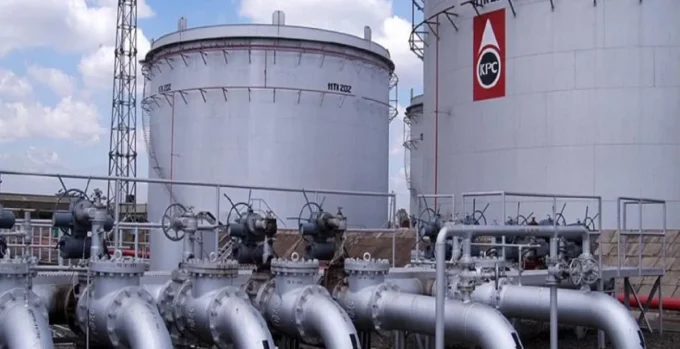
The same Silicon Valley investors who transformed Anduril Industries into a $30.5 billion defense technology powerhouse are now placing significant bets on an entirely different kind of defense company—one founded by two entrepreneurs in their early twenties in Abuja, Nigeria, that designs and manufactures its autonomous systems on the African continent with predominantly African engineers. The investment signals a fundamental shift in how global capital views Africa’s role in the defense technology ecosystem, positioning the continent not merely as a consumer of security solutions but as an emerging hub for indigenous defense manufacturing.
Terrahaptix Inc., which also operates under the name Terra Industries, has successfully raised an $11.8 million seed funding round led by 8VC, the venture capital firm founded by Palantir Technologies co-founder Joe Lonsdale. The funding round, announced on January 12, 2026, represents one of the largest investments in Africa’s nascent defense technology sector and underscores growing investor confidence in vertically integrated defense solutions developed and deployed on the continent.
Build the future you deserve. Get started with our top-tier Online courses: ACCA, HESI A2, ATI TEAS 7, HESI EXIT, NCLEX-RN, NCLEX-PN, and Financial Literacy. Let Serrari Ed guide your path to success. Enroll today.
The Palantir Playbook Arrives in West Africa
The investor syndicate reads like a roster of firms that fundamentally reshaped Pentagon procurement over the past decade. Valor Equity Partners, Lux Capital, SV Angel, Leblon Capital GmbH, Silent Ventures LLC, and Nova Global all participated in the round, with Meyer Malka, managing partner of Ribbit Capital, joining as an angel investor. Critically, both Valor and 8VC have backed Anduril Industries, SpaceX, and Palantir separately—the same constellation of investors who identified the autonomous defense technology wave before traditional defense contractors fully grasped its implications.
Alex Moore, who focuses on defense investments at 8VC and serves as a non-executive director at Palantir, joined Terra Industries’ board last year. This is not a passive investment position. Moore’s dual role at 8VC and Palantir positions him to bring sophisticated understanding of defense procurement, autonomous systems integration, and the strategic imperatives driving global security spending to Terra’s boardroom discussions.
The connection matters profoundly. These are the same investors who spotted the autonomous defense technology revolution before the Pentagon did, who backed Palmer Luckey’s vision when Anduril was dismissed as an overhyped Silicon Valley curiosity, and who understood that software-defined autonomous systems would ultimately displace legacy defense platforms optimized for Cold War-era threat environments. Now they are writing substantial checks to a Nigerian startup that protects hydropower plants, lithium mines, and critical infrastructure across a continent where traditional security approaches have demonstrably failed to keep pace with evolving threats.
Scaling African-Built Defense Technology
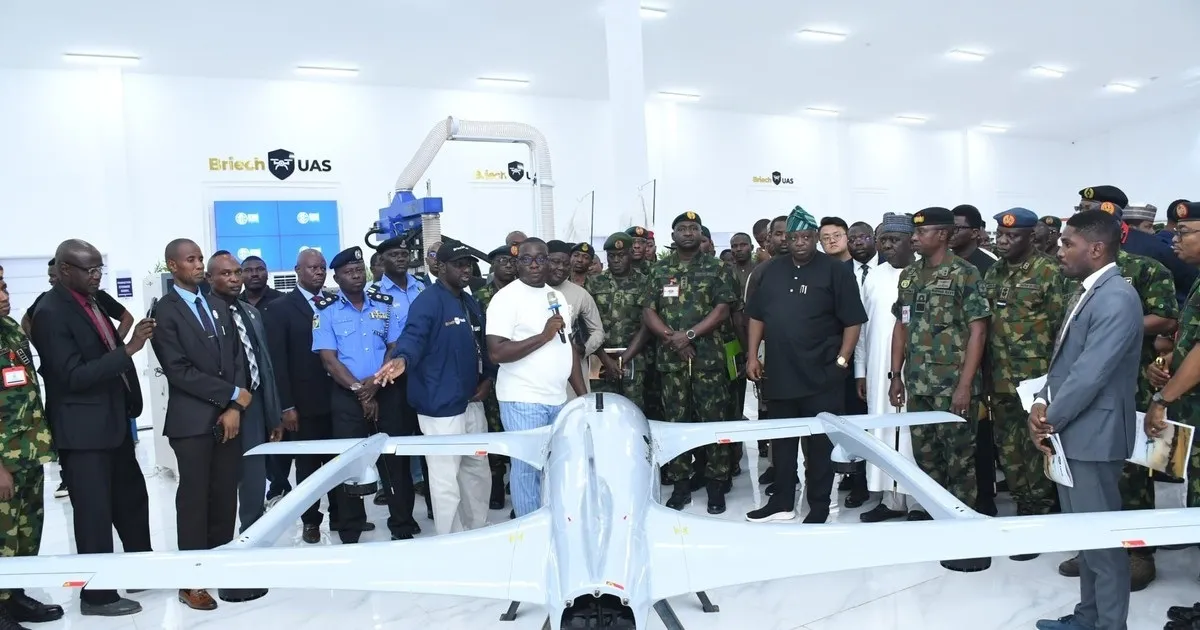
Terra Industries, founded in 2024 by Nathan Nwachuku, 22, and Maxwell Maduka, 24, operates at a scale unusual for such a young company. The Abuja-based startup has commissioned Africa’s largest drone manufacturing facility, a 15,000-square-foot production complex that was designed, constructed, and brought online in just eleven months—a timeline that underscores the company’s rapid execution capability and commitment to building domestic manufacturing capacity.
The facility currently supports production of up to twenty Iroko drones per day, with approximately 80 percent of components sourced and manufactured locally within Nigeria. This localization strategy represents more than cost optimization—it reflects Terra’s broader strategic goal of developing indigenous technical talent, strengthening regional supply chains, and reducing dependence on foreign manufacturing for systems that will protect Africa’s most critical assets.
The company produces long-range and mid-range drones, autonomous sentry towers, and unmanned ground vehicles designed specifically for the environmental conditions, regulatory frameworks, and operational requirements of African deployment scenarios. Unlike Western defense contractors attempting to adapt systems designed for European or Middle Eastern theaters to African conditions, Terra’s products are conceived from inception for the specific challenges of securing vast, often remote infrastructure assets across diverse and challenging terrains.
What distinguishes Terra from traditional defense startups is the integration of hardware and software through its proprietary ArtemisOS platform. This unified software system handles real-time threat detection, autonomous mission planning, and intelligence gathering across all of Terra’s physical assets—air drones, ground drones, and sensory towers. The platform ingests and analyzes data in real time, immediately alerting response teams when threats are detected, enabling rapid intervention before incidents escalate.
Terra says its technology now protects infrastructure assets valued at approximately $11 billion across Africa, including hydropower plants in northern Nigeria, the Geometric Power Plant in Aba, and gold and lithium mining operations in Ghana and Nigeria. The company has secured more than $50 million in commercial and government contracts—a figure that substantially exceeds its venture funding to date and demonstrates genuine revenue traction rather than merely venture-subsidized growth.
The Security Vacuum Creating Market Demand
The investment arrives as the security situation across West Africa has deteriorated dramatically over the past several years. Terrorist groups including Islamic State and al-Qaeda affiliates are gaining ground across territory stretching from Mali through Burkina Faso, Niger, and into Nigeria. According to the 2025 Global Terrorism Index published by the Institute for Economics and Peace, the Sahel accounted for 19 percent of all terrorist attacks worldwide and 51 percent of global terrorism-related deaths in 2024, up from 48 percent in 2023.
The Economic Community of West African States (ECOWAS) has struggled to operationalize effective regional counterterrorism mechanisms despite repeated commitments. ECOWAS Commission President Omar Alieu Touray cited 450 attacks and over 1,900 deaths across the region between January and November 2025, while also deploring the economic warfare waged by Islamist insurgents that causes life-threatening harm to civilian populations beyond direct violence.
Jama’at Nusrat al-Islam wal-Muslimin (JNIM), an al-Qaeda affiliate, has intensified operations in Mali’s capital Bamako by blocking major fuel supply routes and attacking army convoys. UK envoy to the UN Security Council confirmed that terror groups linked to ISIS and al-Qaeda were “adopting new, more sophisticated tactics” to cripple governments and destabilize countries, citing Mali’s fuel blockade as evidence of how extremist groups now leverage economic disruption as a weapon of war.
Traditional security solutions have manifestly failed to keep pace with these evolving threats. Mining companies, energy producers, and governments are increasingly looking to autonomous surveillance and perimeter defense systems that can cover vast areas without the manpower limitations, corruption vulnerabilities, and logistical challenges of conventional security forces. This creates precisely the market conditions where Terra’s technology finds its strongest value proposition.
Africa’s Critical Mineral Stakes
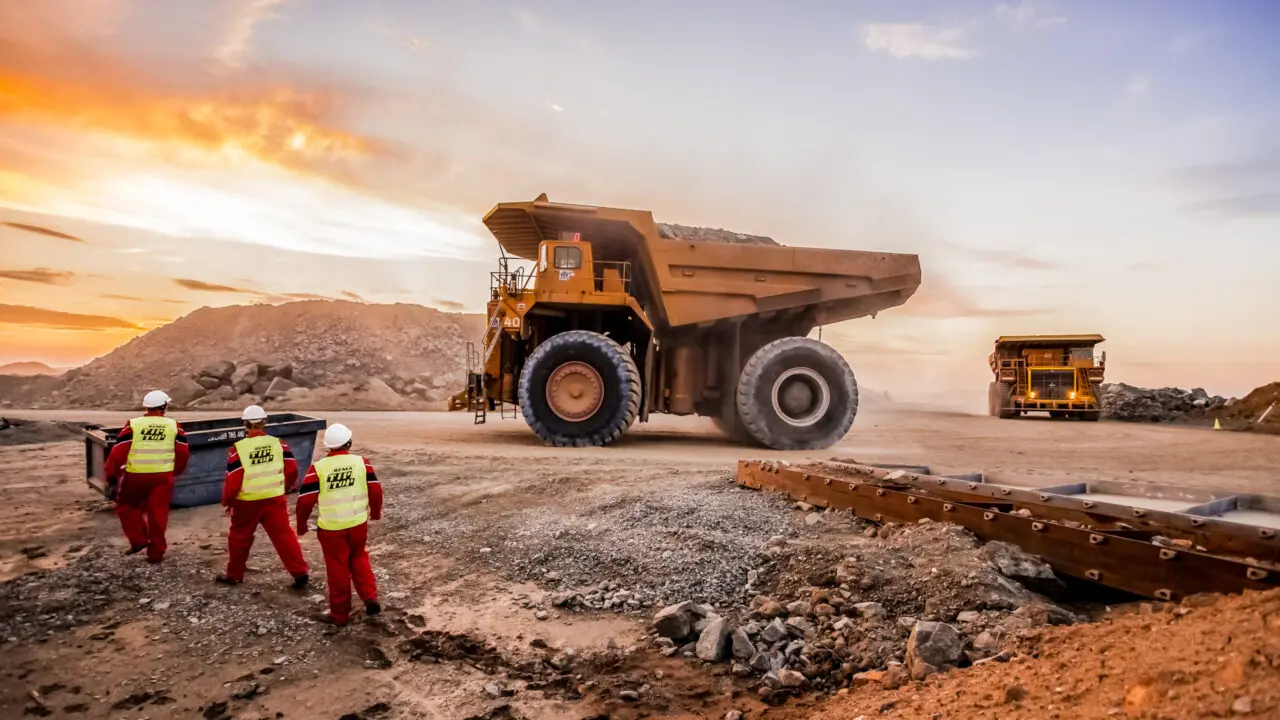
The security of Africa’s mineral wealth carries implications far beyond the continent’s borders. Africa holds approximately 30 percent of the world’s critical mineral reserves—resources essential to global defense, aerospace, green energy supply chains, and the semiconductor manufacturing that underpins artificial intelligence infrastructure. The Democratic Republic of Congo alone accounts for approximately 70 percent of global cobalt mining, while Zimbabwe ranks among the top five globally in lithium deposits.
The continent’s lithium reserves are particularly strategic. Africa holds more than 30 percent of global critical mineral reserves for the energy transition, with rapidly expanding lithium production in Zimbabwe, Ghana, and other countries. These minerals are essential components of lithium-ion batteries for electric vehicles and energy storage systems that will define the global energy transition over coming decades.
However, terrorist groups have increasingly targeted mining sites, pipelines, and power facilities to finance their operations and disrupt economic activity. This targeting raises demand for persistent surveillance and rapid-response systems that can function reliably in remote locations with limited or no conventional security infrastructure. When JNIM or Islamic State affiliates can shut down a lithium mine or hydropower facility, they don’t merely damage one company’s operations—they disrupt global supply chains that Western automakers and battery manufacturers depend upon for their own strategic transitions.
“Africa is industrializing faster than any other region, with new mines, refineries and power plants emerging every month,” Nwachuku explained in Bloomberg’s coverage of the funding announcement. “But none of that progress will matter if we don’t solve the continent’s greatest Achilles’ heel, which is insecurity and terrorism.”
This framing is deliberate and strategic. Terra positions its mission not as providing security services but as enabling Africa’s industrial emergence by eliminating the security constraints that have historically deterred investment, driven up insurance costs, and forced companies to deploy unsustainable levels of human security personnel in high-risk environments.
Strategic Board Composition and Defense Expertise
Terra has been strategic about selecting board members who bring specific expertise from the American defense technology ecosystem. The company brought on Eliot Pence, a former executive at Anduril, adding operational insight from one of the few companies that has successfully scaled autonomous defense systems from prototype to production deployment at hyperscale levels.
Pence’s experience at Anduril—where he witnessed the company grow from startup to $30.5 billion valuation while navigating Pentagon procurement, building Arsenal-1 manufacturing facilities, and integrating autonomous systems into active military operations—provides Terra with practical knowledge of the challenges inherent in transitioning from technology demonstrations to deployed capabilities that must function reliably in contested environments.
This board composition reflects sophisticated understanding of what Terra needs to achieve. The rules for building a defense company differ fundamentally from those for building a fintech or consumer technology company. As Nwachuku told Techpoint Africa, “We need to structure the company properly in order to protect trillions of dollars’ worth of critical infrastructure.” That structuring requires understanding procurement cycles, reliability standards, security clearances, export controls, and the complex regulatory environments that govern autonomous weapons systems globally.
Investment Structure and Strategic Implications
The funding round consisted entirely of U.S.-based investors, a deliberate choice that Nwachuku indicated stems from selecting capital partners who fully understand defense market dynamics. This investor concentration also positions Terra to potentially access U.S. defense procurement opportunities and align with American strategic interests in securing African critical mineral supply chains.
The 8VC-led round gives Terra runway to expand manufacturing capacity as it moves into cross-border security and counterterrorism applications. The company plans to scale defense production across Africa while simultaneously enhancing its data intelligence operating system. This dual focus on physical manufacturing capability and software platform development mirrors the strategic approach that has driven success for companies like Anduril and Palantir—neither pure hardware nor pure software, but integrated systems where each element enhances the value of the other.
Terra represents something genuinely unusual in the global defense technology landscape: homegrown African capabilities developed by founders who understand local terrain, regulatory environments, operational requirements, and cultural contexts in ways that imported Western systems inherently cannot. When a mining operation in Ghana faces security challenges, Terra’s founders don’t need extensive briefings on local governance structures, ethnic dynamics, or the specific tactics employed by groups operating in that region—this is knowledge embedded in the company’s DNA from inception.
One decision can change your entire career. Take that step with our Online courses in ACCA, HESI A2, ATI TEAS 7, HESI EXIT, NCLEX-RN, NCLEX-PN, and Financial Literacy. Join Serrari Ed and start building your brighter future today.
Competitive Landscape and Market Positioning
Terra’s emergence occurs as African drone companies across multiple verticals attract significant venture capital. The company can be viewed as roughly parallel to competitors like Sora, which recently raised a total of $7.3 million to deploy AI-powered drones across different industries. However, Terra’s Silicon Valley backers and defense-specific focus may provide competitive advantages that general-purpose drone companies struggle to replicate.
Drone companies operating across Africa—from Sora to Zipline—have been attracting substantial funding as investors recognize the continent’s unique characteristics that make aerial solutions particularly valuable: vast distances between population centers, inadequate road infrastructure, challenging terrain, and use cases ranging from medical delivery to agricultural monitoring to security surveillance. Terra’s specialization in defense applications allows deeper optimization for the reliability, redundancy, and security requirements that distinguish military-grade systems from commercial deployments.
The company’s vertical integration—from component manufacturing through final assembly, software development, and ongoing support—creates barriers to entry that pure assembly operations or software-only companies cannot easily replicate. When Terra manufactures 80 percent of its components locally, it gains supply chain resilience, cost advantages, and the ability to rapidly iterate designs based on field feedback without depending on external suppliers or navigating complex international procurement.
Geopolitical Dimensions and Global Implications
The investment in Terra occurs against a backdrop of intensifying great power competition for influence and access to African resources. China has long been the dominant external player in Africa’s critical mineral sector, using long-term investment, infrastructure projects, and minerals-for-loans deals to secure access to strategic commodities. The United States views access to Africa’s critical minerals as economic necessity and national security priority, prompting Washington to seek alternative sources and more resilient supply chains.
When Silicon Valley defense investors back an African company building autonomous security systems to protect critical infrastructure, they are not simply making a financial bet on market opportunity. They are positioning for a future where Africa’s industrial emergence depends fundamentally on indigenous security capabilities, where Western supply chains for critical minerals require African stability, and where the companies that provide that stability become strategically indispensable.
The broader context includes the Lobito Corridor development—a railway infrastructure project connecting Angola’s Lobito port with mineral-rich Zambia and the Democratic Republic of Congo, backed by the U.S. Development Finance Corporation and European Union support. These infrastructure corridors require security, and they will increasingly require the kind of autonomous, persistent surveillance that Terra specializes in providing.
Technology Philosophy and Product Strategy
Terra blends the hardware-first approach pioneered by Anduril with the software-centric model associated with Palantir. According to TechCabal’s analysis, the startup mirrors Anduril in building physical security infrastructure including sentry towers similar to those Anduril deploys along the U.S.-Mexico border. Like Palantir, however, Terra treats software as the center of gravity, with a goal of minimizing human intervention at protected sites by automating detection, analysis, and response.
Palantir’s long-term strategy has been to become a modern defense prime by owning the orchestration layer across complex systems. Terra has adopted a similar thesis through ArtemisOS, its unified platform for large-scale security operations that ingests and analyzes data in real time. This platform approach creates switching costs and network effects—as more sensors, drones, and ground vehicles feed data into ArtemisOS, the system becomes more capable at pattern recognition, threat prediction, and coordinated response.
The technology philosophy extends to Terra’s approach to upgrades and iteration. Unlike traditional defense contractors where product cycles span years and updates require lengthy certification processes, Terra’s software-defined architecture allows continuous improvement of detection algorithms, mission planning capabilities, and integration with new sensor types without necessarily requiring hardware replacement. This mirrors the agile development methodologies that have allowed technology companies to iterate far more rapidly than legacy defense primes.
Market Validation and Revenue Traction
Terra’s claim of having secured its first federal contract, though details remain undisclosed, provides important validation that government customers view the company’s offerings as meeting requirements for protecting state assets. The company generates revenue from private clients through equipment sales and ongoing data services—a recurring revenue model that provides more sustainable economics than purely transactional hardware sales.
The ability to secure more than $50 million in contracts before raising $12 million in venture capital suggests genuine market pull rather than venture-subsidized customer acquisition. This ratio—where contract value substantially exceeds funding raised—indicates that Terra has found product-market fit and that customers are willing to pay meaningful amounts for the value delivered rather than merely experimenting with subsidized pilot programs.
This validation matters particularly in defense markets where procurement cycles can extend for years and where companies often burn through hundreds of millions in venture capital before securing their first meaningful contract. Terra appears to have compressed this timeline substantially, likely by focusing on private sector customers (mining companies, energy producers) who can make purchasing decisions more rapidly than government bureaucracies and who face immediate, quantifiable security costs that autonomous systems can reduce.
Infrastructure and Manufacturing Strategy
The decision to build a 15,000-square-foot manufacturing facility in Abuja rather than outsourcing production to established defense manufacturing hubs reflects Terra’s commitment to African industrialization beyond merely providing security services. By manufacturing locally with 80 percent local component sourcing, Terra creates jobs, develops technical expertise, and builds industrial capabilities that extend beyond the company itself.
This manufacturing strategy also provides geopolitical flexibility. A company that manufactures in Nigeria, sources components across Africa, and serves customers throughout the continent is less vulnerable to export controls, supply chain disruptions, or political pressure from any single external power. If U.S.-China tensions escalate or if European regulations change, Terra’s operational continuity depends on African supply chains and manufacturing rather than access to American or Chinese components.
The facility’s ability to produce twenty drones daily represents a serious manufacturing scale for a seed-stage company. For context, many defense startups struggle for years to move from hand-assembled prototypes to any kind of volume production. Terra’s rapid establishment of manufacturing capability suggests either exceptional execution or significant non-dilutive funding (potentially from early commercial contracts) that allowed infrastructure investment before raising venture capital.
Strategic Outlook and Expansion Plans
With fresh capital, Terra plans to expand its manufacturing capacity while moving into cross-border security and counterterrorism applications. This expansion represents a natural progression from static infrastructure protection toward more active security roles. Cross-border security—monitoring borders, tracking illicit trafficking, detecting cross-border insurgent movements—requires different technical capabilities than perimeter security for a mining facility, including longer-range sensors, more sophisticated pattern-of-life analysis, and integration with national security infrastructure.
Counterterrorism applications raise additional complexities. These use cases potentially involve lethal autonomous systems, significantly more stringent certification and oversight requirements, and integration with military command and control systems. They also raise ethical and legal questions about autonomous weapons systems, particularly in contexts where rules of engagement may be ambiguous and where civilian populations may be present in operational areas.
Terra’s positioning as “Africa’s first defense prime focused on autonomous security systems” suggests ambitions that extend well beyond providing commercial security services. A defense prime in the American or European context is a company like Lockheed Martin or BAE Systems—one capable of serving as primary contractor for major defense programs, integrating subsystems from multiple vendors, and taking responsibility for system performance across the entire lifecycle. Achieving equivalent status in African markets would represent genuine strategic significance.
Broader Implications for African Defense Technology
Terra Industries’ success—or failure—carries implications beyond the company itself. As the only truly African company among top players in the defense drone space, Terra’s trajectory will influence how investors, governments, and multinational corporations view African defense technology capabilities more broadly.
If Terra can successfully scale, deliver on its contract commitments, and demonstrate that African-designed, African-manufactured defense systems can compete with Western and Chinese alternatives, it creates a template that other African defense technology companies can follow. It demonstrates that African engineers can design sophisticated autonomous systems, that African manufacturing can achieve defense-grade quality standards, and that African companies can execute on complex defense programs.
Conversely, if Terra stumbles—whether through technical failures, contract performance issues, or inability to scale manufacturing—it could reinforce skepticism about whether Africa can move beyond consuming security technology to producing it. The stakes are high not just for Terra’s investors but for the broader question of whether Africa’s industrial emergence will include indigenous defense manufacturing capabilities or whether the continent will remain dependent on imported security solutions.
Conclusion: A Strategic Inflection Point
The $11.8 million investment in Terra Industries represents more than a successful fundraising round for a promising startup. It signals recognition by sophisticated defense technology investors that Africa is transitioning from a market where security is provided primarily by external actors—Western defense contractors, private military companies, or troops from former colonial powers—to one where indigenous capabilities increasingly define the security landscape.
When the same investors who built Anduril, backed Palantir, and funded SpaceX commit capital to a Nigerian defense technology company, they are making a strategic assessment that Africa’s industrial emergence, security requirements, and control over critical mineral resources create conditions where autonomous security systems developed and manufactured on the continent will become essential infrastructure. They are betting that founders who understand African operating environments, regulatory frameworks, and threat landscapes can build better solutions than Western contractors attempting to adapt systems designed for other theaters.
For Terra Industries, the challenge now shifts from raising capital to execution: expanding manufacturing capacity, delivering on existing contracts, moving successfully into more complex cross-border security and counterterrorism applications, and demonstrating that African defense technology can achieve the reliability, scalability, and performance that make companies like Anduril valued at over $30 billion. The next eighteen to twenty-four months will reveal whether Terra can translate Silicon Valley backing, African market knowledge, and genuine revenue traction into sustainable competitive advantage in one of the world’s most demanding industries.
What happens when African founders with local expertise, Silicon Valley capital, and Palantir board connections start competing with Western defense contractors for continental security contracts? We are about to find out.
Ready to take your career to the next level? Join our Online courses: ACCA, HESI A2, ATI TEAS 7 , HESI EXIT , NCLEX – RN and NCLEX – PN, Financial Literacy!🌟 Dive into a world of opportunities and empower yourself for success. Explore more at Serrari Ed and start your exciting journey today! ✨
Track GDP, Inflation and Central Bank rates for top African markets with Serrari’s comparator tool.
See today’s Treasury bonds and Money market funds movement across financial service providers in Kenya, using Serrari’s comparator tools.
Photo source: Google
By: Montel Kamau
Serrari Financial Analyst
13th January, 2026