Vice Chairman of the Standing Committee of the National People’s Congress of the People’s Republic of China, Wang Dongming, has pledged China’s full support to the Government of Sri Lanka’s comprehensive efforts to rebuild lives and overcome the devastating challenges posed by Cyclone Ditwah, expressing confidence that the island nation will recover rapidly under the leadership of President Anura Kumara Dissanayake. The high-level diplomatic engagement on December 17, 2024, represents a significant demonstration of bilateral solidarity at a time when Sri Lanka confronts one of its most severe natural disasters in recent memory, with catastrophic damage to critical infrastructure including the near-total collapse of its railway network.
Wang made these remarks when he, along with a senior delegation of the National People’s Congress of the People’s Republic of China, met President Dissanayake at the Presidential Secretariat during his official visit to Sri Lanka. Expressing deep concern over the severe disaster faced by the South Asian nation, the Vice Chairman noted that both the Chinese Government and the Chinese people were deeply saddened by the situation and emphasized that China acted promptly from the outset to provide relief assistance to the affected Sri Lankan population.
Build the future you deserve. Get started with our top-tier Online courses: ACCA, HESI A2, ATI TEAS 7, HESI EXIT, NCLEX-RN, NCLEX-PN, and Financial Literacy. Let Serrari Ed guide your path to success. Enroll today.
Catastrophic Scale of Cyclone Ditwah’s Destruction
Cyclone Ditwah has inflicted devastation of extraordinary magnitude across Sri Lanka, leaving the nation facing a multi-dimensional national crisis with historic flooding, widespread landslides, massive infrastructure collapse, and rising casualties. According to United Nations estimates, floodwaters inundated more than 1.1 million hectares – almost 20 percent of the country’s entire land area – causing significant damage to homes, infrastructure, and essential services in what has been termed one of the worst flooding disasters to hit Sri Lanka in decades.
The death toll from Cyclone Ditwah has risen to 639 people, with most fatalities recorded in the Kandy, Badulla, Nuwara Eliya, and Matale districts where landslides and flash floods struck without warning. The International Organization for Migration reported that over 209,000 individuals have been displaced, while nearly 1 million people have been directly affected by severe flooding, landslides, and damage to infrastructure. The humanitarian crisis has prompted Sri Lanka to declare a state of emergency and issue urgent appeals for international assistance.
Analysis from the United Nations Development Programme reveals that over half of the people in the flooded areas were already living in households facing multiple vulnerabilities before the cyclone, including unstable income, high debt, and limited ability to cope with disasters. Under these conditions, even moderate shocks can turn into long-lasting setbacks for communities that were already economically fragile.
Railway Network Faces Near-Total Paralysis
Sri Lanka’s railway network has been left in a state of near paralysis following Cyclone Ditwah, with only two lines remaining operational after widespread destruction caused by landslides and torrential rainfall. General Manager of Railways Ravindra Padmapriya indicated that the disaster had rendered most of the network unusable, leaving only the Coastal Line and the Kelani Valley Line functioning in the immediate aftermath.
The most severe damage was reported in the hill country, particularly along the Kandy, Badulla, and Matale lines. At least fifteen locations were identified where the ground beneath the tracks had been completely eroded, leaving sections of rail suspended. “The earth had been undermined under the line and the track is now in a situation of hanging in 15 places,” Padmapriya stated. Sri Lanka Railways has identified 286 incidents linked to the cyclone, including 159 caused by landslides.
According to Commissioner General of Essential Services B.K. Prabath Chandrakeerthi, only 30 percent of Sri Lanka’s railway network is currently operational following the extensive damage. Out of the country’s total 1,593 kilometers of railway tracks, just 478 kilometers remain functional. Furthermore, the Railways Station Masters’ Association has warned that 39 train power sets could not be brought to Colombo for operation due to the disaster, significantly affecting the normal functioning of office trains and commuter services.
By December 5, limited services had resumed on the main line from Colombo to Ambepussa and on the Puttalam Line up to Nattandiya. At that stage, just 322 kilometers of Sri Lanka’s 1,436 kilometer railway network were operational. The Railway Department indicated that the Gal Oya to Trincomalee line has been repaired and was undergoing testing, though the stretch from Rambukkana to Gal Oya via Maho remains out of service. Restoration of that section is expected to take approximately three weeks, after which services to Batticaloa and Trincomalee would resume.
Broader Infrastructure Devastation
Beyond the railway network, Cyclone Ditwah has inflicted comprehensive damage across multiple infrastructure sectors. The Road Development Authority reported that 22 bridges have been destroyed nationwide, while Sri Lanka’s highway network has sustained damages roughly estimated at Rs.190 billion following weather-induced disasters such as floods, earth-slips, and landslides.
Analysis from the United Nations Development Programme indicates that over 16,000 kilometers of roads and 278 kilometers of railways were exposed to flooding – a length that could wrap Sri Lanka’s coastline more than twelve times. The floodwaters reached nearly 720,000 buildings, about one in every twelve buildings in the country, demonstrating the unprecedented geographical scope of the disaster’s impact.
The Department of Agricultural Services has recorded extensive destruction to irrigation infrastructure, including 1,777 tanks, 483 dams, 1,936 canals, and 328 rural roads. Approximately 137,265 acres of farmland have been damaged, raising serious concerns about food security and agricultural livelihoods in the coming months. The Ceylon Electricity Board reported that nearly the entire country experienced blackouts at the height of the storm, while major water treatment plants in Kandy, Ambatale, and several other areas were submerged or forced to shut down.
Strategic Importance of China-Sri Lanka Relations
The purpose of Wang Dongming’s visit extended beyond immediate disaster response to encompass the broader strategic framework of strengthening long-standing economic, cultural, and diplomatic relations between Sri Lanka and China. The timing of the visit, during Sri Lanka’s moment of acute crisis, underscores the depth of bilateral ties that have evolved significantly over nearly seven decades since the establishment of diplomatic relations in 1957.
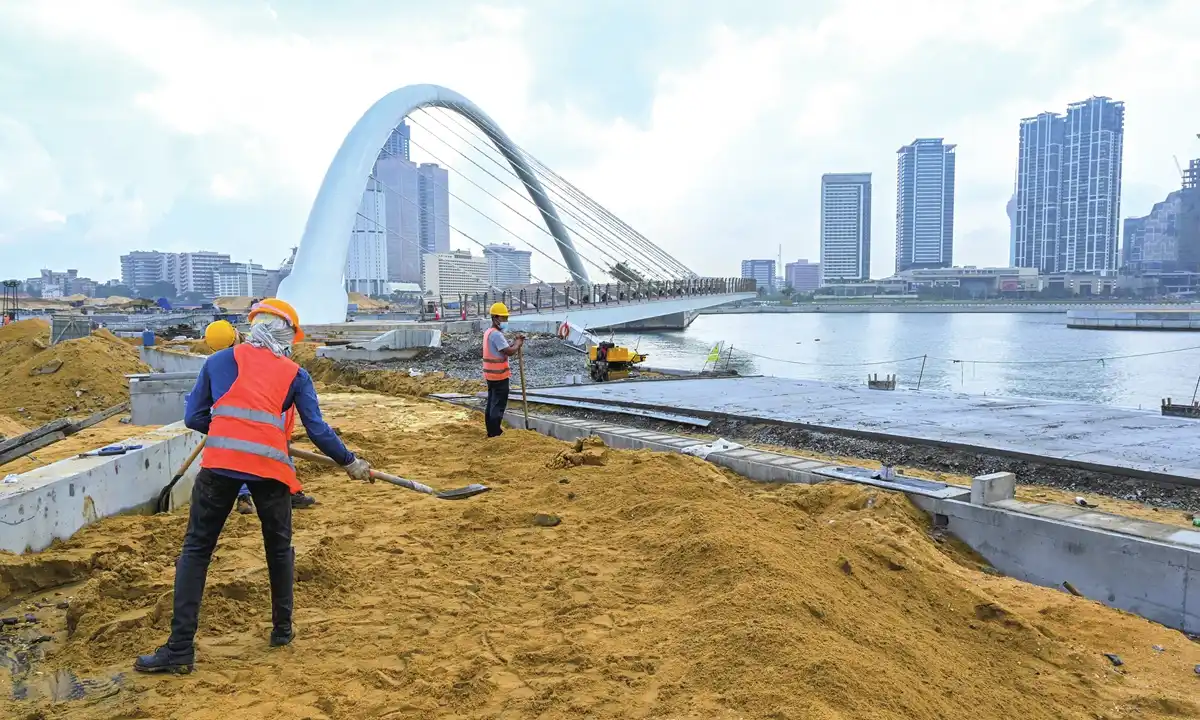
China has emerged as Sri Lanka’s most important bilateral partner in recent years, particularly through extensive infrastructure investments under the Belt and Road Initiative framework. Sri Lanka was one of the first countries to join China’s ambitious Belt and Road Initiative following China’s announcement to revive the ancient maritime Silk Road. The partnership has resulted in major infrastructure projects including the Hambantota Port, the Colombo International Container Terminal, the Colombo-Katunayake Expressway, the Norochcholai Coal Power Plant, and the Colombo Port City development.
President Dissanayake himself recently completed a four-day state visit to China in January 2025, during which he met with Chinese President Xi Jinping and emphasized that “China has always been a reliable friend and partner of Sri Lanka.” The visit resulted in the signing of several bilateral cooperation documents in areas including Belt and Road cooperation, agricultural products, social welfare, and news and broadcasting. China pledged $10 billion in investments over the coming years, though the exact timeline and scope of implementation are yet to be confirmed.
President Dissanayake’s Request for Railway Reconstruction
During the December 17 meeting, President Dissanayake expressed his sincere appreciation to Vice Chairman Wang and the accompanying delegation for visiting Sri Lanka during this difficult period, gratefully acknowledging the heartfelt support extended by China, including both material and financial assistance provided to the people affected by the disaster. The President specifically conveyed Sri Lanka’s formal request to the Chinese Government and President Xi Jinping for the provision of technical assistance to restore and reconstruct the severely damaged railway network.
This request holds particular significance given China’s extensive experience in railway infrastructure development and its proven track record of large-scale infrastructure projects in Sri Lanka. The railway reconstruction represents an opportunity for China to demonstrate its technical capabilities and deepen practical cooperation in a critical infrastructure sector that is essential for Sri Lanka’s economic recovery and social mobility.
General Manager of Railways Padmapriya noted that an Indian company which upgraded the Northern Line with Indian assistance had agreed to support repair efforts, indicating that Sri Lanka is mobilizing technical assistance from multiple partners to address the unprecedented scale of railway infrastructure damage. The combination of Chinese technical expertise and Indian support reflects Sri Lanka’s pragmatic approach to leveraging multiple bilateral partnerships for critical reconstruction needs.
One decision can change your entire career. Take that step with our Online courses in ACCA, HESI A2, ATI TEAS 7, HESI EXIT, NCLEX-RN, NCLEX-PN, and Financial Literacy. Join Serrari Ed and start building your brighter future today.
Government’s Comprehensive Recovery Strategy
President Dissanayake briefed the Chinese delegation on the disaster situation faced by Sri Lanka and the ongoing recovery and reconstruction program being implemented by the Government. The President stated that the Government’s immediate priority was the rescue of people affected by the disaster, followed by relocating them to safe locations and ensuring the provision of essential facilities such as food and healthcare.
The President further noted that the Government is now implementing a well-planned program to restore the livelihoods of the affected communities and return their daily lives to normalcy. This phased approach prioritizes immediate humanitarian relief before transitioning to longer-term reconstruction and livelihood restoration efforts. The strategy reflects lessons learned from previous disaster responses and recognizes the complex, multi-dimensional nature of recovery from a catastrophe of this magnitude.
The Government has mobilized domestic resources and coordinated international assistance from multiple partners. A Japan Disaster Relief Medical Team comprising doctors, medical experts, relief personnel, and rescue specialists arrived in Colombo to strengthen emergency humanitarian operations. The United Nations launched a $35.3 million humanitarian plan to assist Sri Lanka in addressing immediate needs.
High-Level Delegation Composition
The meeting was attended by a senior delegation from the National People’s Congress of China, demonstrating the importance China attaches to bilateral relations and disaster response cooperation. The delegation included Lu Xinshe, Chairman of the Environmental Protection and Resources Conservation Committee; Wang Ke, Vice Chairman of the Foreign Affairs Committee and Deputy Head of the China-Sri Lanka Friendship Group; Tan TianXing, Vice Chairman of the Social Development Affairs Committee; Tang Jian, Deputy Director-General of the Foreign Affairs Bureau of the General Office of the Standing Committee; Yang Yin, Counsellor of the Asian Affairs Department of the Ministry of Foreign Affairs; Sha Long, Third Secretary of the Asian Affairs Department of the Ministry of Foreign Affairs; and Qi Zhenhong, Ambassador of China to Sri Lanka, along with other officials.
Representing the Government of Sri Lanka were Minister of Labour and Deputy Minister of Finance and Planning, Dr. Anil Jayantha Fernando; Secretary to the President, Dr. Nandika Sanath Kumanayake; and Senior Additional Secretary to the President, Roshan Gamage. The composition of both delegations reflects the multi-dimensional nature of the bilateral relationship, spanning environmental cooperation, foreign affairs, social development, and economic coordination.
Historical Context of China-Sri Lanka Infrastructure Cooperation
China’s infrastructure investments in Sri Lanka have evolved significantly over decades. China’s first infrastructure investments took place in the 1970s in the form of outright grants, which included the construction of a convention centre. In the early 2000s, grant-based relations were upgraded to a commercial model that utilized interest-bearing loans and infrastructure-related foreign direct investment.
Analysis suggests that the cumulative value of Chinese infrastructure investment in Sri Lanka amounted to $12.1 billion between 2006 and July 2019, equivalent to 14 percent of Sri Lanka’s 2018 GDP. This included investments in transportation infrastructure such as highways, ports, and railways; energy infrastructure including power generation facilities; telecommunications infrastructure; and water and sanitation infrastructure that has contributed to expanding access to pipe-born water across the country.
The Lotus Tower in Colombo, built through a 2012 agreement between Sri Lanka and China, exemplifies successful Belt and Road Initiative cooperation. The tower, which opened to the public in September 2022, has become a symbolic landmark for the country, attracting visitors for sightseeing, photography, cultural experiences, and adventure sports. Many who initially criticized the project are now proudly sharing their experiences on social media, demonstrating how infrastructure projects can transform from controversial investments to valued national assets.
Geopolitical Context and Balanced Diplomacy
President Dissanayake’s engagement with China must be understood within the broader geopolitical context of Sri Lanka balancing its relationships with India and China, the two key pillars of its political landscape and economic corridor. The President’s maiden foreign visit was to India soon after assuming office in December 2024, followed by the January 2025 state visit to China, signaling that the National People’s Power government follows an independent and non-aligned foreign policy.
India and China collectively account for over 10 percent of Sri Lanka’s total trade volume, though Sri Lanka’s imports from these nations significantly exceed its exports, creating trade imbalances that Colombo is working to address through renegotiation of trade agreements and expansion of market access for Sri Lankan products. As a strategic maritime hub in the Indian Ocean, Sri Lanka possesses tremendous potential for advancing maritime trade and activities, making it a focal point of competing geopolitical interests.
President Dissanayake has strongly reaffirmed that Sri Lanka will not allow its land or territory to be used in a manner that threatens India, while simultaneously maintaining constructive relations with China. This diplomatic balancing act reflects Sri Lanka’s pragmatic approach to maximizing benefits from partnerships with both Asian giants while ensuring geopolitical neutrality and protecting its sovereignty.
Challenges and Opportunities in Post-Disaster Reconstruction
The reconstruction of Sri Lanka’s railway network and broader infrastructure presents both immense challenges and significant opportunities. The scale of damage is unprecedented, with approximately 70 percent of the railway network requiring repair or reconstruction. The financial requirements will be substantial, potentially straining Sri Lanka’s limited fiscal resources at a time when the country is still recovering from its 2022 economic crisis and implementing International Monetary Fund austerity reforms.
However, the reconstruction effort also provides opportunities to modernize and upgrade infrastructure to higher standards of resilience and efficiency. Learning from the disaster, reconstruction can incorporate climate adaptation measures, improved drainage systems, slope stabilization technologies, and early warning systems to reduce vulnerability to future extreme weather events. China’s technical expertise in railway engineering, experience with challenging mountainous terrain, and capacity for rapid large-scale construction could prove invaluable in this context.
The UNDP analysis emphasizes that the majority of those affected belong to communities already “facing multiple vulnerabilities including unstable income, high debt, and a limited capacity to cope with disasters.” For instance, the Malaiyaha Tamil community concentrated in Sri Lanka’s central highlands have long been victims of discrimination and neglect that has left them without adequate access to basic services and infrastructure even in normal times. Reconstruction efforts must prioritize these marginalized communities and address underlying structural inequalities that amplify disaster vulnerability.
Looking Forward: Strengthening Resilience and Partnership
As Sri Lanka embarks on the long road to recovery from Cyclone Ditwah, China’s pledge of comprehensive support represents a significant pillar of international assistance. The focus on railway infrastructure reconstruction addresses a critical bottleneck for economic activity, social mobility, and humanitarian access to affected regions. The technical assistance requested from China could accelerate the restoration timeline and introduce advanced engineering solutions appropriate for Sri Lanka’s challenging topographical conditions.
The disaster has also highlighted systemic vulnerabilities in Sri Lanka’s disaster preparedness and early warning capabilities. Despite multiple governments and shifting national priorities, a project to establish a Doppler Weather Radar system conceived in 2007 remains incomplete after 18 years, contributing to inadequate early warning for Cyclone Ditwah. Addressing these institutional failures will be essential for strengthening future disaster resilience.
The international community’s response, including China’s immediate material and financial assistance followed by the high-level diplomatic visit, demonstrates solidarity with Sri Lanka during its time of need. However, the true measure of success will be whether reconstruction efforts create more resilient infrastructure, address underlying vulnerabilities, and contribute to long-term sustainable development that benefits all Sri Lankans, particularly the most marginalized communities who bore disproportionate impacts from the disaster.
As Vice Chairman Wang Dongming expressed confidence in Sri Lanka’s capacity for rapid recovery under President Dissanayake’s leadership, the coming months and years will reveal whether this optimism is justified by concrete progress in reconstruction, institutional reform, and enhanced disaster resilience. The China-Sri Lanka partnership, rooted in nearly seven decades of diplomatic relations and deepened through Belt and Road cooperation, faces an important test in translating commitments into tangible improvements in the lives of disaster-affected populations and the restoration of critical national infrastructure.
Ready to take your career to the next level? Join our Online courses: ACCA, HESI A2, ATI TEAS 7 , HESI EXIT , NCLEX – RN and NCLEX – PN, Financial Literacy!🌟 Dive into a world of opportunities and empower yourself for success. Explore more at Serrari Ed and start your exciting journey today! ✨
Track GDP, Inflation and Central Bank rates for top African markets with Serrari’s comparator tool.
See today’s Treasury bonds and Money market funds movement across financial service providers in Kenya, using Serrari’s comparator tools.
photo source: Google
By: Montel Kamau
Serrari Financial Analyst
18th December, 2025