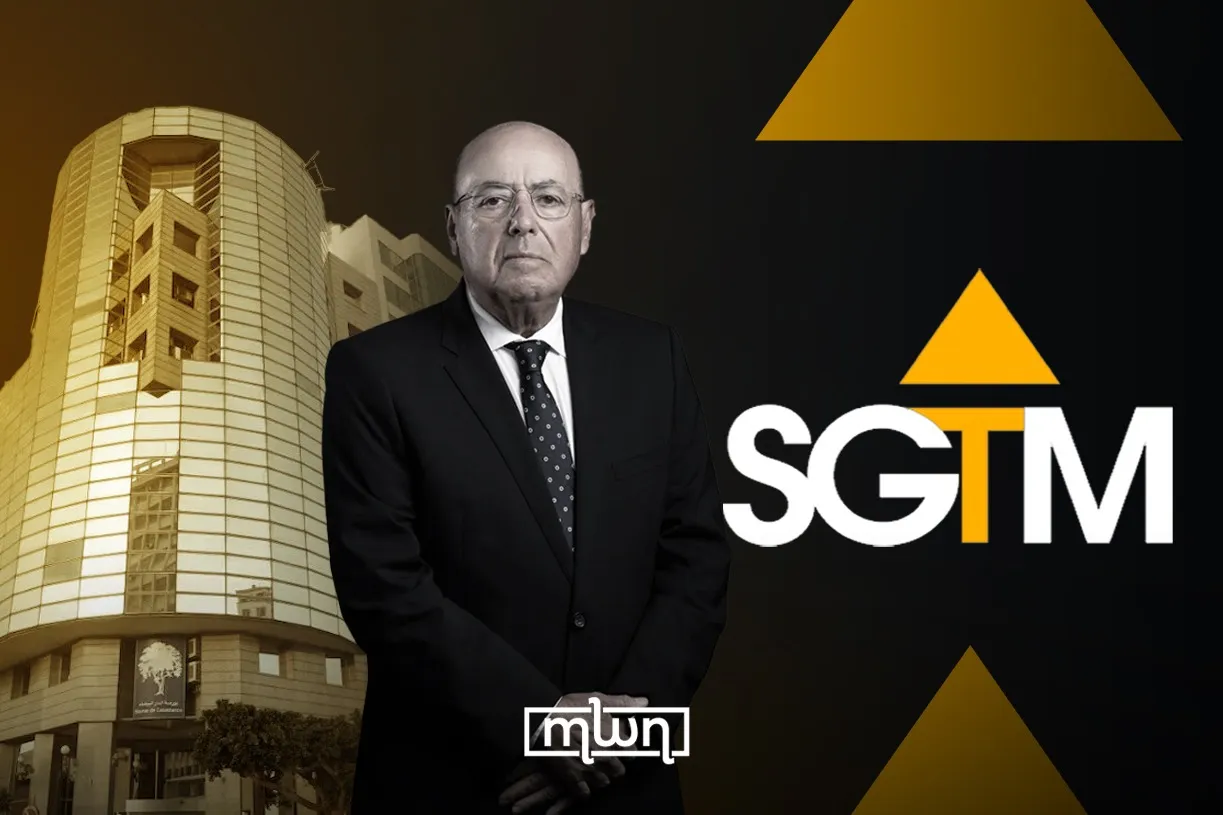
Société Générale des Travaux du Maroc has officially received approval from the Moroccan Capital Market Authority for its initial public offering, clearing the path for one of North Africa’s most significant construction companies to list on the main market of the Casablanca Stock Exchange starting in December 2025. The authorization, granted on November 17, 2025, validates the entire IPO prospectus, which includes the offering memorandum and the reference document covering the 2024 financial year and the first half of 2025, marking a watershed moment for Morocco’s capital markets that have experienced renewed vitality following years of dormancy.
The operation will cover 20 percent of SGTM’s capital, representing up to twelve million shares for a total amount that could reach 5.04 billion dirhams (approximately $540 million), positioning this offering as the second-largest IPO in the history of the Moroccan stock market, behind only Maroc Telecom’s landmark listing in 2004. The subscription period was scheduled from December 1 to 8, 2025, at 3:30 p.m. GMT+1, with the offering price structured to accommodate various investor categories: 380 dirhams for Order Type II and 420 dirhams for qualified investors under Order Types III and IV, while eligible employees and retirees benefited from preferential pricing as outlined in the prospectus.
Build the future you deserve. Get started with our top-tier Online courses: ACCA, HESI A2, ATI TEAS 7, HESI EXIT, NCLEX-RN, NCLEX-PN, and Financial Literacy. Let Serrari Ed guide your path to success. Enroll today.
Unprecedented Market Response Shatters All Records
The SGTM IPO generated extraordinary investor enthusiasm that exceeded even the most optimistic projections. The offering attracted nearly 173,000 subscribers, marking the highest number of individual participants ever recorded for an IPO in Morocco and surpassing the previous record held by Maroc Telecom in 2004, which had drawn 133,000 investors during its public offering. The subscription period closed on December 8 with the MAD 5 billion operation oversubscribed by 3,400 percent, generating total demand exceeding MAD 171 billion ($17.1 billion), an astronomical figure that demonstrates the pent-up demand for quality equity issuers in the Moroccan market.
According to the Casablanca Stock Exchange preliminary data, the construction and infrastructure group sold 12 million shares equal to 20 percent of its share capital at a price of 420 dirhams per share, excluding preferential allocations granted to some investor categories. The company scheduled to begin trading on December 16, 2025, with the deal ranking as the second-largest IPO ever completed in Casablanca behind only Maroc Telecom’s 2004 listing, and significantly exceeding the scale of other offerings completed in 2025, including Vicenne and Cash Plus, which had already helped revive activity on the primary market.
The overwhelming subscriber response indicates growing household willingness to invest in equities when company fundamentals appear solid, reflecting a maturation of Morocco’s retail investor base and increased financial literacy among the general population. For SGTM, this listing opens new financial horizons while allowing historical investors to monetize their holdings and institutionalize the company’s shareholder base, transforming what was previously a family-owned enterprise into a publicly accountable corporation subject to enhanced governance standards and disclosure requirements.
Strategic Rationale Behind the Public Listing
SGTM views this IPO as a critical step in its long-term development and opening strategy, designed to position the company for accelerated growth in both domestic and regional markets. By offering part of its capital to the market, the group aims to strengthen its financial structure, attract new strategic and financial partners, improve operational transparency through regular public disclosure, and enhance its visibility both nationally and across the African continent where infrastructure demand continues to surge.
The offering also supports a critical managerial objective: involving employees directly in the company’s performance and enabling them to share in the value created through their collective efforts. This employee participation component reflects modern corporate governance practices that align workforce incentives with long-term shareholder value creation, fostering a culture of ownership and accountability throughout the organization.
The company’s decision to pursue a public listing occurs against a backdrop of extraordinary growth opportunities. SGTM’s backlog has climbed to around MAD 35 billion ($3.5 billion) as of late 2024, almost double its level at year-end, giving SGTM roughly three years of sales “almost secured” at current run-rate. This robust pipeline provides solid visibility on future activity and supports the company’s growth ambitions in Morocco and in several African markets where it maintains operational presence.
Five Decades of Infrastructure Excellence
Founded in 1972 by brothers Ahmed and Mohamed Kabbaj, SGTM has evolved from a challenger in a market dominated by foreign firms into one of the central players of Morocco’s construction and infrastructure industry. The family-owned group, which has remained 100 percent Moroccan and independent throughout its history, has spent over half a century helping shape the country’s physical and economic landscape through completion of more than 1,000 flagship projects.
The company positions itself as a multi-specialist operator active across five main business lines: dams and hydraulic works, tertiary buildings, transport infrastructure and civil works, maritime and river works, and industrial, mining, and energy-related structures. Its impressive track record includes major dams that provide water security for agriculture and urban populations, ports such as Tanger Med and Nador West Med that serve as gateways for international trade, large stadiums that host national and international sporting events, sections of Morocco’s high-speed rail line connecting major cities, industrial units supporting manufacturing sectors, and university campuses that expand educational infrastructure.
As of the end of 2024, the company employs more than 21,000 people across its operations, backed by a sizeable equipment fleet comprising approximately 2,500 machines ranging from earthmoving equipment to specialized construction machinery. This substantial workforce and capital equipment base enables SGTM to simultaneously execute multiple large-scale projects while maintaining quality standards and meeting demanding delivery schedules.
The group’s geographic footprint extends beyond Morocco’s borders, with the company actively operating in six other African countries including Senegal, Côte d’Ivoire, and Burkina Faso. This regional diversification reduces dependence on any single market while providing exposure to infrastructure development opportunities across West Africa, where governments are investing heavily in roads, ports, energy facilities, and social infrastructure to support economic development and improve living standards.
Explosive Revenue Growth Driven by Infrastructure Boom
Financially, SGTM enters the public market with impressive scale and a visible growth trajectory that has accelerated dramatically in recent years. Consolidated revenue rose from about MAD 8.8 billion ($880 million) in 2022 to MAD 11.1 billion ($1.11 billion) in 2024, representing growth of approximately 26 percent over the two-year period. More significantly, revenue reached around MAD 11 billion in 2024, up from MAD 8.5 billion in 2023, marking growth of approximately 30 percent in a single year.
For 2025, SGTM anticipates similar robust expansion, with revenue expected to reach close to MAD 14 billion ($1.4 billion), replicating the annual increase of more than 25 percent achieved in 2024. This extraordinary growth trajectory reflects the company’s success in capturing major infrastructure contracts associated with Morocco’s accelerating development programs, particularly those linked to preparation for the 2025 Africa Cup of Nations and the 2030 FIFA World Cup.
The 2030 World Cup alone is boosting SGTM’s business by approximately 15 percent according to company leadership, though this understates the broader transformational impact on Morocco’s construction sector. As Hicham Kabbaj, a company executive, noted in an interview, “The 2030 World Cup is an accelerator of the infrastructure development in the country,” driving demand across multiple project categories from transportation networks to hospitality facilities.
The company’s most visible World Cup-related project is its role in constructing the Hassan II Stadium, which is being built approximately 35 miles east of Casablanca and will feature a design capacity of 115,000 seats, making it the largest football stadium in the world when completed. In September 2025, the firm completed total renovation of Rabat’s Moulay Abdellah Stadium, demonstrating its capacity to deliver complex projects on aggressive timelines.
World Cup Infrastructure: A National Transformation
Morocco’s successful bid to co-host the 2030 FIFA World Cup with Spain and Portugal has unleashed an unprecedented wave of infrastructure investment that creates enormous opportunities for construction companies like SGTM. The country is preparing to invest approximately $5 billion in infrastructure projects specifically tied to World Cup preparation, though this figure represents only the tournament-specific investments and does not capture the full scope of the broader national development program.
The Moroccan government has committed approximately MAD 150 billion ($15 billion) to infrastructure projects across multiple sectors through 2030, with Fouzi Lekjaa, Morocco’s minister in charge of the budget, explaining that the country’s infrastructure projects for the 2025 Africa Cup of Nations are being designed as integral components of World Cup preparation, ensuring that every dirham spent provides lasting value beyond the immediate tournament requirements.
The comprehensive development program includes renovating five existing stadiums and investing MAD 5 billion ($500 million) in construction of the world’s largest football stadium in Benslimane near Casablanca. Beyond sports venues, Morocco plans to invest MAD 12.5 billion ($1.3 billion) to develop highway infrastructure, with investments spanning from 2025 to 2032 and focusing on three major projects: the Continental Rabat-Casablanca Highway, Tit Mellil-Berrechid Highway, and Ain Harrouda and Sidi Maarouf junctions.
These highway projects are designed to improve access to the Grand Stadium in Casablanca for the World Cup, ease traffic flow on the Rabat-Casablanca corridor, and improve connectivity across the Casablanca region, addressing longstanding congestion challenges while creating modern transportation infrastructure that will serve the country for decades.
The construction sector represents about 6 percent of Morocco’s GDP and 16 percent of employment, positioning it at the heart of a public investment program exceeding MAD 1,000 billion ($100 billion) through 2031. Large-scale projects in water infrastructure, transport, ports, industrial platforms, renewable energy, and social facilities are already underway or planned, with the World Cup adding an additional layer of urgency and visibility for stadiums and transport upgrades.
Economic impact analyses project substantial returns from these investments. According to Valoris Securities estimates, each World Cup match is projected to contribute between $25 million and $37.5 million to the economy, with total direct economic benefit estimated at $1.2 billion and GDP growth contribution of 0.6 to 0.9 percent during the 2024-2030 period. The tournament is expected to create 200,000 to 250,000 direct and indirect jobs while generating an 80 percent increase in tourist arrivals by 2030.
One decision can change your entire career. Take that step with our Online courses in ACCA, HESI A2, ATI TEAS 7, HESI EXIT, NCLEX-RN, NCLEX-PN, and Financial Literacy. Join Serrari Ed and start building your brighter future today.
Valuation Framework and Investment Thesis
The valuation framework adopted for the SGTM IPO centers on discounted cash flow methodology, using a business plan covering 2025-2031 that incorporates projected revenue growth, margin profiles, investment schedules, and working capital requirements. According to detailed analysis, the weighted average cost of capital is set at 7.96 percent, combining a risk-free rate of 2.88 percent, an equity risk premium of 6.07 percent, and an unlevered beta of 0.9, which translates into a cost of equity close to 9.93 percent.
The terminal growth rate is capped at 2.5 percent, positioned conservatively below macroeconomic forecasts for Morocco’s construction sector to provide valuation cushion. On this basis, the discounted cash flow model yields an equity value of MAD 26.692 billion ($2.67 billion), or MAD 445 per share, placing the IPO price of MAD 420 toward the lower end of the theoretical range and providing investors with immediate value appreciation potential.
This valuation of around MAD 25 billion ($2.5 billion) for the entire enterprise reflects SGTM’s position as a family-owned construction group coming to market through an initial public offering made entirely by share disposal from the founding Kabbaj family. The IPO pricing strategy balances the interests of selling shareholders seeking to monetize decades of value creation with the need to attract new investors through attractive entry valuations that leave room for capital appreciation.
The timing of the IPO is directly linked to favorable macroeconomic and sector-specific conditions. Construction activity is accelerating across Morocco, supported by record public investment programs and the momentum generated by World Cup preparation. SGTM’s substantial order book, robust profit margins, conservative balance sheet, and IPO valuation that sits below model-based estimates create a compelling investment proposition for both institutional and retail investors seeking exposure to Morocco’s infrastructure boom.
Casablanca Stock Exchange: A Market Reborn
SGTM’s arrival on the Casablanca Stock Exchange occurs during a particularly active year for the bourse, which is witnessing the return of sizeable listings after several quieter years when capital-raising activity had languished and investor sentiment remained subdued. The exchange has experienced a remarkable transformation, with the benchmark MASI index surpassing the symbolic threshold of 19,000 points and reaching a record MAD 1 trillion ($100 billion) market capitalization for the first time in its history during July 2025.
Before SGTM, Cash Plus had received AMMC approval for its own listing, scheduled for December 8 following a dual operation of new and existing shares totaling 3.8 million units at a fixed price of 200 dirhams, for a global amount of approximately 750 million dirhams ($75 million). The fintech company’s IPO generated MAD 48.82 billion ($4.88 billion) in subscription requests for just MAD 750 million in available shares, representing a 64-fold oversubscription from 80,759 investors across 75 nationalities and 12 regions.
Cash Plus made history as Morocco’s first fintech to list on the Casablanca Stock Exchange, landing a valuation of about $550 million and drawing one of the largest investor turnouts the market has seen from a technology-driven issuer. The listing closed on November 25 after the IPO raised $82.5 million in total, including $44 million in new capital that will go directly into scaling the company through expansion of its nationwide footprint, strengthening its agent network, and pushing its digital ecosystem further into payments, mobile wallets, and app-based services.
Earlier in 2025, Vicenne made a notable market debut on July 15 with an IPO that was oversubscribed 64 times, attracting 32.1 billion Moroccan dirhams ($3.2 billion) in total demand for only MAD 500 million in shares. The healthcare equipment supplier’s offering attracted nearly 38,000 investors from 48 countries including buyers from the UK, UAE, France, the US, and Luxembourg, demonstrating international appetite for Morocco’s growing equity market.
Vicenne raised MAD 500 million by selling 2.1 million shares at a subscription price of MAD 236 per share, with the Bourse de Casablanca commenting that “this operation confirms the Casablanca Stock Exchange’s ability to concretely support the development of Moroccan companies by offering them effective and accessible financing solutions, regardless of their size or sector of activity.”
Beyond the completed 2025 listings, the pipeline remains robust. GPC Carton, a packaging manufacturer benefiting from Morocco’s position as leading exporter of corrugated papers and cartons in the Middle East and North Africa region, is preparing its listing. Other major companies including Dislog, Diana Holding, and Ynna Holding are reportedly considering public offerings, pointing to renewed momentum and confidence in the Casablanca market as a viable channel for raising growth capital.
Structural Reforms Drive Market Revival
The resurgence of the Casablanca Stock Exchange reflects deeper structural reforms implemented by Moroccan authorities in collaboration with international partners such as the World Bank. These reforms aim to modernize the exchange, attract more foreign capital, and establish Morocco as a regional financial center. According to Raef Kawar, a partner at Rabat-based investment banking firm EuraBridge, “Morocco has understood that to be able to attract more capital, we need to have the standards that potential investors are looking for.”
The government has introduced new financial instruments including sukuks and green bonds to broaden financing options, while finalizing plans to introduce a derivatives market that would allow investors to trade and manage risk more efficiently. These initiatives reflect recognition that developing robust, internationally competitive capital markets is essential for financing Morocco’s ambitious infrastructure and economic diversification programs without excessive reliance on government budgets or foreign debt.
The improved regulatory environment and enhanced market infrastructure have begun attracting foreign institutional investors who previously viewed Morocco as insufficiently developed for meaningful capital allocation. The 64-times oversubscription of Vicenne’s IPO, with more than 17 percent of institutional allocations going to foreign investors, demonstrates that international capital is responding to Morocco’s reform efforts and recognizes the country’s investment potential.
Private equity firms including Mediterrania Capital Partners have structured several recent listings including Cash Plus, Akdital, TGCC, and CMGP, bringing sophisticated financial engineering and institutional credibility to the market. This participation by established private equity investors provides validation of company quality and corporate governance standards, making public offerings more attractive to risk-averse retail and institutional investors.
Capital Markets Performance and Economic Context
Morocco’s stock market performance has been exceptional by regional and global standards. The MASI index rose 74 percent from early 2023 through late 2025, dramatically outperforming most developed and emerging market indices over the same period. The index gained 1.30 percent to close at 19,168.83 points in a single day during July, bringing its year-to-date performance to an impressive 29.75 percent.
Total market fundraising reached MAD 3.4 billion ($340 million) in 2025, surpassing 2024’s MAD 3.1 billion and demonstrating sustained momentum in primary market activity. Since 2022, IPOs have raised more than MAD 147 billion ($14.7 billion), confirming the growing appeal and maturity of the Casablanca market for both companies seeking funding and investors looking for new opportunities.
This capital markets revival occurs against a backdrop of solid macroeconomic performance despite global uncertainties. According to the High Commission for Planning, Morocco’s economic growth accelerated to 4.8 percent in the first quarter of 2025, up from 3.0 percent a year earlier, primarily driven by a 4.6 percent increase in non-agricultural activities stimulated by major infrastructure projects related to AFCON 2025 and World Cup 2030 preparation.
Public finances remain under control despite increased infrastructure spending, with the central bank projecting a budget deficit of 3.9 percent of GDP for 2025. This trajectory is supported by increased tax revenues from economic growth and rigorous expenditure management that prioritizes high-impact investments while containing current spending. The government has structured World Cup-related financing through innovative mechanisms including public-private partnerships and specialized funding vehicles that avoid burdening the general state budget.
Investment Banking and Market Infrastructure
SGTM’s IPO benefits from sophisticated financial advisory services provided by Morocco’s leading investment banks. Attijari Finances Corp., the investment banking arm of Attijariwafa Bank, is acting as the financial advisor and global coordinator for the offering, bringing decades of capital markets experience and deep relationships with institutional investors across Morocco, Africa, and Europe.
Attijari Intermédiation serves as lead manager of the placement syndicate, coordinating the distribution of shares to various investor categories. Co-lead managers include BMCE Capital, Saham Capital Bourse, CFG Bank Capital Markets, and Upline Securities, ensuring broad distribution capacity and access to diverse investor bases ranging from retail individuals to large institutional asset managers.
This syndicate structure reflects best practices in emerging market IPOs, where multiple banks collaborate to maximize distribution while managing pricing and allocation decisions. The competitive dynamics among syndicate members help ensure aggressive marketing efforts while the coordination provided by the global coordinator maintains consistency in messaging and execution.
Broader Implications for Moroccan Capital Markets
The SGTM IPO carries significance that extends well beyond the transaction itself, representing validation of Morocco’s economic trajectory and capital markets infrastructure. The overwhelming investor response—173,000 subscribers generating MAD 171 billion in demand—demonstrates that retail investors, who have historically been skeptical of equities, are now willing to allocate capital to well-structured offerings backed by companies with strong fundamentals and visible growth prospects.
This shift in investor psychology reflects multiple factors: improved corporate governance standards that provide better protection for minority shareholders, enhanced disclosure requirements that increase transparency and reduce information asymmetry, growing financial literacy as more Moroccans gain exposure to capital markets through various channels, and concrete examples of wealth creation through earlier IPOs that have delivered strong returns for subscribers.
For other Moroccan companies contemplating public listings, SGTM’s success provides a powerful demonstration effect. The ability to raise MAD 5 billion at premium valuations while generating extraordinary oversubscription proves that the market has capacity to absorb large offerings when properly structured and marketed. This should encourage additional companies to consider IPOs as viable alternatives to private equity or debt financing for funding growth initiatives.
The diversification of listed sectors—from healthcare (Vicenne) to fintech (Cash Plus) to construction (SGTM)—enhances the attractiveness of the Casablanca exchange to portfolio investors seeking sectoral diversity. Previously, the market was heavily weighted toward financials and materials, limiting options for investors wanting broad economic exposure. The addition of high-growth companies from various sectors creates more balanced index composition and reduces concentration risk.
Challenges and Risk Factors
Despite the overwhelmingly positive market reception, SGTM and the broader Moroccan construction sector face legitimate challenges that could impact future performance. The surge in contracts brings operational pressures including scarcity of qualified talent in engineering and project management roles, rising input costs for materials and equipment that compress margins, execution risk associated with delivering multiple large projects simultaneously, and working capital requirements that increase as the company scales operations.
SGTM’s international expansion ambitions, including pursuit of contracts in the Middle East region and particularly in Saudi Arabia for the 2034 World Cup, introduce additional complexities related to operating in unfamiliar regulatory environments, managing currency exposures, competing against well-established international contractors, and adapting to different construction standards and practices.
The concentration of revenue growth on World Cup-related projects creates temporary demand that will eventually moderate, requiring SGTM to identify sustainable growth drivers beyond the tournament cycle. While infrastructure investment is expected to remain elevated through 2030, the post-World Cup environment could see reduced public sector contracting volumes unless Morocco successfully transitions to a more diversified industrial and services economy that generates ongoing construction demand.
Macroeconomic risks include potential fiscal constraints if government revenues disappoint or if debt servicing costs rise significantly, currency volatility that could impact import costs for equipment and materials, inflationary pressures that erode purchasing power and increase wage demands, and external shocks such as regional instability or global economic downturns that reduce investor confidence and capital flows.
Conclusion: A Defining Moment for Morocco’s Financial Future
SGTM’s record-breaking IPO represents more than a successful capital-raising transaction for a single company—it marks a defining moment in the evolution of Morocco’s capital markets and broader economic development trajectory. The offering’s overwhelming reception, with nearly 173,000 subscribers generating demand 34 times the available supply, validates years of regulatory reform and demonstrates that Morocco has successfully created a functioning equity market capable of channeling domestic savings toward productive investments.
The timing of SGTM’s listing, coinciding with historic infrastructure investment programs tied to AFCON 2025 and World Cup 2030, positions the company to benefit from extraordinary growth opportunities while providing public market investors with direct exposure to Morocco’s transformation. The construction sector’s central role in the country’s development strategy—representing 6 percent of GDP and 16 percent of employment—ensures that SGTM’s fortunes are closely tied to national success.
For the Casablanca Stock Exchange, the successive listings of Vicenne, Cash Plus, and SGTM in 2025 highlight a market gaining momentum and capable of mobilizing public savings to support high-value projects. Since 2022, IPOs have raised more than MAD 147 billion, confirming that the exchange has matured into a credible capital formation mechanism that complements traditional bank lending and foreign direct investment.
Looking ahead, the continued development of Morocco’s capital markets depends on sustaining the reform momentum, expanding the investor base both domestically and internationally, encouraging more companies to consider public listings, and maintaining the quality of corporate governance and disclosure that underpins investor confidence. If these conditions are met, the Casablanca Stock Exchange could evolve into a true regional financial center, attracting capital from across Africa and the Middle East while providing Moroccan companies with efficient access to growth financing.
SGTM’s December 16 trading debut will provide the ultimate test of market sentiment, with opening price performance signaling whether the extraordinary subscription demand translates into sustained buying pressure from investors who missed allocation opportunities. If the stock performs well in the aftermarket, it will encourage the pipeline of companies contemplating IPOs while reinforcing retail investor enthusiasm for equity participation.
The renaissance of Morocco’s capital markets, exemplified by SGTM’s landmark offering, demonstrates that emerging markets with sound fundamentals, credible institutions, and compelling growth narratives can attract substantial capital even in an uncertain global environment. As infrastructure investment accelerates and economic diversification progresses, Morocco’s experience may provide a template for other African nations seeking to develop robust domestic capital markets that reduce dependence on external financing while empowering local entrepreneurs and investors to build shared prosperity.
Ready to take your career to the next level? Join our Online courses: ACCA, HESI A2, ATI TEAS 7 , HESI EXIT , NCLEX – RN and NCLEX – PN, Financial Literacy!🌟 Dive into a world of opportunities and empower yourself for success. Explore more at Serrari Ed and start your exciting journey today! ✨
Track GDP, Inflation and Central Bank rates for top African markets with Serrari’s comparator tool.
See today’s Treasury bonds and Money market funds movement across financial service providers in Kenya, using Serrari’s comparator tools.
photo source: Google
By: Montel Kamau
Serrari Financial Analyst
17th December, 2025