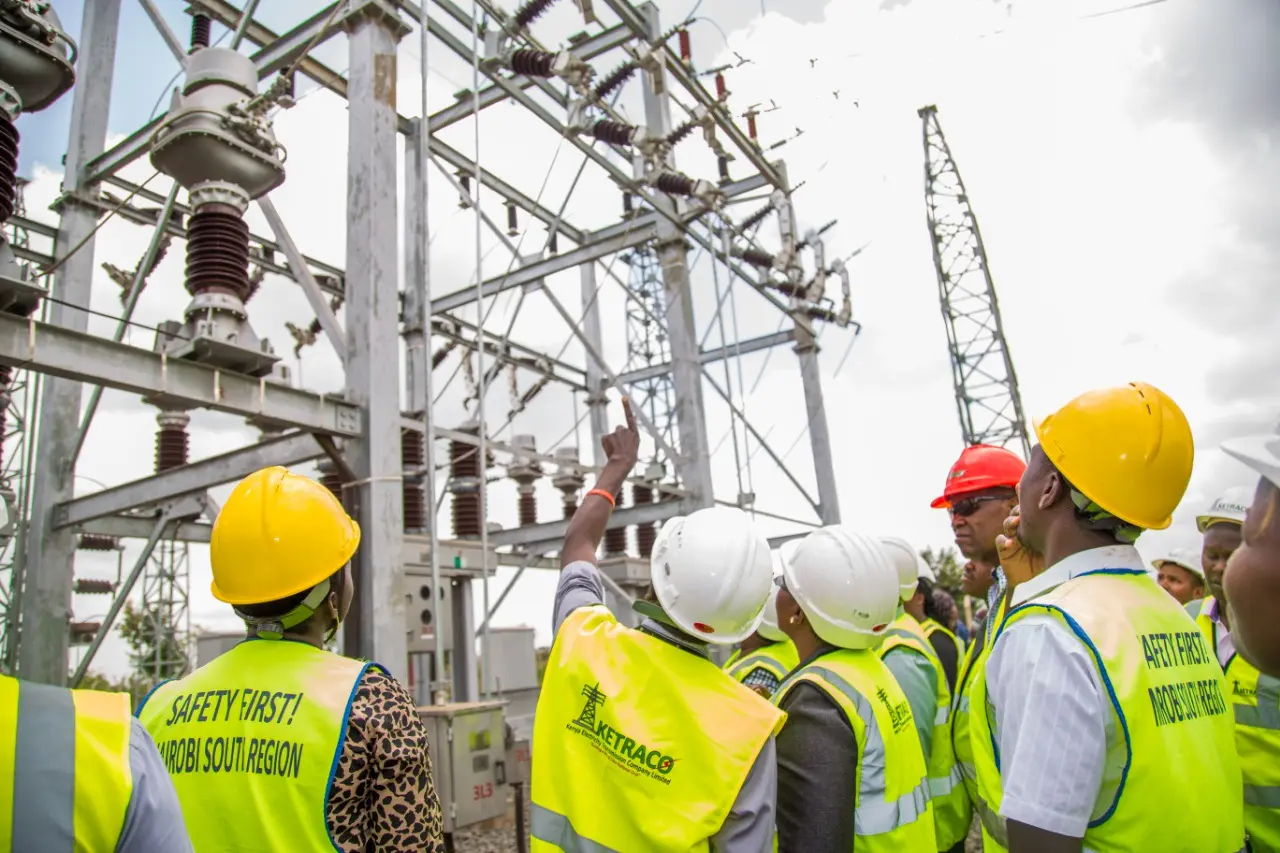
The Kenyan government has finalized a landmark KSh 40.4 billion ($311 million) Public-Private Partnership agreement to strengthen the nation’s electricity transmission network, marking a strategic pivot after President William Ruto cancelled controversial deals with India’s Adani Group in November 2024 due to corruption concerns and intense public backlash.
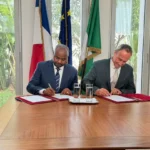
The deal, signed on Monday, December 15, 2025, between the Kenya Electricity Transmission Company Limited (KETRACO) and a consortium comprising Africa50 and PowerGrid Corporation of India, was witnessed by National Treasury Principal Secretary Dr. Chris Kiptoo alongside senior government officials, marking a critical milestone in Kenya’s efforts to modernize energy infrastructure through innovative financing while maintaining fiscal discipline and transparency.
Build the future you deserve. Get started with our top-tier Online courses: ACCA, HESI A2, ATI TEAS 7, HESI EXIT, NCLEX-RN, NCLEX-PN, and Financial Literacy. Let Serrari Ed guide your path to success. Enroll today.
Strategic Partnership Details and Approval Process
The consortium brings together Africa50, a pan-African infrastructure investment platform backed by 33 African governments including Kenya as a shareholder with a paid-up capital of $25.6 million, the African Development Bank Group, and other continental institutions. PowerGrid Corporation of India, one of the world’s largest transmission utilities responsible for transmitting approximately 50 percent of India’s electricity, provides technical and operational expertise critical to the project’s success.
The project was initiated as a Privately Initiated Proposal (PIP) in 2022 and approved under Section 61 of Kenya’s PPP Act, 2021. It received comprehensive approvals from the PPP Committee, KETRACO’s Board, the Energy and Petroleum Regulatory Authority (EPRA), and the Office of the Attorney General before culminating in the December 15 signing ceremony. This rigorous approval process contrasts sharply with the opacity that characterized the cancelled Adani Group agreements.
Reading remarks on behalf of Treasury Cabinet Secretary John Mbadi, Principal Secretary Kiptoo emphasized that the project reaffirms the government’s commitment to accelerating economic development through strategic investments in energy infrastructure anchored on sound policy and disciplined planning. He noted that the project would strengthen Kenya’s transmission backbone, which is critical for national resilience, regional development, and sustained economic expansion.
“Through PPPs, the Government attracts capital and technical expertise while safeguarding fiscal discipline and national priorities,” Kiptoo stated during the signing ceremony. The event was also attended by Principal Secretaries Bonface Makokha of Economic Planning, Cyrell Odede of Public Investment and Asset Management, Alex Wachira of Energy, and Director General of the Public Private Partnership Directorate Kepha Seda.
Infrastructure Scope and Technical Specifications
The KSh 40.4 billion project, which will be fully financed, implemented, operated, and maintained by the private sector, involves construction of two high-voltage transmission corridors and associated substations designed to address critical bottlenecks in Kenya’s electricity distribution system.
The first corridor is the 400 kV Lessos–Loosuk transmission line, which will traverse Samburu, Baringo, Nandi, and Elgeyo Marakwet counties, with substations at Lessos and Loosuk. This line will provide an alternative evacuation route for up to 300 megawatts of geothermal power from the Baringo–Silali resource area, significantly enhancing grid stability by reducing pressure on the existing Loiyangalani–Suswa line. The corridor will also facilitate evacuation of wind power from the Lake Turkana Wind Power project, one of Africa’s largest renewable energy installations.
The second corridor is the 220 kV Kibos-Kakamega-Musaga transmission line, which will serve Kisumu, Vihiga, and Kakamega counties, with substations at Kibos, Kakamega, and Musaga. This infrastructure is expected to dramatically improve high-voltage power supply to Kakamega and significantly reduce technical losses and load shedding that have plagued Western Kenya, enhancing electricity reliability for households, businesses, and industrial operations in the region.
According to the National Treasury, the project will establish new routes to enhance system stability, reduce technical losses and load shedding, and facilitate the integration of renewable energy sources into the national grid—objectives aligned with Kenya’s Least Cost Power Development Plan and KETRACO’s Transmission Master Plan.
Operational Framework and Asset Management
Under the agreement, Africa50 and PowerGrid will establish a dedicated project company to manage the infrastructure over a 30-year concession period, undertaking the entire lifecycle from construction through operation. KETRACO will make performance-based availability payments to ensure the private consortium maintains service standards and infrastructure quality throughout the concession period.
An independent expert jointly appointed by both KETRACO and the consortium will oversee project delivery, ensuring compliance with technical specifications, environmental standards, and contractual obligations. This independent oversight mechanism addresses concerns about accountability that emerged during the Adani controversy.
At the end of the concession period, all transmission assets will revert to KETRACO in good condition and free of encumbrances, ensuring long-term national ownership of critical infrastructure. The project company will undertake financing, design, construction, and operation responsibilities, allowing KETRACO to expand transmission capacity without immediate capital expenditure from government coffers.
Addressing Kenya’s Transmission Infrastructure Gap
KETRACO Acting Managing Director Eng. Kipkemoi Kibias revealed that the company plans to develop an additional 8,000 kilometers of transmission lines over the next 20 years, requiring approximately $5 billion in investment. Limited public funding has necessitated increased private sector participation to bridge this massive financing gap and deliver critical infrastructure essential for Kenya’s economic transformation.
“This PPP reflects our commitment to innovative financing solutions to bridge the transmission financing gap and deliver critical infrastructure,” Kibias stated. The shift to Public-Private Partnerships was driven by increasing constraints in public financing and the urgent need to modernize the national grid to meet rapidly growing electricity demand driven by population growth, urbanization, and industrialization.
Kenya’s electricity demand has been growing steadily, driven by expanding economic activity, increased connectivity rates, and government initiatives to achieve universal electricity access. However, inadequate transmission infrastructure has created bottlenecks that result in power supply interruptions, technical losses estimated at substantial percentages of generated electricity, and inability to efficiently evacuate renewable energy from generation sites to consumption centers.
The government has emphasized that PPP frameworks enable Kenya to leverage private sector capital, technology, and management expertise while maintaining public oversight and ensuring infrastructure serves national development objectives. The approach allows government to focus limited public resources on social sectors like health and education while partnering with experienced operators for infrastructure development.
The Adani Shadow: Context of Cancellation
The current deal emerges against the backdrop of intense controversy surrounding KETRACO’s earlier engagement with India’s Adani Group. KETRACO had awarded a separate transmission project to Adani Energy Solutions in October 2024, valued at approximately KSh 96 billion ($736 million) under a 30-year Public-Private Partnership for construction of transmission lines including the 400kV, 206km Gilgil-Thika-Malaa-Konza corridor and associated substations.
However, President Ruto cancelled the Adani agreements in November 2024 during his State of the Nation address, citing “new information provided by our investigative agencies and partner nations” following US federal indictments against Adani Group founder Gautam Adani. US prosecutors charged Adani and seven others with agreeing to pay approximately $265 million in bribes to Indian government officials to secure solar energy contracts, along with securities fraud and conspiracy charges.
The Adani transmission deal, signed in October 2024 despite widespread public criticism, had faced immediate legal challenges from the Law Society of Kenya over lack of transparency and inadequate public participation. The High Court issued conservatory orders just weeks after signing, suspending implementation and barring Adani from entering new agreements or furthering existing deals.
The Kenyan government now faces a potential KSh 7.3 billion liability following the Adani contract cancellation, according to the Treasury’s PPP Directorate. The government is pursuing a “mutual separation agreement” rather than formal termination to minimize financial fallout, with legal experts estimating formal termination could cost taxpayers at least KSh 5 billion in compensation.
The Adani controversy highlighted critical deficiencies in Kenya’s procurement processes and raised fundamental questions about transparency, due diligence, and public participation in major infrastructure deals. The episode generated substantial political pressure for more rigorous vetting procedures and greater transparency in future PPP agreements.
Enhanced Transparency and Stakeholder Engagement
Learning from the Adani debacle, KETRACO emphasized that it held numerous internal and external stakeholder engagement forums and public participation sessions before signing the Africa50-PowerGrid agreement to ensure social acceptability and transparency. This consultative approach contrasts markedly with the secrecy and rushed processes that characterized the Adani engagement.
The government has committed that all project-affected persons will receive prompt and fair compensation for land, crops, structures, and income loss, alongside livelihood restoration measures aimed at safeguarding community stability. This commitment addresses concerns about inadequate compensation that have plagued previous transmission projects and resulted in delays and community opposition.
Public participation has become a critical political requirement in Kenya following widespread protests in mid-2024 against perceived government overreach and lack of accountability. Citizens increasingly demand transparency in major government contracts, particularly those involving foreign companies, reflecting lessons learned from previous controversial deals.
The signing ceremony’s high-profile nature, with multiple Principal Secretaries in attendance and extensive media coverage, signals government intent to demonstrate transparency and build public confidence in the procurement process. Officials emphasized compliance with constitutional principles of transparency, accountability, and public participation enshrined in Article 10 of Kenya’s Constitution.
One decision can change your entire career. Take that step with our Online courses in ACCA, HESI A2, ATI TEAS 7, HESI EXIT, NCLEX-RN, NCLEX-PN, and Financial Literacy. Join Serrari Ed and start building your brighter future today.
Africa50’s Pan-African Credentials and Track Record
Africa50 is a Morocco-based infrastructure investment platform established by African governments and the African Development Bank to help bridge the continent’s infrastructure funding gap. The platform currently has 33 shareholders comprising 32 African countries, the African Development Bank, the Central Bank of West African States (BCEAO), and Bank Al-Maghrib, Morocco’s central bank.
Kenya is among the six most influential countries in the Africa50 Fund, selected based on financial contribution size, economic strength, and political positioning within the continent. Kenya initially subscribed as a founding shareholder and subsequently increased its equity investment, demonstrating commitment to pan-African infrastructure development through multilateral platforms.
Africa50 has invested over $6.6 billion in critical infrastructure across the continent since operations began, according to African Development Bank President Dr. Akinwumi Adesina, who chairs Africa50’s board of directors. The platform has established a track record in energy, transportation, digital infrastructure, and other sectors across more than 30 African countries.
The organization operates through three business lines: Africa50-Project Development, which provides early-stage equity funding and project preparation; Africa50-Project Finance, which engages near or after financial close providing equity and quasi-equity; and the Africa50 Infrastructure Acceleration Fund, a private equity vehicle targeting mid-to-large scale infrastructure projects.
Africa50’s first close of the Infrastructure Acceleration Fund secured $222.5 million in commitments, including from 16 African institutional investors and the International Finance Corporation, which invested $20 million. The fund targets a final close of $500 million for deployment across digital infrastructure, renewable power and energy, transportation, logistics, and water and sanitation projects.
PowerGrid India’s Technical Expertise and Global Experience
PowerGrid Corporation of India Limited brings formidable technical capabilities to the partnership. As one of the world’s largest electric transmission utilities, PowerGrid operates one of the most extensive transmission networks globally, with interstate transmission lines spanning more than 170,000 circuit kilometers and over 260 substations across India.
The company transmits approximately 50 percent of India’s total electricity generation, managing complex grid operations that integrate diverse generation sources including thermal, hydro, nuclear, and rapidly expanding renewable energy capacity. PowerGrid’s experience in evacuating renewable energy—particularly from large-scale solar and wind installations—directly addresses Kenya’s challenges in integrating geothermal and wind power into the national grid.
PowerGrid Chairman and Managing Director Shri K. Sreekant stated that PowerGrid is pleased to partner with Africa50 in undertaking development of Kenya’s first PPP mode transmission project. “Transmission plays an important role in bringing efficiency in the entire electricity supply chain. A robust transmission network not only imparts reliability and security to the electricity grid but also allows non-discriminatory access to buyers and sellers which spur competition and efficiency,” Sreekant noted.
PowerGrid’s technical expertise encompasses high-voltage direct current (HVDC) transmission technology, smart grid solutions, and advanced supervisory control and data acquisition (SCADA) systems that enhance grid monitoring and operational efficiency. The company’s involvement ensures technology transfer and capacity building for Kenyan technical personnel operating the transmission infrastructure.
Renewable Energy Integration and Climate Objectives
The project aligns with Kenya’s ambitious renewable energy targets and climate commitments under the Paris Agreement. Kenya has emerged as a global leader in geothermal power development, with the Olkaria complex in the Rift Valley representing one of the world’s largest geothermal installations. However, inadequate transmission capacity has constrained full utilization of this clean energy potential.
The 400 kV Lessos–Loosuk line will provide crucial evacuation capacity for up to 300 MW of geothermal power from the Baringo–Paka–Silali resource area, unlocking development of geothermal reserves that have remained stranded due to transmission constraints. This will enable Kenya to reduce reliance on thermal power generation during peak demand periods, lowering carbon emissions and electricity costs.
The transmission corridors will also support Kenya’s vision of becoming a regional clean energy hub, facilitating potential electricity exports to neighboring countries including Uganda, Tanzania, Rwanda, and potentially beyond through Eastern Africa Power Pool interconnections. Enhanced transmission infrastructure is essential for regional power trade that can improve energy security and economic integration.
Kenya’s renewable energy sector—comprising geothermal, wind, solar, and hydroelectric sources—has attracted substantial private investment in recent years. However, generation capacity additions have outpaced transmission infrastructure development, creating bottlenecks that limit renewable energy penetration and force continued reliance on expensive thermal generation during grid constraints.
The government has emphasized that modern, high-capacity transmission lines with reduced technical losses will lower the overall cost of electricity by enabling efficient power flow from generation sites to consumption centers, reducing reliance on expensive emergency power generation, and minimizing system inefficiencies.
Regional and Economic Development Implications
Beyond technical electricity transmission functions, the project carries significant regional development implications. Western Kenya, including Kakamega and surrounding counties served by the 220 kV corridor, has historically experienced power supply challenges that constrain economic activity and industrial development.
Improved electricity infrastructure is expected to catalyze manufacturing expansion, agro-processing industries, and commercial activities in the region. Reliable power supply attracts investment, supports small and medium enterprises, and enables value addition to agricultural products—transforming economic opportunities for communities long underserved by inadequate infrastructure.
The Rift Valley counties traversed by the Lessos–Loosuk line, including Baringo and Samburu, are predominantly pastoral communities that have traditionally had limited access to grid electricity. Enhanced transmission infrastructure creates opportunities for rural electrification, connecting remote communities to the national grid and supporting productive uses of electricity in agriculture, healthcare, and education.
The project is expected to create thousands of direct and indirect jobs during construction and operation phases, providing employment opportunities for skilled and unskilled workers across multiple counties. Local procurement of materials and services will generate economic multiplier effects in project-affected areas.
KETRACO has committed to prioritizing local labor and skills development during project implementation, including training programs that build technical capacity among Kenyan workers in high-voltage transmission construction and maintenance. Technology transfer from PowerGrid India will enhance local expertise in modern transmission technologies.
Lessons from KETRACO’s Troubled History
The current deal occurs against a backdrop of serious operational and financial management challenges at KETRACO documented in successive Auditor-General reports. An audit for the financial year ending June 30, 2023, revealed that taxpayers lost over KSh 6.9 billion in unwarranted expenditures due to project delays and poor planning at the state-owned entity.
Auditor General Nancy Gathungu highlighted numerous instances of avoidable costs, including a KSh 417 million fine for delayed commissioning of the Kenya-Ethiopia power-sharing project and KSh 85 million in storage costs for transformers for a terminated project. KETRACO also faces a KSh 4.5 billion arbitration award to Spanish contractor Instalaciones Inabensa for wrongful contract termination.
A 2020 audit report flagged four key projects worth KSh 24 billion that were significantly behind schedule, contributing to transmission bottlenecks and undermining Kenya’s ability to integrate new generation capacity. Parliament has subjected KETRACO to intense scrutiny over ballooning liabilities nearing KSh 13 billion and significant delays in compensating landowners for wayleaves, which further stalls critical infrastructure projects.
These systemic issues create a high-risk environment for large-scale projects and have burdened the Kenyan public with financial consequences of failed contracts and inefficient management. The new PPP framework, with private sector financing and performance-based payments, is designed to mitigate some of these risks by transferring construction and operational risks to experienced private partners.
However, questions remain about KETRACO’s institutional capacity to effectively manage complex PPP arrangements, conduct adequate oversight, and ensure private partners deliver quality infrastructure on schedule. The organization’s history of project delays and cost overruns underscores the importance of robust contract management and independent technical oversight.
Path to Financial Close and Implementation Timeline
The project is expected to achieve financial close in early 2026, with construction commencing shortly thereafter. The consortium has secured indicative term sheets from senior lenders for project financing, with a debt-to-equity ratio of 77:23 planned for the capital structure.
According to due diligence reports, the anticipated project cost as of November 2024 was approximately $341 million, with the consortium demonstrating financial capacity, relevant experience, and technical expertise to deliver the projects. Both Africa50 and PowerGrid have met requirements under Section 27 of Kenya’s PPP Act regarding financial capability, relevant experience, expertise, and satisfaction of legal, social, and environmental parameters.
Construction is expected to span approximately three to four years, depending on terrain challenges, weather conditions, and community engagement success in securing rights of way. The remote nature of some corridor sections, particularly in Baringo and Samburu counties, presents logistical challenges for transporting materials and equipment.
Once operational, the transmission lines will significantly enhance Kenya’s electricity grid capacity and reliability, supporting the government’s objective of ensuring universal electricity access by 2030. The infrastructure will remain operational for decades, delivering long-term benefits to the national economy and supporting Kenya’s industrialization agenda.
Looking Forward: PPPs and Kenya’s Infrastructure Future
The Africa50-PowerGrid partnership represents a test case for Kenya’s PPP framework following the Adani controversy. Success will depend on transparent implementation, effective community engagement, timely land acquisition and compensation, adherence to environmental and social standards, and consistent oversight by government agencies and civil society.
The government has emphasized that PPPs will play an increasingly central role in financing Kenya’s infrastructure development as fiscal constraints limit traditional government-funded approaches. However, the Adani experience demonstrates that PPP frameworks require rigorous due diligence, transparent procurement processes, meaningful public participation, and robust oversight mechanisms to protect public interests.
Civil society organizations and media will closely monitor project implementation, scrutinizing contract execution, land acquisition processes, environmental compliance, and benefit delivery to communities. The level of transparency maintained throughout construction and operation will significantly influence public confidence in future PPP arrangements.
President Ruto’s administration has staked substantial political capital on demonstrating that it can deliver major infrastructure projects through partnerships that balance efficiency with transparency and accountability. The transmission project’s success or failure will influence investor perceptions of Kenya’s PPP framework and affect the government’s ability to attract private capital for other critical infrastructure needs.
As Kenya pursues its vision of becoming an upper-middle-income country with modern infrastructure supporting economic transformation, the electricity transmission partnership with Africa50 and PowerGrid represents both opportunity and test—opportunity to leverage international expertise and capital for national development, and a test of whether lessons learned from past controversies can translate into improved governance of public-private infrastructure partnerships.
For millions of Kenyans in Western Kenya, the Rift Valley, and beyond who experience frequent power interruptions and inadequate electricity access, the project’s ultimate measure of success will be tangible improvements in electricity reliability, reduced outages, and economic opportunities enabled by dependable power supply—the concrete benefits that transform infrastructure investments from political promises into lived realities.
Ready to take your career to the next level? Join our Online courses: ACCA, HESI A2, ATI TEAS 7 , HESI EXIT , NCLEX – RN and NCLEX – PN, Financial Literacy!🌟 Dive into a world of opportunities and empower yourself for success. Explore more at Serrari Ed and start your exciting journey today! ✨
Track GDP, Inflation and Central Bank rates for top African markets with Serrari’s comparator tool.
See today’s Treasury bonds and Money market funds movement across financial service providers in Kenya, using Serrari’s comparator tools.
Photo source: Google
By: Montel Kamau
Serrari Financial Analyst
16th December, 2025