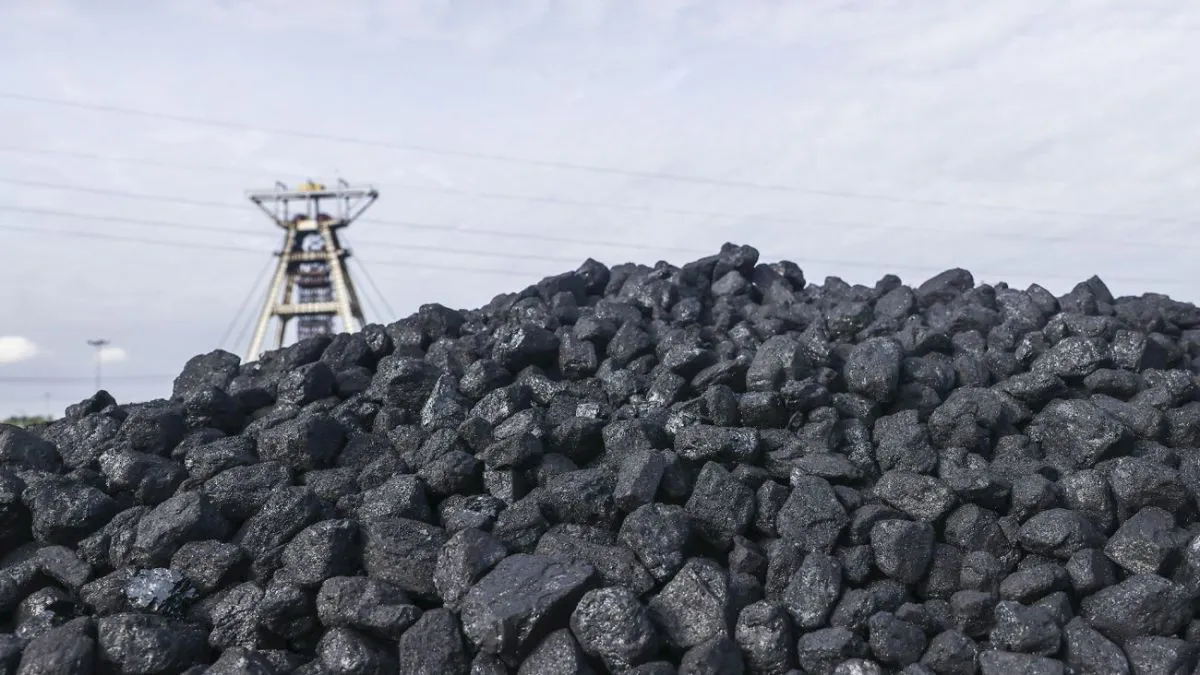
South African coal miners have dramatically increased thermal coal exports to Israel following Colombia’s total ban on shipments implemented in August 2025, with data revealing an 87 percent surge that positions South Africa as the dominant supplier to the Israeli energy market despite Pretoria’s high-profile genocide case against Tel Aviv at the International Court of Justice.
Analytics from Kpler, LSEG and DBX Commodities show that South Africa boosted exports by 87 percent to 474,000 metric tons in the three months ending November 2025 on an annual basis, with projections indicating the country will ship nearly 170,000 tons in December alone. The expansion comes as Colombian coal exports to Israel dropped to zero during the same period, following Bogotá’s enforcement of export restrictions initially imposed through presidential decree.
The dramatic shift in supply chains has exposed what critics describe as profound hypocrisy in South African policy, where the government pursues legal action against Israel for alleged war crimes while simultaneously providing the energy resources that power Israeli infrastructure, including military operations and illegal settlements in occupied Palestinian territories.
Build the future you deserve. Get started with our top-tier Online courses: ACCA, HESI A2, ATI TEAS 7, HESI EXIT, NCLEX-RN, NCLEX-PN, and Financial Literacy. Let Serrari Ed guide your path to success. Enroll today.
Colombia’s Principled Stand and Enforcement Challenges
Colombian President Gustavo Petro issued a complete ban on coal exports to Israel in August 2025, reinforcing an earlier prohibition announced in 2024. The South American leader declared that “not a single ton of coal” would be shipped to Israel amid continued military operations in Gaza that have killed tens of thousands of Palestinians, including thousands of children according to Gaza health ministry figures.
Petro explicitly framed the ban as a refusal to be complicit in what he characterized as genocide, stating that “with Colombian coal they make bombs to kill the children of Palestine.” The Colombian president took the extraordinary step of ordering the Colombian Navy to intercept and block any shipments of coal destined for Israel, threatening to unilaterally alter concession contracts for mining giant Glencore if exports continued.
The ban, formalized through Decree 0949 signed on August 28, 2025, completely suspends coal shipments to Israel without exception, citing World Trade Organization rules that permit export restrictions during wartime or periods of international tension. Colombia supplies around 5 percent of its coal output to Israel, but Israel has historically sourced nearly half of its coal imports from Colombia, making the ban a significant disruption to Israeli energy security.
The implementation faced resistance from multinational corporations. President Petro publicly criticized mining companies Drummond and Glencore for allegedly violating the export ban, with union leaders and energy watchdog groups confirming discrepancies in government oversight. However, according to the Colombian Mining Association, coal sales to Israel have dropped by more than 50 percent since implementation, with no reported exports in April and May 2025.
Colombia’s decision reflects broader regional solidarity with Palestine. Petro hosted delegates from over 30 countries at a pro-Palestinian summit organized by The Hague Group in Bogotá, where participants announced plans to hold Israel accountable for alleged genocide in Gaza. The summit produced six measures aimed at stopping Israeli actions in occupied Palestinian territories.
South Africa’s Contradictory Position
South Africa’s surging coal exports to Israel directly undermine the country’s political positioning as a global leader in condemning Israeli actions. Pretoria filed a landmark case at the International Court of Justice in December 2023 accusing Israel of genocide in Gaza—a claim Prime Minister Benjamin Netanyahu has categorically rejected. Yet even as South African officials pursue this high-profile legal action, the country’s coal exports to Israel have continued unabated and indeed accelerated.
Data from the South African Revenue Service shows coal exports to Israel rose 20 percent to 667,442 tons in the three months to October 2025—the highest for any three-month period since February 2017. More strikingly, South Africa’s 2025 coal exports to Israel will be the highest since 2017, with the country’s share in Israel’s seaborne coal market set to more than triple from 2024 levels to 55 percent.
Patrick Bond, director at the University of Johannesburg’s Centre for Social Change who closely tracks coal exports, characterized the situation bluntly: “Four words explain this profound hypocrisy: talk left, walk right.” Bond noted that more than a dozen South Africa-based coal exporters have been shipping electricity-grade coal to Israel since 2023, with Kpler data showing that all cargoes imported by Israel since September 2025 came exclusively from South Africa.
Trade data shows South Africa’s coal shipments to Israel grew 17 percent in January 2025 compared with January 2024, with total export value of coal and other products growing 22.9 percent to represent approximately $28 million. Over the past five years, trade between the two countries has increased by an average of 20.6 percent annually according to Observatory of Economic Complexity data.
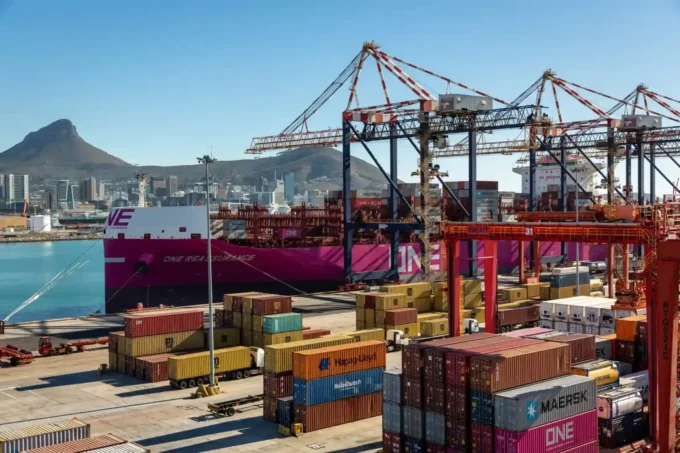
The coal travels through state-controlled infrastructure. The Transnet National Ports Authority, a division of state-owned Transnet SOC Ltd., loads coal onto cargo ships at facilities including the Richards Bay Terminal in Durban for transport to Israeli ports, particularly the Port of Hadera which serves the Orot Rabin power plant. This means South African government infrastructure directly facilitates coal exports that critics argue fuel Israeli military operations.
The Energy Infrastructure Connection
The strategic significance of these coal exports extends beyond their economic value. Israel generates 17.5 percent of its electricity from imported coal, primarily at the Rotenberg power plant in Ashkelon and the Orot Rabin plant in Hadera. This electricity sustains both civilian and military infrastructure, including what UN reports describe as illegal settlements in the West Bank and East Jerusalem.
According to campaign groups including the Global Energy Embargo for Palestine, Israel’s Electric Corporation (IEC) is the largest supplier and sole integrated electrical power provider in Israel and occupied Palestinian territories. The IEC builds, maintains, and operates power generation stations, sub-stations, and transmission and distribution networks across both Israel and occupied territories, meaning coal exports directly power infrastructure used in military operations.
A UN report by Francesca Albanese, the Special Rapporteur on Palestine, warned that global energy corporations are complicit in fueling Israel’s military operations. The Swiss-based multinational Glencore has been specifically identified as a key actor, facilitating multiple shipments of South African coal to Israel since the Gaza war escalated. The company controls vast mining assets in Mpumalanga province and maintains joint ventures with politically connected firms including African Rainbow Minerals, which has links to the family of President Cyril Ramaphosa.
Israel is planning a significant energy transition that will eventually reduce coal dependency. A senior official at state-run Israel Electric Corporation stated that the country would stop using coal as a major power source by 2027, with natural gas becoming the main energy source and coal relegated to backup status for emergencies. Israel’s Ministry of Energy has set a 2030 goal of 70 percent natural gas and 30 percent renewables, with plans to shut down all coal plants while retaining some generation capacity for emergencies.
However, the coal phaseout timeline has been repeatedly delayed. While Israel’s government announced in 2020 that the “coal era” would end by 2025, delays by the Israel Electric Corporation in constructing efficient replacement units have pushed this back. Consulting firm BDO estimates coal will account for 8 percent of Israel’s energy mix in 2025, with the coal phaseout now expected no earlier than 2027—at least two years behind schedule.
Mounting Domestic Pressure on South African Government
Civil society groups, labor unions, and pro-Palestine activists in South Africa have intensified pressure on the government to halt coal exports, arguing they undermine Pretoria’s political stance at the ICJ. Since 2024, protests have erupted in Cape Town, Durban, Pretoria, and Johannesburg with demonstrators carrying placards reading “No South African coal to Israel” and “Glencore fuels genocide.”
In August 2025, demonstrators marched to offices of the Department of Trade, Industry, and Competition in multiple cities to demand that the government stop coal mining companies from exporting to Israel. The General Industries Workers Union of South Africa (GIWUSA) declared it “unacceptable” for a state pursuing genocide charges at the ICJ to simultaneously supply Israel with coal that “keeps its electricity grid on, supporting the industrial military complex it uses in carrying out the genocide.”
Protesters have invoked the anti-apartheid boycott movement of the 1980s as a historical parallel for their campaign. Andile Zulu of the Alternative Information and Development Centre said it “saddens and angers” him to see “politicians engaging in moral hypocrisy and political cowardice,” noting that South Africa made clear international commitments to end the genocide in Gaza by suffocating Israel economically.
According to parliamentary records, South Africa exported a total of 23.75 million tons of coal worth 8.66 billion rand ($492 million) to Israel between 2004 and 2009. More recent trade data shows exports rising by 17 percent in 2024 to reach 1.6 million tons valued at approximately $178 million according to UN Comtrade database figures.
Civil society groups submitted a memorandum to Trade Minister Parks Tau stating that South Africa has “exported approximately 1.6 million metric tonnes of coal to Israel” and “allowed our national ports to be used as conduits for transporting fuel, minerals, and other dual-use goods to Apartheid Israel.” The memorandum calls on the department to “lead in implementing a coal embargo and stop our complicity in feeding the Israeli electricity grid that fuels the genocide, illegal occupation and Apartheid Israel’s military industrial complex.”
One decision can change your entire career. Take that step with our Online courses in ACCA, HESI A2, ATI TEAS 7, HESI EXIT, NCLEX-RN, NCLEX-PN, and Financial Literacy. Join Serrari Ed and start building your brighter future today.
Government’s Legal and Economic Justifications
Despite mounting pressure, the South African government has hesitated to impose a unilateral ban on coal exports to Israel. Trade Minister Parks Tau stated that sanctions against Israel would expose South Africa to legal challenges under World Trade Organization rules. Colombian officials have noted that Colombia, also a WTO member, has not been challenged following implementation of its ban, suggesting South Africa’s concerns about legal exposure may be overstated.
Government sources told PassBlue that banning trade to Israel or restricting use of public infrastructure simply because of public perceptions and moral principles could potentially open the government to lawsuits from coal companies. “And they will win,” one government official said, acknowledging that Pretoria faces what it describes as “an uncomfortable optics problem.”
The government has largely deflected responsibility to private companies. Officials told PassBlue that private companies are best positioned to stop sending South African coal to Israel—despite the fact that coal shipping companies rely entirely on government infrastructure including state-owned Transnet facilities to move coal onto cargo ships for transport to Israel.
Analysts highlight the domestic economic costs of an embargo. The coal industry employs hundreds of thousands and contributes billions to South Africa’s GDP, making it a politically sensitive sector at a time when the country struggles with high unemployment and slow economic growth. However, South African coal exports to Israel account for just 0.3 percent of the country’s total coal exports, suggesting the economic impact of a ban would be relatively modest.
The Department of Trade and Industry told media outlets it is “currently in consultation with teams from other key stakeholders such as the Department of International Relations and Cooperation and the Department of Mineral Resources and Energy among other stakeholders to discuss issues” regarding coal sales to Israel, though timelines for any policy decisions remain unclear.
International Context and The Hague Group
The pressure on South Africa occurs within a broader international movement. By mid-2025, 13 countries including Turkey, Malaysia, Bolivia, and South Africa itself had endorsed the “Hague Group” declaration, pledging coordinated measures to restrict military and dual-use exports to Israel.
In January 2025, The Hague Group—a coalition of eight global South nations including South Africa—signed an agreement to stop the docking of vessels used to carry fuel by the Israeli military as well as weapons to the country. This commitment theoretically should have restricted South African coal shipments, yet exports have continued and actually accelerated throughout 2025.
The contradiction between South Africa’s international commitments and actual trade practices has drawn sharp criticism. Professor Patrick Bond told PassBlue: “If South Africa, which led the call in the ICJ, the UN’s main court, to declare Israel genocidal, still sends coal to Israel, it makes them look like a foolish hypocrite.”
Market Dynamics and Russia’s Reduced Role
The coal export landscape to Israel has undergone significant transformation over the past year. According to Kpler data, Colombia would still account for 42 percent of Israel’s 2 million tons of coal imports in 2025, reflecting shipments that occurred before the ban’s full enforcement. However, the three-month data ending in November shows Colombian exports have effectively ceased.
Russia, which accounted for nearly a quarter of Israel-bound coal shipments in 2024, has dramatically reduced its role. Russian exports to Israel in 2025 amounted to just one cargo of 55,000 tons, making up less than 3 percent of the market—a significant decline from previous years. The reasons for Russia’s reduced exports remain unclear but may relate to the country’s own wartime economic priorities and international sanctions that complicate trade relationships.
Alexandre Claude, CEO of London-based DBX Commodities, expects Colombian exports to Israel to remain close to zero in the short to mid-term. “Colombia will redirect slightly more of its coal to other buyers. The country already has a highly diversified portfolio,” he noted, suggesting Colombian coal producers can absorb the loss of the Israeli market without significant economic disruption.
This market consolidation leaves South Africa as the overwhelmingly dominant supplier to Israel’s coal market, with projections showing the country will provide 55 percent of Israel’s seaborne coal imports in 2025—more than triple its 2024 market share. The concentration of supply in South African hands amplifies both the strategic importance of these exports to Israeli energy security and the political significance of Pretoria’s decision to allow them to continue.
Historical Trade Patterns and Apartheid-Era Connections
South Africa’s willingness to maintain trade with Israel despite international pressure has historical precedents. South Africa traded with Israel throughout the apartheid era, even when South Africa itself was under comprehensive international economic sanctions. This historical relationship primarily involved weapons and minerals trade, with both pariah states providing economic lifelines to each other when isolated by the international community.
The current situation represents a bitter irony: the post-apartheid South African government, which came to power through an international solidarity movement that included boycotts and sanctions, now finds itself accused of enabling another state’s alleged human rights violations through continued trade in strategic commodities. Critics argue this represents a betrayal of the principles that animated South Africa’s own liberation struggle.
Democratic South Africa has maintained open trade relations with Israel and illegal settlements in occupied Palestinian territories. The Department of Trade, Industry and Competition only requires that settlement goods be distinguished from goods made within Israel’s internationally recognized borders—a minimal restriction that does not prevent trade with settlements the international community considers illegal under the Fourth Geneva Convention.
South Africa has been Israel’s largest trading partner on the African continent. Until 2018, Israel’s only trade and economic mission in Africa was located in Johannesburg, underscoring the relationship’s importance to both countries. Between January and May 2024, after the ICJ ruled that South Africa had made a sufficiently plausible case of genocide against Israel, South African companies exported almost $100 million worth of goods to Israel, with imports from Israel matching exports in the same period.
The Campaign for an Energy Embargo
The Global Energy Embargo for Palestine campaign, a coalition including the Palestine Institute for Public Diplomacy, Arab Group for the Protection of Nature, Workers For Palestine, and Disrupt Power, has specifically targeted South African coal exports. Campaign coordinator Ousman Noor stated: “The Palestinian people are being subject to the most horrific crimes known to mankind, including genocide and ethnic cleansing. All peoples, states and individuals have a moral and legal obligation to stop this relentless massacre.”
The campaign wrote an open letter to South Africa’s Ministry of International Relations and Cooperation explaining that coal used to fuel Israel’s Electric Corporation is crucial for sustaining Israel’s apartheid system and military operations. The letter detailed how the IEC provides electricity across both Israel and occupied Palestinian territories, making energy supplies directly complicit in maintaining the occupation and enabling military operations.
Progressive political economist Shir Hever argued that cutting off South African coal supplies would materially hinder Israel’s ability to sustain its military operations. “Although South Africa’s coal supplies to Israel account for just 0.3% of its coal exports, it is a significant source of energy for Israel,” Hever noted, emphasizing the strategic rather than merely economic dimension of the trade.
The campaign has drawn parallels between Colombian and South African struggles. Indigenous leaders in Colombia connected their communities’ struggles against coal mining with the Palestinian cause, combining calls on President Petro to cut trade ties with demands to hold mining companies responsible for human rights violations in Colombia. This transnational solidarity helped generate pressure that led to Colombia’s ban.
The largest Colombian mine workers’ union, Sintracarbón, responded to calls from Palestinian trade unions by issuing a statement demanding the halting of Colombian coal exports to Israel. The miners highlighted Israel’s role in training paramilitaries and mercenaries responsible for atrocities in Colombia, rallying workers globally to “stop the production of metals, minerals and fuels that are used in these wars.”
Path Forward and Intensifying Contradictions
For Pretoria, the dilemma lies in reconciling its moral leadership on the global stage—exemplified by the ICJ genocide case—with economic realities and concerns about legal exposure under WTO rules. With activists promising to escalate protests and unions threatening industrial action, pressure on the government to align its trade policy with its political stance on Palestine is expected to intensify in coming months.
The South African mines ministry has not responded to requests for comment on the surging exports. The silence from government departments directly responsible for overseeing coal trade and mining operations suggests political sensitivity around an issue that exposes fundamental contradictions between South Africa’s international positioning and its economic interests.
As Israel’s coal consumption is projected to decline significantly by 2027 with the transition to natural gas, South African coal exporters may face a narrowing window of commercial opportunity. However, the current surge in exports—precisely at a moment when Colombia has taken a principled stand and South Africa is prosecuting a genocide case—ensures the issue will remain politically contentious both domestically and internationally.
The case of South African coal exports to Israel illuminates broader tensions between economic interests and human rights commitments that developing nations navigate in an interconnected global economy. Whether South Africa ultimately follows Colombia’s example or continues to prioritize trade relationships over political principles will signal important implications for the effectiveness of grassroots pressure campaigns and the credibility of states claiming to champion Palestinian rights while maintaining material support for Israeli infrastructure.
For now, as South African coal continues to flow to Israeli power plants, the country’s position exemplifies what Patrick Bond characterizes as the gap between progressive rhetoric and commercial reality—a disconnect that undermines both South Africa’s moral authority in international forums and the broader movement for Palestinian rights.
Ready to take your career to the next level? Join our Online courses: ACCA, HESI A2, ATI TEAS 7 , HESI EXIT , NCLEX – RN and NCLEX – PN, Financial Literacy!🌟 Dive into a world of opportunities and empower yourself for success. Explore more at Serrari Ed and start your exciting journey today! ✨
Track GDP, Inflation and Central Bank rates for top African markets with Serrari’s comparator tool.
See today’s Treasury bonds and Money market funds movement across financial service providers in Kenya, using Serrari’s comparator tools.
Photo source: Google
By: Montel Kamau
Serrari Financial Analyst
16th December, 2025