Kenya’s ambitious journey toward achieving first-world economic status received a significant boost on Monday, December 15, 2025, when President William Ruto’s Cabinet approved the establishment of two transformative financial vehicles—the National Infrastructure Fund (NIF) and the Sovereign Wealth Fund (SWF). These flagship initiatives represent the cornerstone of a KSh 5 trillion development roadmap designed to fundamentally reshape Kenya’s economic landscape over the next decade without resorting to additional borrowing or taxation.
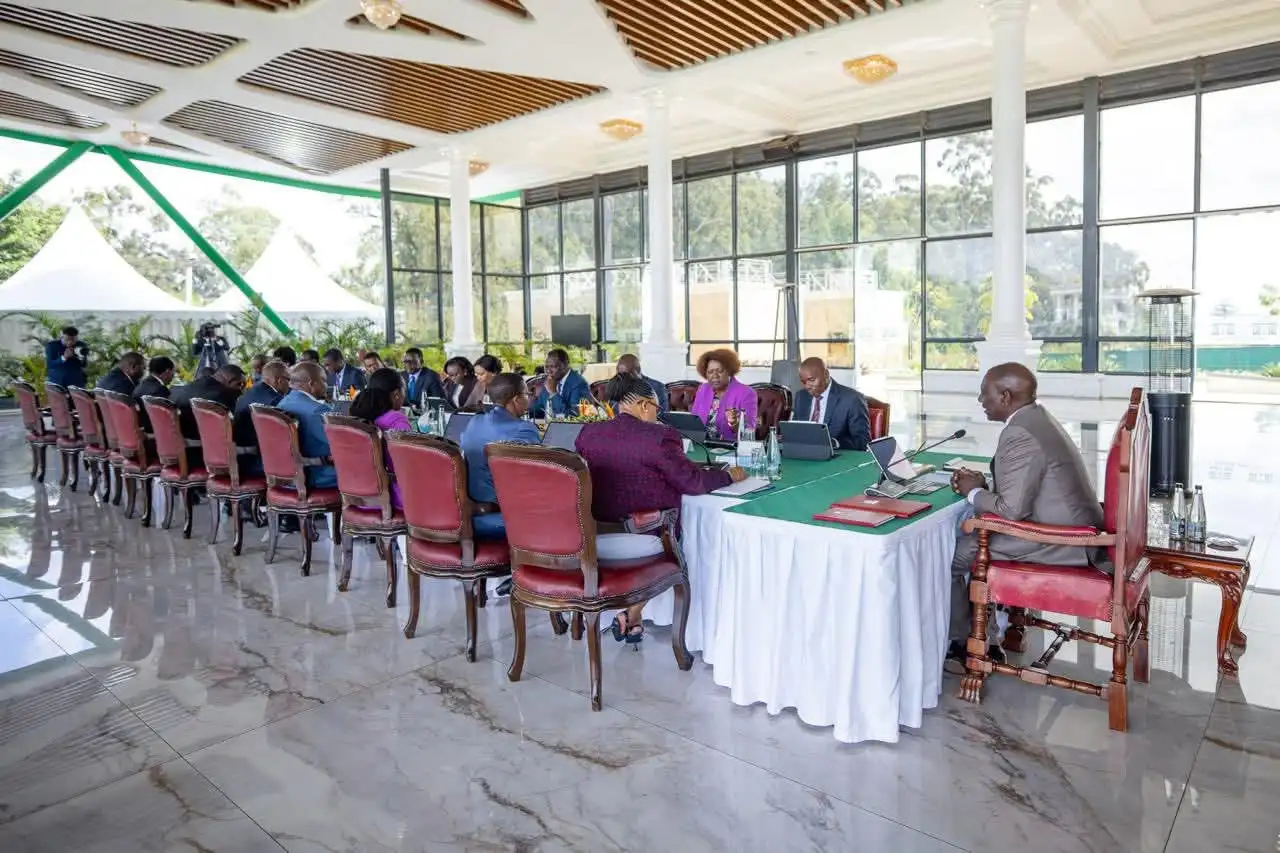
The historic Cabinet decision, made during a meeting at State House Nairobi, marks a decisive pivot in Kenya’s development financing strategy. Rather than continuing the decades-long reliance on external debt that has pushed the country’s debt-to-GDP ratio to concerning levels, the government is charting a new course that emphasizes domestic resource mobilization, strategic asset monetization, and innovative public-private partnerships.
Build the future you deserve. Get started with our top-tier Online courses: ACCA, HESI A2, ATI TEAS 7, HESI EXIT, NCLEX-RN, NCLEX-PN, and Financial Literacy. Let Serrari Ed guide your path to success. Enroll today.
The National Infrastructure Fund: A New Financing Architecture
The National Infrastructure Fund has been approved as a limited liability company and will serve as the central engine for aligning the administration’s financial resources with national development priorities. Under Kenyan law, this corporate structure means that shareholders will only be liable up to their share capital, thus protecting them from the company’s liabilities—a crucial feature designed to attract institutional investors who require clear risk parameters.
According to the Cabinet dispatch, the NIF will operate through an innovative financing architecture that combines multiple capital sources. Through the strategic monetization of mature public assets, democratization of ownership through capital markets, and deployment of national savings, the government aims to unlock large-scale private sector capital to finance priority investments. This represents a fundamental departure from the traditional model where infrastructure development has been financed primarily through government borrowing, often at commercially unfavorable terms.
The fund’s capital mobilization strategy is ambitious but grounded in realistic financial engineering principles. Every shilling invested through the NIF is expected to crowd in up to KSh 10 from long-term investors, including pension funds, sovereign partners, private equity firms, and development finance institutions. This 1:10 leverage ratio, if achieved, would dramatically amplify the government’s infrastructure investment capacity without proportionally increasing public debt.
A critical feature of the NIF framework is the ring-fencing of privatization proceeds. Under the new structure, all revenues generated from the sale or strategic partnership of state-owned enterprises will be channeled exclusively into the infrastructure fund rather than being used to plug annual budget deficits or finance recurrent expenditure. This ensures that one-time asset sales generate lasting value through infrastructure that can serve multiple generations.
The fund will be professionally managed under strict governance, transparency, and accountability frameworks. The NIF will be overseen by a competitively appointed board of directors and chief executive officer, with selection processes designed to attract top-tier financial and infrastructure expertise. This independent management structure is intended to insulate the fund from political interference while ensuring that investment decisions are made on purely commercial and developmental merit.
The Sovereign Wealth Fund: Securing Intergenerational Prosperity
Parallel to the infrastructure fund, the Cabinet approved the Sovereign Wealth Fund Policy, establishing a comprehensive framework for the prudent management and investment of revenues from mineral and petroleum resources, dividends from public investments, and a portion of privatization proceeds. This represents Kenya’s second attempt to establish a sovereign wealth fund, with the first initiative proposed in 2014 failing to gain sufficient traction.
The 2025 Sovereign Wealth Fund Bill, which provides the legal foundation for the SWF, is structured around three broad purposes that distinguish it from its predecessor. These pillars include stabilization—providing a fiscal buffer against external economic shocks such as pandemics or commodity price collapses; strategic infrastructure investment—channeling resource revenues into transformative national projects; and the Future Generation (Urithi) component—ensuring that current resource extraction benefits future generations of Kenyans.
The stabilization function is particularly critical for Kenya given recent experiences with global disruptions. The SWF is designed to protect Kenya’s economy from unforeseen events such as pandemics or supply chain disruptions like those caused by the Russia-Ukraine conflict. By building up reserves during periods of strong commodity prices or robust economic performance, the fund can be drawn upon during downturns to maintain essential government services and infrastructure investment without resorting to emergency borrowing at unfavorable terms.
The intergenerational equity principle embedded in the SWF operationalizes Article 201 of Kenya’s Constitution, which establishes principles for public finance including the requirement to ensure that the burden of debt on future generations is managed prudently. By setting aside a portion of non-renewable resource revenues for long-term investment, Kenya aims to ensure that today’s extraction of minerals and petroleum generates benefits that extend well beyond the depletion of these finite resources.
The SWF will be managed and invested for the benefit of both current and future generations of Kenyan citizens, with investment decisions guided by both commercial returns and developmental impact. The fund will operate under a robust policy framework designed to ensure prudent investment, fiscal discipline, and transparency in the management of what will become a significant national asset.
The KSh 5 Trillion Transformation Agenda
The combined firepower of the NIF and SWF will finance what President Ruto has characterized as Kenya’s most ambitious development agenda since independence. During a church service in Gatundu North on December 14, the day before the Cabinet approval, the President declared: “Tomorrow we will have a special Cabinet sitting that will approve a KSh 5 trillion Infrastructure Fund that will help take our development projects forward. We are now officially starting the journey to transform Kenya into a First World country.”
The transformation agenda is built around four critical pillars that President Ruto outlined during his November 20, 2025 State of the Nation Address. These include achieving food security through modern irrigation infrastructure, transforming transport and logistics, scaling up energy generation, and accelerating industrialization and the digital economy.
Food Security and Agricultural Transformation
The agricultural component of the development plan is anchored on a massive expansion of irrigation infrastructure. The government plans to construct 50 mega dams, 200 mini-dams, and over 1,000 micro-dams, bringing an additional 2.5 million acres under irrigation to support agro-industrialization and transform rural livelihoods. This represents one of the most ambitious water infrastructure programs in Africa and would fundamentally alter Kenya’s agricultural production capacity.
Currently, Kenya has approximately 500,000 acres under irrigation, meaning the proposed expansion would increase irrigated acreage by a factor of five. This would dramatically reduce the country’s vulnerability to rainfall variability—a vulnerability that has repeatedly undermined food security and rural incomes. The dam construction program would also generate hydroelectric power, provide water for urban centers, and create employment during construction and operation phases.
The agricultural transformation goes beyond irrigation infrastructure. The government envisions a shift toward high-value commercial agriculture that can supply both domestic and export markets. By bringing marginal lands into production through irrigation and providing farmers with access to credit, technology, and markets, Kenya aims to position agriculture as a driver of industrialization rather than merely a source of subsistence.
Transport and Logistics Infrastructure Revolution
The transport sector will receive massive investment under the new financing framework. The Ministry of Roads and Transport has identified 2,500 kilometers of highways for dualling and 28,000 kilometers of roads for tarmacking over the next decade. This road network expansion and upgrade would dramatically improve connectivity, reduce transportation costs, and open up currently isolated regions to commercial activity.
Among the priority projects is the dualling of the congested 170-kilometer Rironi-Naivasha-Nakuru-Mau Summit corridor, a critical artery that handles a significant portion of traffic along the Northern Corridor connecting Kenya to Uganda, Rwanda, Burundi, and eastern Democratic Republic of Congo. President Ruto announced he would launch this project along with several other major highway improvements in the coming weeks.
Other roads earmarked for dualling include the Muthaiga-Kiambu-Ndumberi route, Machakos Junction-Mariakani highway, Mau Summit-Kericho-Kisumu road, Kisumu-Busia corridor, Mau Summit-Eldoret-Malaba highway, Kericho-Kisii-Migori-Isebania route, and the Nakuru-Nyahururu-Karatina highway. These projects would create a truly modern highway network connecting all major urban centers and economic zones in Kenya.
The railway component is equally ambitious. Cabinet approved financing for the Naivasha-Kisumu Standard Gauge Railway Phase 2B and the SGR link to Uganda, projects that have faced repeated delays due to financing challenges. The extension of the SGR from its current terminus in Naivasha through Kisumu to the Malaba border with Uganda would complete the vision of a modern railway connecting Mombasa port to the Great Lakes region.
Additionally, the government approved financing for the Nairobi Railway City Central Station, which would serve as a major intermodal transport hub, and Bus Rapid Transit Lines 2 and 3, which would expand Nairobi’s public transport capacity. These projects, along with commuter rail and non-motorized transport initiatives, represent an integrated approach to urban mobility designed to reduce congestion and improve quality of life in Kenya’s rapidly growing cities.
The aviation and maritime sectors will also receive significant attention. The government plans to pursue public-private partnerships to modernize Jomo Kenyatta International Airport, including construction of a new 4.8-kilometer runway by June 2027 and a new passenger terminal by 2029. The Port of Mombasa and Lamu Port will also undergo modernization to increase capacity and efficiency, reinforcing Kenya’s position as East Africa’s logistics hub.
Energy Sector Transformation
Energy generation represents a third critical pillar of the development agenda. President Ruto has set a target of adding at least 10,000 megawatts of new capacity over the next seven years, more than quadrupling Kenya’s current firm capacity. Despite having an installed capacity of approximately 3,300 MW, the intermittent nature of solar and wind power means Kenya’s reliable generating capacity is only about 2,300 MW—far below what a rapidly industrializing economy requires.
The energy expansion will draw on Kenya’s diverse renewable energy potential, including geothermal resources in the Rift Valley, hydroelectric potential from rivers and the planned dams, abundant solar irradiation across much of the country, wind resources in areas like Turkana, and potentially nuclear power in the longer term. This diversified energy mix would provide resilience against the failure of any single source while positioning Kenya as a clean energy leader in Africa.
The Cabinet also approved the National Energy Policy to accelerate access to reliable and sustainable energy and promote renewable energy sources. Additionally, the National Petroleum Policy was endorsed, updating the 2004 framework to reflect constitutional requirements and incorporate lessons from recent oil discoveries in Turkana County. These policy updates provide the regulatory framework necessary to attract private investment in energy infrastructure.
Adequate energy supply is critical for the fourth pillar of the development agenda—industrialization and digital economy expansion. Manufacturing operations, data centers, electric mobility, and other emerging technologies all require abundant, reliable, and affordable power. By dramatically expanding generation capacity, Kenya aims to remove energy constraints that have historically limited industrial growth.
One decision can change your entire career. Take that step with our Online courses in ACCA, HESI A2, ATI TEAS 7, HESI EXIT, NCLEX-RN, NCLEX-PN, and Financial Literacy. Join Serrari Ed and start building your brighter future today.
Financing Architecture: From Debt to Investment-Led Development
The establishment of the NIF and SWF represents what the Cabinet dispatch described as “a decisive shift toward a sustainable, investment-led development model that mobilizes capital, accelerates delivery, preserves national value and secures lasting prosperity for present and future generations.” This philosophical shift in development financing reflects hard lessons learned from Kenya’s debt trajectory over the past two decades.
Kenya’s public debt has grown dramatically, reaching KSh 12.05 trillion (approximately $93 billion) by September 2025, representing a debt-to-GDP ratio of 67.3%. This is significantly above the 50% threshold recommended for developing countries by the International Monetary Fund and has raised concerns about debt sustainability. Debt service consumes an increasingly large share of government revenue, constraining the resources available for development and essential services.
The new financing model aims to reverse this trajectory. Rather than borrowing to finance infrastructure, the government will monetize existing assets and use the proceeds as seed capital to attract much larger pools of private investment. This approach has several advantages: it reduces the accumulation of new debt, it brings private sector efficiency and innovation to infrastructure delivery, it creates opportunities for citizens to invest in national development through capital markets, and it ensures that infrastructure projects are subject to commercial discipline and must generate returns.
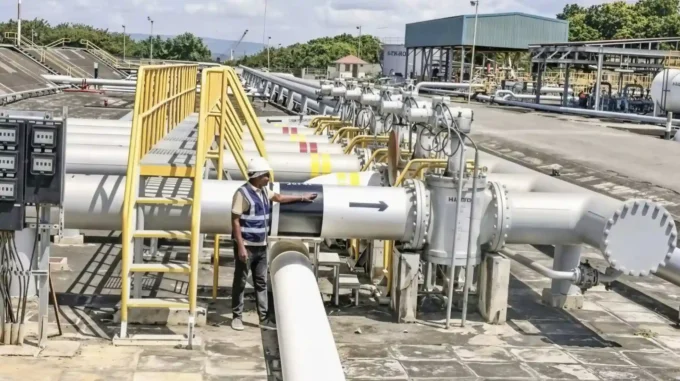
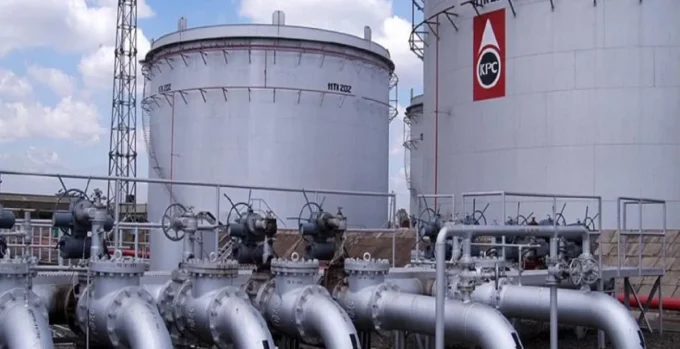
The privatization component of this strategy has already been articulated in President Ruto’s recent pronouncements. State corporations earmarked for privatization include the Kenya Pipeline Company, which is expected to raise about KSh 100 billion. Other entities being evaluated for strategic partnerships or outright sale include Kenya Airways, hotels owned by parastatal organizations, agricultural development corporations with land holdings, and various other state enterprises that have historically operated at a loss or well below their potential.
The government has clarified that privatization does not mean simply selling off the family silver. Rather, the approach involves strategic monetization where the government may retain a stake while bringing in private partners with capital, technology, and management expertise. In some cases, assets will be listed on the Nairobi Securities Exchange, allowing ordinary Kenyans to become shareholders and benefit from any appreciation in value.
Political and Economic Context
President Ruto’s infrastructure push must be understood within the broader political and economic context of contemporary Kenya. The President has consistently framed his development agenda as existential, arguing that Kenya must fundamentally transform its economic structure to provide opportunities for its rapidly growing, young population. With a median age of approximately 20 years and unemployment particularly acute among youth, the government views infrastructure investment as essential for job creation and economic dynamism.
During his State of the Nation Address, President Ruto invoked Kenya’s potential to follow the path of Asian Tigers like South Korea, Singapore, and Malaysia, which transformed from developing to developed status within a generation through sustained infrastructure investment, export-oriented industrialization, and emphasis on education and skills development. He argued that Kenya possesses advantages these countries lacked—including abundant natural resources, a strategic geographic position, and a large domestic market—but has been held back by lack of infrastructure and limited capital for transformative investment.
The President has also been emphatic that his development push is not motivated by the 2027 General Election. During the Gatundu North church service, he stated: “All this work I am doing is not because I am looking for votes. I have passed the level of seeking votes. I want to change Kenya. That is my mission.” This framing positions the infrastructure agenda as a long-term national project transcending electoral cycles.
However, the initiative has not been without critics. Opposition politicians and some economic analysts have questioned whether the KSh 5 trillion target is realistic, whether the government can successfully monetize state assets at the anticipated valuations, and whether the private sector will respond with the scale of investment the model assumes. Some critics have termed the move a “misplaced priority” given ongoing challenges with basic service delivery, high cost of living, and concerns about corruption in public procurement.
These concerns are not trivial. Kenya has a mixed track record with large infrastructure projects, some of which have been plagued by cost overruns, delays, and allegations of corruption. The Standard Gauge Railway from Mombasa to Naivasha, while a significant achievement, cost far more than initially projected and has not generated the economic returns that were anticipated. The government will need to demonstrate that the new financing model can deliver projects more efficiently and with greater transparency than past approaches.
Governance and Accountability Frameworks
Recognizing these concerns, the Cabinet has emphasized that both the NIF and SWF will be professionally and independently managed under strict governance, transparency, and accountability frameworks. The specific governance structures represent a significant evolution from how infrastructure financing has historically been handled in Kenya.
The National Infrastructure Fund will be overseen by a board of directors selected through a competitive process designed to identify individuals with relevant expertise in infrastructure finance, project management, financial markets, and development economics. The board will be responsible for setting investment strategy, approving major projects, overseeing risk management, and ensuring compliance with legal and regulatory requirements. The CEO, also competitively selected, will be responsible for day-to-day management and implementing the board’s directives.
The Sovereign Wealth Fund will operate under a robust policy framework that draws on international best practices from established sovereign wealth funds like Norway’s Government Pension Fund, Singapore’s GIC and Temasek, and Abu Dhabi Investment Authority. These institutions have demonstrated that resource revenues can be managed for long-term national benefit if appropriate governance structures, investment disciplines, and transparency mechanisms are in place.
Key accountability mechanisms will include regular public reporting on fund performance, independent audits by the Auditor-General, parliamentary oversight through relevant committees, and potentially inclusion in the Santiago Principles—a set of voluntary best practices for sovereign wealth funds developed by the International Working Group of Sovereign Wealth Funds. The government has committed to publishing annual reports detailing the funds’ investments, returns, and developmental impact.
Implementation Timeline and Early Priorities
While the Cabinet approval represents a crucial milestone, substantial work remains to operationalize the funds and begin deploying capital for infrastructure projects. The government has indicated that initial implementation will focus on establishing the legal and institutional frameworks, recruiting management teams, developing investment policies and procedures, and identifying early pipeline projects.
The government has already cleared a significant obstacle by settling all pending bills for certified road works up to December 31, 2024—amounting to KSh 123 billion—thereby unlocking or accelerating 875 road projects since April 2025. This signals the government’s commitment to honoring its obligations to contractors and creating confidence in the market for infrastructure work.
Early priorities for infrastructure investment are likely to include projects with clear economic returns, strong developmental impact, and potential to catalyze private investment. The dualling of major highways that are currently congestion bottlenecks would meet these criteria, as would strategic dam projects in areas with high agricultural potential, and railway extensions that would significantly reduce transport costs for landlocked regions and neighboring countries.
President Ruto has indicated that construction of the SGR extension from Naivasha to Malaba would commence in January 2026, suggesting that financing arrangements for this flagship project are already well advanced. Similarly, the launch of highway dualling projects has been scheduled for the coming weeks, indicating that preliminary engineering and procurement work is underway.
Regional and International Dimensions
Kenya’s infrastructure transformation has significant implications beyond its borders. As the largest and most diversified economy in East Africa and a key member of regional economic blocs including the East African Community (EAC) and the Common Market for Eastern and Southern Africa (COMESA), Kenya’s infrastructure capacity has spillover effects throughout the region.
The extension of the Standard Gauge Railway to the Uganda border, for instance, would benefit not only Kenya but also Uganda, Rwanda, Burundi, and eastern Democratic Republic of Congo by providing these landlocked countries with more efficient access to Mombasa port. The upgrade of the Northern Corridor highway system would similarly benefit regional trade. Kenya’s role as a regional logistics and aviation hub means that improvements to its ports and airports enhance connectivity for the entire region.
The government has already received encouragement from international development partners. President Ruto secured backing from the International Finance Corporation during recent discussions in Washington, with IFC expressing interest in partnering on the infrastructure fund. Other development finance institutions including the African Development Bank, European Investment Bank, and bilateral development agencies have indicated willingness to provide technical assistance and potentially co-investment.
The involvement of these institutions brings not only capital but also technical expertise in infrastructure finance, project structuring, environmental and social safeguards, and governance frameworks. Their participation can also help crowd in additional private capital by providing risk mitigation through partial guarantees or by taking junior positions in the capital structure that improve the risk-return profile for other investors.
Additional Cabinet Decisions Supporting the Transformation Agenda
The December 15 Cabinet meeting approved several other initiatives that support the broader transformation agenda and demonstrate the government’s commitment to modernization across multiple sectors.
The Cabinet approved the establishment of a National Integrated Security Command and Control System to enhance coordination among security agencies and improve response times to security incidents. This system, which will be piloted in urban areas and border counties, uses technology to integrate communications, surveillance, and response capabilities—an essential element of creating an environment conducive to investment and economic activity.
The meeting also endorsed the rollout of Second-Generation Smart Driving Licences incorporating advanced features including an instant fines system, mobile licence wallet, and merit and demerit points for drivers. This digital transformation of driver licensing aims to improve road safety, reduce corruption in traffic enforcement, and modernize a system that has long been criticized as inefficient and prone to abuse.
Additionally, the Cabinet adopted the National Care Policy, which establishes a comprehensive framework for early childhood development, elderly care, and support for persons with disabilities. This policy recognizes that economic transformation requires not only physical infrastructure but also social infrastructure that enables all citizens to participate productively in the economy.
The government also confirmed that preparations are underway to host the COMESA-EAC-SADC Tripartite Summit, a major regional gathering that will showcase Kenya’s leadership in regional integration and provide a platform for advancing trade and infrastructure connectivity across Eastern and Southern Africa.
The Path Ahead: Challenges and Opportunities
As Kenya embarks on this ambitious infrastructure transformation, several challenges and opportunities lie ahead. The success of the NIF and SWF will ultimately be determined by execution—the government’s ability to establish credible governance structures, select viable projects, attract private capital at the anticipated scale, and deliver infrastructure on time and within budget.
The privatization component presents particular challenges. State corporations have historically been politically sensitive, with powerful constituencies resistant to reform. The government will need to manage the politics of privatization carefully while ensuring that transactions deliver fair value for taxpayers and that any job losses are handled sensitively with adequate transition support for affected workers.
The capacity to structure bankable infrastructure projects is another constraint. Many potential projects require sophisticated financial engineering, careful risk allocation, clear revenue models, and strong governance to attract private investment. The government will need to invest in building this capacity, potentially drawing on international advisors while simultaneously developing local expertise.
Environmental and social safeguards will be critical. Large infrastructure projects can have significant environmental impacts and may require resettlement of communities. The government must ensure that projects meet international environmental standards, that affected communities are adequately consulted and compensated, and that development does not come at the cost of environmental degradation or social upheaval.
However, the opportunities are equally significant. If successfully implemented, the infrastructure transformation could unleash Kenya’s economic potential in ways that generate broad-based prosperity. Improved roads reduce transport costs for farmers getting crops to market, for manufacturers moving goods, and for tourists accessing destinations. Expanded irrigation makes agriculture more productive and resilient. Abundant energy enables manufacturing and digital services. Better ports and airports enhance trade competitiveness.
The demonstration effect could also be substantial. If Kenya shows that an African country can mobilize capital for infrastructure transformation without relying primarily on external debt, it could serve as a model for other nations facing similar development financing challenges. This could catalyze a broader shift in how African infrastructure is financed, with implications for the continent’s economic trajectory.
Conclusion: A Defining Moment for Kenya’s Development Path
The Cabinet’s approval of the National Infrastructure Fund and Sovereign Wealth Fund on December 15, 2025 represents a defining moment in Kenya’s development journey. The KSh 5 trillion transformation agenda is certainly ambitious—critics would say audaciously so—but it reflects a conviction that incremental improvements will be insufficient to address Kenya’s development challenges and capitalize on its opportunities.
Whether President Ruto’s vision of transforming Kenya into a first-world economy within a generation proves realistic remains to be seen. The path from approval to implementation is fraught with challenges, and history is littered with ambitious development plans that failed to materialize. However, the decision to pivot from debt-financed development to an investment-led model leveraging domestic resources and private capital represents sound economic logic.
For Kenya’s young, rapidly growing population, the stakes could not be higher. The country needs to create millions of productive jobs in the coming decade to absorb new entrants to the labor force and lift households out of poverty. This requires sustained economic growth at rates significantly higher than population growth, which in turn requires massive investment in productive infrastructure, human capital, and enabling institutions.
The National Infrastructure Fund and Sovereign Wealth Fund provide mechanisms for making these investments without mortgaging the country’s future through unsustainable debt accumulation. If properly managed with transparency, accountability, and focus on long-term national interest rather than short-term political expediency, these funds could indeed help write a new chapter in Kenya’s development story—one characterized by resilience, prosperity, and opportunity for current and future generations.
As construction equipment begins moving onto project sites in the coming months and years, as dams rise from river valleys, as highways expand to accommodate growing traffic, as trains run on new rail lines, and as megawatts light up factories and homes, Kenyans will be able to judge whether December 15, 2025 marked a genuine turning point or merely another ambitious promise. For now, the Cabinet approval represents hope—hope that Kenya can indeed build the infrastructure foundation for prosperity, hope that domestic resources can be mobilized for national transformation, and hope that the dream of a first-world economy is not just rhetoric but a realizable aspiration.
Ready to take your career to the next level? Join our Online courses: ACCA, HESI A2, ATI TEAS 7 , HESI EXIT , NCLEX – RN and NCLEX – PN, Financial Literacy!🌟 Dive into a world of opportunities and empower yourself for success. Explore more at Serrari Ed and start your exciting journey today! ✨
Track GDP, Inflation and Central Bank rates for top African markets with Serrari’s comparator tool.
See today’s Treasury bonds and Money market funds movement across financial service providers in Kenya, using Serrari’s comparator tools.
Photo source: Google
By: Montel Kamau
Serrari Financial Analyst
16th December, 2025