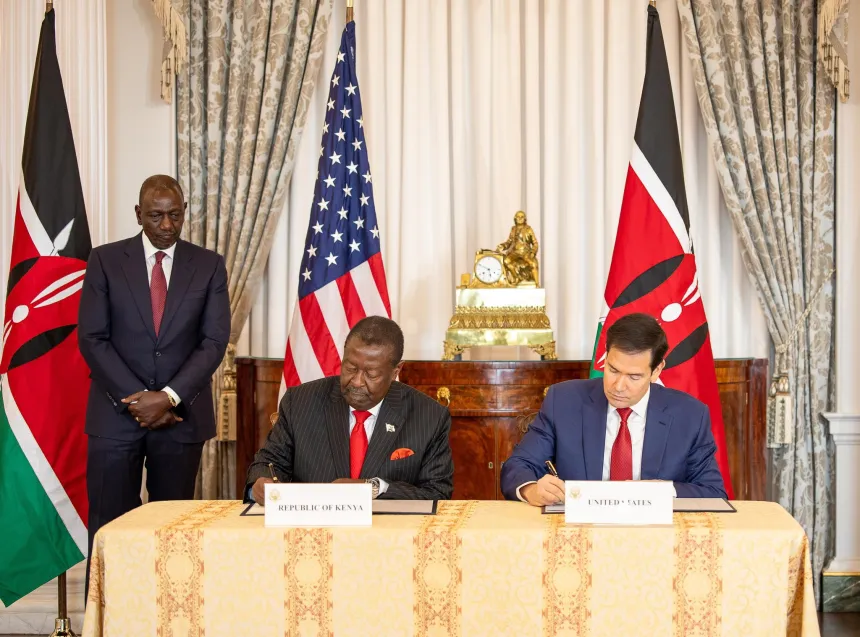
In a groundbreaking shift in foreign health assistance architecture, Kenya has become the first country to sign a comprehensive Health Cooperation Framework under the United States’ new “America First Global Health Strategy,” securing $1.6 billion (Sh208 billion) in direct government-to-government funding over the next five years. The landmark agreement, signed on December 4, 2025, in Washington D.C., fundamentally restructures how American health assistance flows to partner nations, bypassing traditional NGO intermediaries to channel resources directly into Kenya’s national health institutions.
President William Ruto witnessed the historic signing ceremony where Prime Cabinet Secretary Musalia Mudavadi and U.S. Secretary of State Marco Rubio formalized the bilateral compact. The agreement represents not merely a financial commitment but a paradigmatic transformation in development assistance—one that prioritizes national ownership, institutional strengthening, and sustainable self-reliance over donor-dependent parallel systems that have characterized global health aid for decades.
Build the future you deserve. Get started with our top-tier Online courses: ACCA, HESI A2, ATI TEAS 7, HESI EXIT, NCLEX-RN, NCLEX-PN, and Financial Literacy. Let Serrari Ed guide your path to success. Enroll today.
Revolutionary Government-to-Government Funding Model
The most significant innovation in this framework is its direct funding mechanism, which channels American resources through Kenya’s own government institutions rather than international NGOs. The funds will flow directly into Kenyan government systems including the Social Health Authority (SHA), Digital Health Authority (DHA), Kenya Medical Supplies Authority (KEMSA), the Integrated Financial Management Information System (IFMIS), the Ministry of Health, and the newly established National Public Health Institute.
Secretary Rubio articulated the rationale behind this transformation with unprecedented frankness, directly criticizing the previous aid architecture. “We are not going to spend millions of dollars funding the NGO industrial complex while close and important partners like Kenya have very little influence on how healthcare money is spent,” Rubio declared during the signing ceremony. “Bottom line – if you want to help a country, work with that country, not with a third party that imposes things on that country.”
This represents a dramatic departure from decades of development practice. Under previous models, substantial portions of health assistance funding supported NGO operating costs, with only a fraction reaching host country systems, patients, and intended programs. The new Government-to-Government (G2G) funding approach focuses on sustainability and accountability, directly addressing critiques that traditional aid created dependency while building parallel systems that undermined rather than strengthened national institutions.
Kenya’s Reciprocal Commitments and Co-Investment
The framework is not a one-sided transfer but a true partnership requiring substantial commitments from Kenya. Kenya has pledged to increase its own health spending by $850 million over the five-year period, demonstrating political commitment to domestic resource mobilization for health. More specifically, Kenya has committed to progressively increasing domestic health financing, injecting up to Sh50 billion annually by 2030 as part of ongoing health financing reforms under the Social Health Authority.
Additionally, the agreement includes a transition mechanism whereby Kenya will gradually assume responsibility for US-funded health commodities and health workers by 2031, valued at $141 million. This phased approach recognizes that achieving true self-reliance requires both time and capacity building, providing a realistic pathway rather than abrupt aid cessation that could jeopardize continuity of essential services.
These reciprocal commitments embed accountability mechanisms and performance benchmarks throughout the framework. The agreement includes meaningful co-investment commitments from Kenya aligned with ambitious yet realistic performance benchmarks, paving the way for long-term health self-reliance while ensuring that American resources catalyze rather than substitute for domestic investment.
Strategic Focus Areas and Health Priorities
The funds will strengthen HIV, TB and malaria initiatives, laboratory and surveillance capacity, digital health systems, and emergency response programs. These priority areas reflect both Kenya’s disease burden and strategic American interests in containing infectious disease threats that could spread globally.
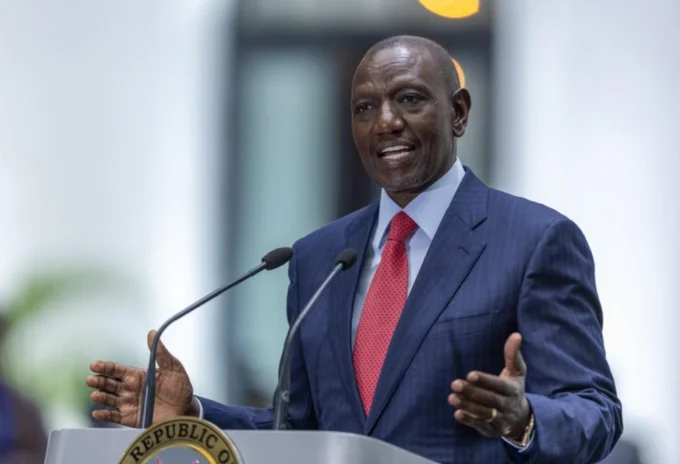
President Ruto emphasized how the framework aligns with Kenya’s domestic health agenda. “The framework we sign today adds momentum to my administration’s universal health coverage that is focused on supply of modern equipment to our hospitals, efficient and timely delivery of health commodities to our facilities, enhancement of our health workforce, and health insurance for all, and leaving no Kenyan behind,” the president stated.
The cooperation framework outlines joint efforts across multiple domains: surveillance and outbreak response, laboratory and diagnostic systems, human resources for health, digital health transformation, strategic commodities management, research and information exchange, and emergency preparedness. This comprehensive approach addresses systemic weaknesses across Kenya’s health architecture rather than targeting isolated disease programs.
The ‘America First Global Health Strategy’ Context
The Kenya agreement operationalizes principles laid out in the America First Global Health Strategy announced in September 2025, which fundamentally reorients U.S. global health assistance around three pillars: making America safer, stronger, and more prosperous. The strategy calls for poorer nations to play bigger roles in fighting HIV/AIDS, malaria, tuberculosis and polio in their countries and eventually transition from aid to self-reliance.
“Our agreement with Kenya is a model for the types of bilateral health arrangements the United States will be entering into with dozens of countries over the coming weeks and months,” stated Brad Smith, Senior Advisor for the Bureau of Global Health Security and Diplomacy at the U.S. Department of State. This signals that the Kenya framework serves as a template that will shape American health assistance architecture globally.
Jeremy P. Lewin, Senior Official for Foreign Assistance, Humanitarian Affairs & Religious Freedom, emphasized the strategic dimension of the new approach. “As Secretary Rubio has emphasized, foreign assistance is a tool of American diplomacy and statecraft—and every dollar we spend on it must be directly justified on those terms,” Lewin stated. The framework explicitly prioritizes American allies and specifies that sovereign resources “should never benefit groups unfriendly to the United States and our national interests.”
This represents a significant philosophical shift from traditional development assistance rhetoric that emphasized universal humanitarian imperatives and technical neutrality. The Trump administration’s approach openly acknowledges geopolitical considerations and transactional reciprocity, viewing health assistance as an instrument of foreign policy rather than purely humanitarian endeavor.
Historical Context of Kenya-US Health Partnership
The new framework builds on a long-established foundation of health cooperation. President Ruto noted that “for over a quarter of a century the United States has worked alongside Kenya, investing over $7 billion in well-being, health, and progress for our citizens.” This partnership has saved millions from malaria, HIV/AIDS, tuberculosis, and other life-threatening outbreaks, building resilience, restoring hope, and supporting impactful institutions.
However, critics of the previous model argued that while saving lives, it created unsustainable dependencies and parallel systems that undermined rather than strengthened national health infrastructure. NGO-implemented programs often operated independently of government systems, creating fragmentation, duplication, and capacity asymmetries where NGOs attracted talent away from public service with higher salaries and better conditions.
The new framework attempts to address these criticisms by anchoring assistance within national systems, theoretically building rather than bypassing government capacity. Whether this approach proves superior remains to be empirically demonstrated, but the shift represents acknowledgment that previous models, despite undeniable achievements in disease control, failed to create the sustainable, nationally-owned systems that could eventually operate independently of donor support.
Data Privacy Safeguards and Public Concerns
The framework includes a companion Data Sharing Agreement that sparked significant public concern in Kenya, particularly after whistleblower Nelson Amenya alleged that the agreement would grant the U.S. government real-time access to all Kenyan health records. These concerns prompted swift government reassurance about data protection measures.
Health Cabinet Secretary Aden Duale moved quickly to address these anxieties. Duale stressed that any health data shared under the agreement will be “de-identified and aggregated” and will remain fully governed by Kenya’s Digital Health Act and Data Protection Act. He reiterated that “no personal or identifiable health data will be shared with any foreign government or entity” and that “only anonymized, aggregated data may be exchanged—and always under Kenyan supervision.”
The Ministry of Health underscored that the collaboration is firmly anchored in Kenyan legal frameworks, including the Digital Health Act, 2023; the Data Protection Act, 2019; the Health Act, 2017; and other relevant regulations. The Data Sharing Agreement is time-bound to the duration of the Health Cooperation Framework and will be publicly released to enhance transparency and accountability.
These safeguards address legitimate concerns about sovereignty and privacy in an era of increasing digital health surveillance. The framework’s success will depend partly on whether these protections prove robust in practice and whether the Kenyan public trusts that their government can enforce data sovereignty vis-à-vis a far more powerful partner.
One decision can change your entire career. Take that step with our Online courses in ACCA, HESI A2, ATI TEAS 7, HESI EXIT, NCLEX-RN, NCLEX-PN, and Financial Literacy. Join Serrari Ed and start building your brighter future today.
Institutional Strengthening and Capacity Building
A central pillar of the framework involves strengthening Kenya’s health institutions to eventually assume full responsibility for programs currently supported by American funding. This includes investments in laboratory and diagnostic systems, digital health infrastructure, supply chain management, and human resources for health.
The Social Health Authority, Kenya’s universal health coverage mechanism launched in 2023, receives particular emphasis in the framework. “The Kenyan government is already expanding essential health services to all Kenyans and increasing domestic health financing through the Social Health Authority (SHA),” President Ruto stated. The framework aims to support SHA’s rollout while building capacity for eventual financial sustainability without external subsidy.
Similarly, the newly established National Public Health Institute will receive support to strengthen disease surveillance, outbreak response, and public health emergency preparedness. These institutional investments aim to create durable capacity that persists beyond the five-year framework period, contrasting with project-based assistance that often evaporates when donor funding ends.
The Kenya Medical Supplies Authority (KEMSA), which has faced challenges with procurement efficiency and corruption, will receive technical assistance and systems strengthening support. The framework’s emphasis on supply chain integration and commodities management directly addresses persistent bottlenecks that have plagued Kenya’s health system, where medicines and supplies often fail to reach facilities despite adequate budget allocation.
Haiti Mission Recognition and Broader Diplomatic Context
The health framework signing occurred within a broader diplomatic context highlighting Kenya’s role as a valued American security partner. Secretary Rubio praised Kenya’s leading role in restoring peace and stability in Haiti, noting that without Kenya’s participation the transition to a gang suppression force would have been impossible. Kenya deployed police forces to Haiti in 2024 to lead a multinational security mission addressing gang violence that had paralyzed the Caribbean nation.
“If we had five or 10 countries willing to step forward to do half of what Kenya has done, it would be an extraordinary achievement,” Rubio stated, calling for other nations to contribute personnel, resources, and equipment to support the peace mission. President Ruto responded by reaffirming Kenya’s continued presence in Haiti and praising U.S. support for encouraging other nations to back the mission.
This explicit linkage between Kenya’s security contributions and the health framework underscores the transactional nature of the new American approach to foreign assistance. The framework rewards allies who advance American interests beyond the health sector, with health assistance serving as one component of comprehensive bilateral relationships rather than a standalone technical partnership.
Critiques and Concerns About the New Model
While proponents celebrate the framework’s emphasis on national ownership and sustainability, critics have raised several concerns about the shift from NGO-led to government-led implementation. NGOs often possess specialized technical expertise, community-level reach, and flexibility to operate in challenging environments that government systems lack. They have historically played crucial roles in reaching marginalized populations, providing services in conflict-affected areas, and rapidly responding to emerging crises.
Critics caution that shifting resources entirely to government channels could undermine these capacities, particularly for interventions requiring community mobilization, work with stigmatized populations, or rapid crisis response. Government systems, while theoretically more sustainable, often suffer from bureaucratic inertia, political interference, and corruption that can reduce effectiveness and efficiency compared to well-run NGO programs.
Additionally, concerns exist about the political implications of making health assistance explicitly conditional on alignment with American foreign policy interests. While all aid has always served donor interests to some degree, the Trump administration’s unusually frank acknowledgment of geopolitical conditionality raises questions about whether health assistance decisions will be driven by epidemiological need or political expediency.
The framework’s emphasis on graduation to self-reliance also raises questions about timelines and thresholds. Kenya, despite being a middle-income country, still faces substantial health challenges and resource constraints. Whether five years provides adequate time for transition—particularly given the $141 million in recurrent costs Kenya must absorb by 2031—remains uncertain.
Regional and Global Implications
Kenya’s selection as the first country to sign such an agreement carries symbolic and practical significance. Secretary Rubio said the US chose Kenya because of its stable and strong institutions in both government and the health sector. This sets a high bar for other countries, suggesting that American willingness to pursue direct government partnerships depends on institutional quality and governance standards.
The precedent could influence how other major health donors structure their assistance. If the American model proves successful in strengthening national systems while maintaining program effectiveness, other donors may follow suit. Conversely, if the approach encounters implementation challenges or results in service disruptions, it could vindicate traditional NGO-mediated models.
For Kenya, being first confers both advantages and risks. The country gains favorable terms, substantial resources, and international prestige. However, it also assumes the responsibility of demonstrating that the model works, with any failures likely to attract disproportionate scrutiny that could affect both future American support and Kenya’s broader international standing.
Implementation Challenges and Success Factors
Successful implementation will require addressing multiple challenges. Kenya’s health system suffers from persistent weaknesses including inadequate staffing, infrastructure gaps, supply chain inefficiencies, and limited management capacity at sub-national levels. Channeling $1.6 billion through these systems without overwhelming absorption capacity or creating corruption opportunities requires careful planning and robust oversight mechanisms.
The framework includes performance benchmarks and monitoring systems, but their effectiveness depends on implementation details not yet publicly disclosed. Establishing functional data systems, transparent financial management, and accountability mechanisms that satisfy both Kenyan sovereignty concerns and American oversight requirements will be delicate.
The transition of health worker salaries and commodities procurement from American to Kenyan financing by 2031 represents perhaps the greatest implementation challenge. These recurrent costs, totaling $141 million annually, require Kenya to identify sustainable domestic revenue sources or implement difficult trade-offs in budget allocation. Failure to achieve this transition could result in service disruptions or force continued dependence on external financing despite the framework’s self-reliance rhetoric.
Political stability and policy continuity also matter. The framework spans beyond President Ruto’s current term, assuming that successor governments will honor commitments and maintain reform momentum. Political transitions, particularly contentious ones, could jeopardize implementation if new leadership views the framework as a legacy of predecessors rather than a national priority.
Universal Health Coverage Implications
The framework directly supports Kenya’s Universal Health Coverage (UHC) ambitions centered on the Social Health Authority. UHC aims to ensure all Kenyans can access quality health services without financial hardship, requiring both expanded service coverage and financial risk protection mechanisms.
American support for SHA infrastructure, digital health systems, and commodities procurement could accelerate UHC implementation, particularly if it helps resolve persistent challenges around provider payment delays, benefits package standardization, and quality assurance. However, UHC sustainability ultimately depends on domestic revenue mobilization through taxes and insurance contributions—areas where American assistance plays limited direct roles.
The framework’s emphasis on institutional strengthening aligns with UHC requirements for robust health systems capable of delivering comprehensive primary health care at scale. Success in building these capacities would benefit not only programs addressing HIV, TB, and malaria but also maternal health, non-communicable diseases, mental health, and other priorities requiring functional health systems.
Looking Forward: A New Development Paradigm?
The Kenya-US Health Cooperation Framework represents a bold experiment in development assistance architecture. Whether it succeeds in building sustainable, nationally-owned health systems that eventually operate independently of donor support will significantly influence future donor approaches not only in health but across development sectors.
Success would vindicate arguments that traditional NGO-mediated aid, despite saving lives, created dependencies that undermined long-term development. It would demonstrate that direct government partnerships, despite risks, can build capacity more effectively than parallel systems. Such an outcome would likely accelerate similar shifts by other major donors, fundamentally restructuring the global development landscape.
Conversely, significant implementation challenges or service disruptions would strengthen arguments for maintaining NGO-led models’ flexibility, technical expertise, and ability to operate where government systems prove inadequate. Failure could slow or reverse the shift toward direct government partnerships, with donors concluding that institutional strengthening rhetoric notwithstanding, NGOs remain more reliable implementers.
For Kenya, the framework represents both opportunity and obligation. The country gains unprecedented control over substantial health resources, enabling alignment with national priorities and systems strengthening. However, it also assumes responsibility for demonstrating effective stewardship, efficient implementation, and progress toward self-reliance. How Kenya performs will shape not only its own health future but potentially the future of development assistance architecture globally.
As implementation begins in 2026, multiple stakeholders—health workers, patients, civil society, other donors, and the international development community—will watch closely. The framework’s ultimate measure of success will not be diplomatic achievements or policy innovations but tangible improvements in health outcomes, system capacities, and movement toward genuine self-reliance. Whether this ambitious experiment delivers on its promises remains to be seen, but its significance for Kenya and for global health assistance architecture is already assured.
Ready to take your career to the next level? Join our Online courses: ACCA, HESI A2, ATI TEAS 7 , HESI EXIT , NCLEX – RN and NCLEX – PN, Financial Literacy!🌟 Dive into a world of opportunities and empower yourself for success. Explore more at Serrari Ed and start your exciting journey today! ✨
Track GDP, Inflation and Central Bank rates for top African markets with Serrari’s comparator tool.
See today’s Treasury bonds and Money market funds movement across financial service providers in Kenya, using Serrari’s comparator tools.
photo source: Google
By: Montel Kamau
Serrari Financial Analyst
5th December, 2025