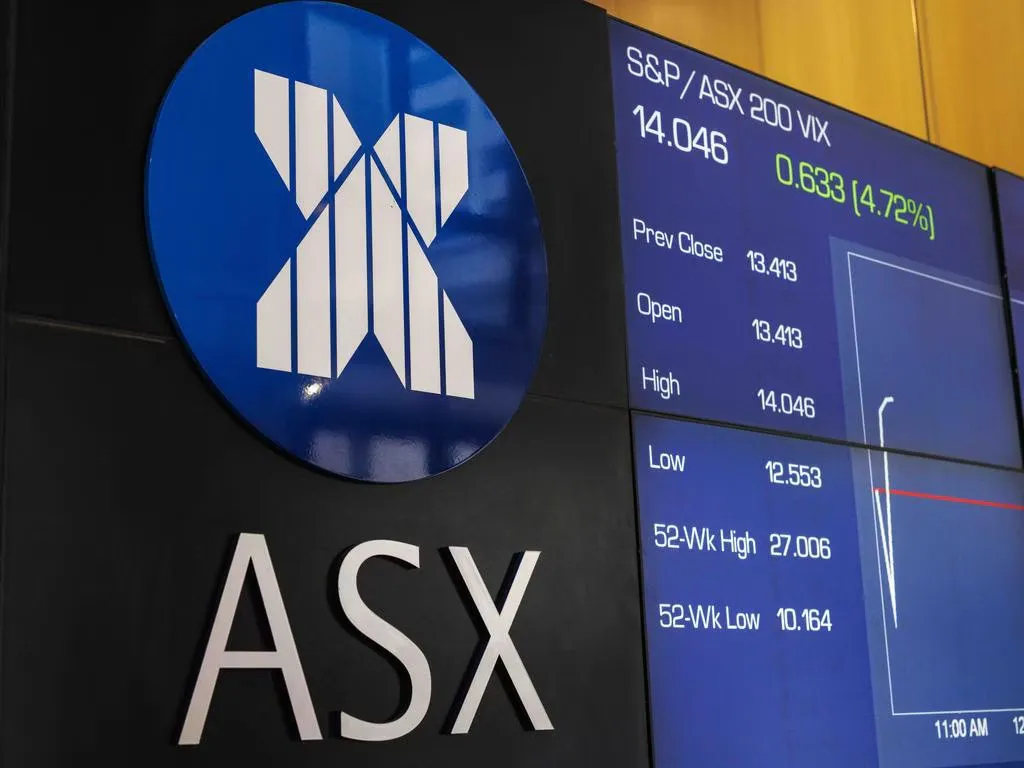
The Australian Securities Exchange (ASX) commenced trading on December 1, 2025, with a visible hesitation that saw the benchmark S&P/ASX 200 index open to a modest decline of around 0.2 per cent. This subdued start was far more than a simple reaction to global cues; it was a consequence of a twin shock that immediately unsettled investors: a major operational failure at the heart of the exchange’s disclosure mechanism and a severe, stock-specific collapse in value for a high-profile financial services company.
The market’s caution was palpable as the announcements outage prevented dozens of companies from fulfilling their continuous disclosure obligations, while simultaneously, key sectors like banking and healthcare extended their recent downturns. This confluence of systemic risk and sector-specific pain underscored a market environment highly sensitive to operational integrity and policy uncertainty.
Build the future you deserve. Get started with our top-tier Online courses: ACCA, HESI A2, ATI TEAS 7, HESI EXIT, NCLEX-RN, NCLEX-PN, and Financial Literacy. Let Serrari Ed guide your path to success. Enroll today.
Operational Risk Re-emerges: The Announcements Outage
The primary immediate disruption on Monday morning was the failure of the ASX’s corporate-announcements platform. As trading opened, companies were unable to publish critical market-sensitive updates, creating a vacuum of information and stoking uncertainty among institutional and retail investors alike.
The ASX moved to address the issue, confirming that it was “urgently investigating a technical issue affecting the publication of company announcements.” Despite the disruption to the flow of information, the exchange affirmed that its cash equities trading platform remained open and had commenced as scheduled at 10:00 AM (AEDT).
The full extent of the issue became clear later in the session. By midday, the ASX disclosed that approximately 80 companies had lodged price-sensitive announcements that were blocked from publication. This bottleneck of crucial information led to a flurry of trading halts, as the exchange implemented its procedures to ensure market fairness. Companies that had lodged price sensitive announcements were placed into a trading halt and were contacted directly by the ASX, with the assurance that “[h]alted securities will only resume trading once the associated announcement has been published.”
The exchange offered an apology for the disruption, stating, “ASX apologises for the disruption from this event and we are seeking to resolve this as soon as possible.” An initial remediation process was implemented by 11:22 AM AEDT, allowing some of the delayed disclosures to finally reach the market. While the disruption was contained to announcements and did not halt the core trading engine, its impact on sentiment was significant, highlighting the critical reliance of the modern market on seamless technology.
Contextualising Systemic Fragility
For many market participants, this event was a painful reminder of the exchange’s recent history of technical difficulties. The ASX has been under sustained regulatory pressure following a previous, more severe market outage in November 2020. That incident, which occurred shortly after the introduction of a new trading platform, forced the closure of the entire equity market.
The 2020 outage triggered an independent expert review by IBM, conducted in consultation with both the Australian Securities and Investment Commission (ASIC) and the Reserve Bank of Australia (RBA). The review’s findings were damning, identifying key shortcomings in the project delivery and concluding that the system was not ready to go-live at the time, despite formal verification processes.
In response, ASIC imposed temporary licence conditions on the ASX in November 2021, compelling the exchange to undertake a comprehensive, regulator-monitored program of improvement. The ASX has been required to submit regular updates on its progress, which has been tracked by an independent expert, EY, in a series of quarterly reports. While some reports have indicated that the ASX continues to make good progress towards addressing the recommendations, recurrent issues, such as the one seen on December 1, 2025, reinforce the lingering question marks over the exchange’s technological resilience and internal rigor, particularly in the eyes of regulators who view such operational incidents with significant concern.
The AUB Group Shockwave—A $5.25 Billion Deal Dies
Adding to the market’s technical woes was a dramatic, company-specific event that delivered a punishing blow to the financial sector: the abrupt collapse of a private equity bid for insurance broking and underwriting giant AUB Group (ASX: AUB).
Shares in AUB Group plunged sharply in early trade, suffering an immediate re-rating after the company announced the termination of takeover discussions with a consortium comprising Swedish firm EQT AB and CVC Asia-Pacific Limited. The consortium had tabled a non-binding, indicative proposal to acquire AUB for A$45.00 per share in cash, a deal that would have valued the company at an estimated A$5.25 billion. The offer represented a sizeable premium over the company’s share price of around A$32 per share before the initial private equity interest was made public.
Following the announcement that the consortium had advised AUB that it “does not intend to proceed with a binding proposal”, investors rushed to exit their positions. AUB Group’s stock tumbled by almost 17% in the first hour of trading, settling at around $30.77, its lowest point since April. The collapse of the bid effectively removed the significant speculative premium that had propelled the stock higher over the preceding weeks during the due diligence period.
Management Stands Firm on Valuation and Outlook
Despite the market’s harsh reaction, AUB Group’s leadership maintained a positive front, quickly seeking to assure shareholders of the company’s intrinsic value and operational strength. Managing Director and CEO Mike Emmett confirmed the termination of discussions, but stressed that the board continued to believe that the A$45.00 per share price “appropriately values AUB” in the current market environment. This public stance signals that the board was unwilling to accept any lower bid that the consortium may have contemplated following their due diligence.
Furthermore, Emmett stated that the rigorous due diligence process itself had “reaffirmed our confidence” in the company’s strategic initiatives and long-term growth trajectory. AUB Group reaffirmed its underlying net profit guidance for the financial year 2026, projecting a figure between A$215 million and A$227 million. This guidance implies substantial year-on-year earnings growth in the range of 7.4 per cent to 13.4 per cent, despite the breakdown of the takeover talks.
Analysts suggest the consortium’s withdrawal may reflect a challenge in justifying the premium price following a deep dive into AUB’s books, or simply price tension during final negotiations. For AUB, the focus now pivots back to its core strategy of organic growth initiatives and strategic acquisition opportunities across its fragmented broker network in Australia and New Zealand. The decision by sophisticated private equity players to target AUB initially, however, still reinforces the perception that the company’s resilient cash flow and business model are highly valued assets in the financial sector.
One decision can change your entire career. Take that step with our Online courses in ACCA, HESI A2, ATI TEAS 7, HESI EXIT, NCLEX-RN, NCLEX-PN, and Financial Literacy. Join Serrari Ed and start building your brighter future today.
The Multi-Month Slide in Local Technology Stocks
Beyond the twin shocks of the announcements outage and the AUB deal failure, the broader market decline on December 1 was heavily influenced by persistent weakness in major sectors, particularly banking, healthcare, and the beleaguered technology sector.
The Australian benchmark index has been under significant pressure, retreating approximately 2.5 per cent over the difficult preceding week alone, and briefly touching a near six-month low. This overall softness has been driven by intensifying global volatility and domestic monetary policy speculation.
Technology stocks remained a notable headwind on the day, continuing a protracted multi-month slide that has erased a significant portion of the gains recorded earlier in the year. The Australian Information Technology industry has been trading at a high price-to-earnings (PE) ratio, suggesting that investors are generally optimistic about long-term growth. However, recent performance has been characterised by significant declines, with the industry losing approximately 17% in the 12 months leading up to the end of November 2025.
This sustained sell-off is not unique to Australia, reflecting a global trend as higher interest rates and persistent inflation erode the valuations of high-growth companies whose profitability is heavily weighted to the distant future. Companies in the sector are facing several challenges, including rising input costs and workforce constraints, both of which are expected to continue dragging on profitability throughout 2025. While market sentiments for 2025 suggest a mild improvement in consumer demand, the anticipation of further pressure on margins due to cost pressures and workforce constraints means that the challenging conditions experienced in 2024 are expected to largely continue.
Despite the prevailing bearish sentiment, some analysts contend that the recent declines in local technology shares may have been “overdone”. They argue that the focus should shift to the sector’s strong forecast for future earnings growth, which is projected to expand by 23% annually. For investors willing to look beyond short-term volatility and navigate the economic uncertainty, this perspective suggests that current valuations may represent a potential value proposition in select stocks. Companies like Megaport, which saw its analyst price target rise in late November following an acquisition, and Xero, which is expected to drive further upside from expanding profit margins, offer specific examples of underlying strength within the troubled sector.
Macroeconomic Headwinds and Policy Uncertainty
The market’s brittle sentiment on December 1 was deeply rooted in the wider macroeconomic landscape, dominated by concerns over inflation and the prospect of further policy action by the Reserve Bank of Australia (RBA).
The market’s anxiety over interest-rate concerns intensified in the weeks preceding the outage. A string of stronger-than-expected economic indicators, including a rise in the manufacturing PMI in November and a softening but still robust labour market, fueled speculation that the RBA’s easing cycle had ended. Reports in late November suggested that a hotter-than-expected inflation reading and stronger labour market figures had strengthened the view that the RBA may be forced to entertain a rate hike, with markets even assigning a possibility to a hike in early 2026. This environment of domestic policy uncertainty, coupled with sustained global volatility, provided the backdrop against which the ASX operational failure and the AUB deal collapse had such a magnified effect.
Looking ahead, the Australian industry outlook for 2025 remains mixed. Industry leaders anticipate another year of challenging conditions, with key inhibitors expected to be weak demand, cost pressures, and persistent workforce constraints. The focus for most businesses is shifting towards “back to basics” investment—prioritizing process improvement and staff training to maximise productivity, often at the expense of long-term initiatives like R&D spending. While uncertainty about the global economic outlook remains, domestic inflation is easing, though its negative effects on industry margins are expected to linger throughout the new year.
Market Divergence: Gold and Critical Minerals
The broad-based weakness in financials and technology on December 1 masked a significant divergence in other key areas of the Australian market, particularly in the resources sector.
While the ASX 200 struggled, the gold sector has been thriving as a safe-haven asset amid the global uncertainty. Recent analysis indicates that the gold sector’s market capitalisation has surged, capturing the majority of investment flows into the resources space. Similarly, the critical minerals sector, while facing its own set of challenges, is positioned for a breakthrough moment. Australia has over 120 “investment-ready” critical minerals projects poised to capitalise on surging global demand for minerals essential to the energy transition and defense technologies, with significant capital flowing from strategic international partners.
This contrast underscores the selective nature of the market downturn. While segments heavily exposed to domestic consumer spending, corporate credit, and high-growth valuations (like banking and tech) bear the brunt of inflation and rate fears, defensive assets and strategic resource plays are attracting robust investment, reinforcing that overall market sentiment is not uniformly bearish.
Conclusion: A Test of Market Confidence
The events of December 1, 2025, served as a potent stress test for the Australian sharemarket. The day began with the immediate, tangible disruption of the announcements outage, which triggered trading halts for approximately 80 securities and demonstrated the inherent operational risks that persist within the ASX infrastructure despite years of regulatory oversight and mandated technological remediation. This technical failure, while ultimately resolved, immediately amplified the existing cautious sentiment.
Simultaneously, the sudden and dramatic collapse of the $5.25 billion takeover proposal for AUB Group delivered a sharp shock to the insurance and financial services sector, forcing a swift and painful correction in the company’s valuation.
The combination of systemic operational failure and severe individual stock volatility played out against a difficult macroeconomic backdrop defined by a protracted sell-off in the technology sector and mounting concerns over the direction of domestic interest rates. The convergence of these factors weighed heavily on the S&P/ASX 200, which continues to trade near multi-month lows.
The extent to which the announcements outage influenced the day’s total trading activity remains to be quantified, but its impact on investor confidence is clear. The incident serves as a critical indicator that the ASX must continue to accelerate its efforts under its remediation program to eliminate operational risks, especially given the market’s current hypersensitivity to any sign of instability or policy uncertainty. For investors, the session reinforced the need for careful sector selection, balancing the clear value emerging in oversold technology stocks against the resilience of defensive assets like gold, while grappling with the continued challenges facing core sectors like banking and healthcare under an uncertain rate environment. The market will be closely watching for the ASX’s full report on the cause of the latest technical failure.
Ready to take your career to the next level? Join our Online courses: ACCA, HESI A2, ATI TEAS 7 , HESI EXIT , NCLEX – RN and NCLEX – PN, Financial Literacy!🌟 Dive into a world of opportunities and empower yourself for success. Explore more at Serrari Ed and start your exciting journey today! ✨
Track GDP, Inflation and Central Bank rates for top African markets with Serrari’s comparator tool.
See today’s Treasury bonds and Money market funds movement across financial service providers in Kenya, using Serrari’s comparator tools.
Photo source: Google
By: Montel Kamau
Serrari Financial Analyst
1st December, 2025