The race to dominate electric vehicle battery technology has intensified significantly in 2025, with traditional automakers scrambling to match the pace set by Chinese competitors like BYD. In this fiercely competitive landscape, Hyundai Motor Group has taken a decisive step forward by celebrating the topping-out ceremony for its Future Mobility Battery Campus in Anseong, Korea on November 28, 2025. This monumental facility represents a strategic inflection point for the South Korean automotive giant as it seeks to transform from a battery buyer into a battery innovator.
The KRW 1.2 trillion investment in the Anseong campus marks Hyundai Motor Group’s first comprehensive battery research and development hub, a critical piece of infrastructure that industry analysts view as essential for survival in the rapidly evolving electric mobility sector. With construction having commenced in January 2025 at Anseong’s Fifth General Industrial Complex, the facility spans approximately 197,000 square meters in site area with a total floor space of 111,000 square meters, with completion targeted for the end of 2026.
Build the future you deserve. Get started with our top-tier Online courses: ACCA, HESI A2, ATI TEAS 7, HESI EXIT, NCLEX-RN, NCLEX-PN, and Financial Literacy. Let Serrari Ed guide your path to success. Enroll today.
The Strategic Imperative Behind Battery Internalization
Hyundai’s decision to build dedicated battery research infrastructure comes at a critical juncture in the global automotive industry. Currently, batteries constitute approximately 40 percent of total electric vehicle production costs, a proportion that significantly impacts vehicle pricing and profitability. Industry experts suggest that internalizing battery technology could help Hyundai reduce this share to below 30 percent, similar to what Chinese automaker BYD has achieved through its vertically integrated approach.
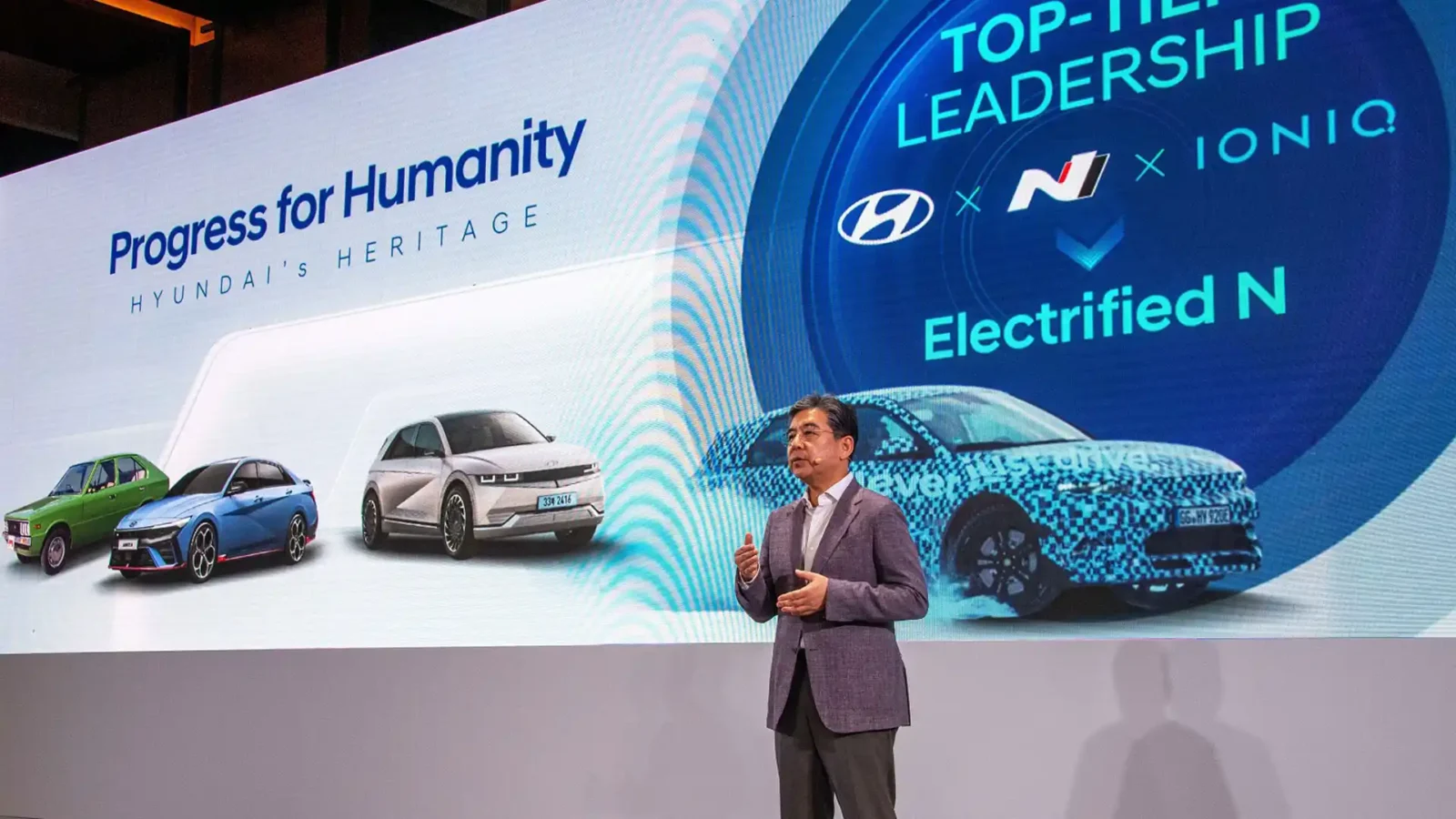
“Through the Future Mobility Battery Campus, we aim to seamlessly connect the entire battery ecosystem to foster cross-industry collaboration and accelerate technological advancement,” stated Heui Won Yang, President and Head of the R&D Division at Hyundai Motor Group during the topping-out ceremony. “We are committed to strengthening Hyundai Motor Group’s EV battery competitiveness and advancing global electrification through strategic collaborations.”
The campus represents a fundamental shift in Hyundai’s battery strategy. Until now, the company has conducted advanced research on battery materials, cell design, and process technologies at facilities such as its Namyang R&D Center and Uiwang R&D Center, both located in Korea. However, these existing centers focus primarily on initial cell and process design and validation at the unit level. The Future Mobility Battery Campus will take this considerably further by performing continuous process validation under conditions that mirror real-world vehicle applications.
Competing in a Chinese-Dominated Battery Landscape
The urgency behind Hyundai’s battery campus becomes clearer when examining the competitive dynamics reshaping the global electric vehicle market. BYD, the Chinese automotive and battery giant, has demonstrated the power of vertical integration by overtaking Tesla in global battery-electric vehicle sales for four consecutive quarters as of Q3 2025, leading by approximately 388,000 units. In September 2025 alone, BYD’s European Union sales surged by 272 percent compared to the previous year, while Tesla’s sales fell by 10.5 percent.
BYD’s competitive advantage stems largely from its proprietary Blade battery technology, a lithium iron phosphate design that the company unveiled in 2020. The Blade battery achieves remarkable safety performance, withstanding crushing, bending, heating to 300 degrees Celsius, and 260 percent overcharge without ignition. Moreover, BYD announced in 2025 that its second-generation Blade Battery would deliver 200 watt-hours per kilogram of energy density while adding 400 kilometers of range with just five minutes of charging.
The speed at which Chinese manufacturers bring new models to market further compounds the competitive pressure. According to recent industry analysis, Chinese car brands accounted for 91 of the 180 new cars released globally from November 2024 to October 2025. BYD alone received approvals for 38 new passenger car models in China during the year leading up to October 2025, compared to just three for Tesla. This breakneck development pace is reshaping the global automotive landscape, with China controlling rare earth materials, battery production, and accounting for 70 percent of worldwide electric vehicle production according to the International Energy Agency.
In response to this Chinese competitive threat, Hyundai established a dedicated “B Task Force” in April 2025, bringing together key battery experts from across the organization. The task force, which reports to Executive Vice President Jung Jun-cheul and includes specialists in energy solutions, battery development, battery design, and battery cell development, was formed specifically to build an integrated system to strengthen battery competitiveness in the long term.
Comprehensive Battery Research Capabilities
The Future Mobility Battery Campus will serve three primary functions that collectively aim to position Hyundai as a formidable player in battery technology development. First, the facility will enable high-precision validation through battery cell production process replication, covering electrode, assembly, and activation steps under conditions similar to real production environments using advanced equipment. An integrated testbed will allow for iterative validation, enabling repeated testing of safety, quality, and scalability of key battery technologies. The campus will also conduct comprehensive battery lifecycle testing, verifying battery performance and safety across all stages from cell to module, pack, and vehicle integration.
Second, the campus will focus on next-generation battery development, initially concentrating on high-performance lithium-ion cells for electric vehicles and Extended Range Electric Vehicles. The facility’s research scope is specifically designed to accommodate adaptability for future mobility needs, with the flexibility to explore diverse battery formats and materials as market and technology trends evolve.
Third, digital and artificial intelligence integration will play a central role in the campus operations. Predictive modeling and automation through AI-based tools and automated testing will enhance accuracy and efficiency in battery development. Big-data analytics will improve reliability and optimize performance through advanced data-driven insights drawn from real-world vehicle usage patterns.
The importance of this research infrastructure cannot be overstated. At Hyundai’s 2025 CEO Investor Day held in New York, the company announced that its battery strategy would deliver industry-leading improvements by 2027, including a 30 percent cost reduction, 15 percent higher energy density, and 15 percent shorter charging times. These ambitious targets reflect the critical importance Hyundai places on battery innovation as a cornerstone of its electrification strategy.
Building on Existing Battery Research Foundations
Hyundai’s battery development efforts extend beyond the Anseong campus. The company has already made significant progress in solid-state battery technology, widely regarded as the “holy grail” of battery innovation due to its potential to provide superior range, safety, performance, and fast-charging capabilities compared to conventional lithium-ion batteries.
In March 2025, Hyundai opened its all-solid-state battery pilot line at the Uiwang Research and Development Center in South Korea. Industry sources indicated that full-scale production at this pilot line would begin in the same month, with expectations that Hyundai would release a prototype vehicle powered by the new battery technology by the end of 2025. The company aims to begin mass-producing all-solid-state batteries around 2030, with the first commercial electric vehicles equipped with this technology arriving shortly thereafter.
The development of solid-state batteries represents a collaborative effort. Hyundai has partnered with Seoul National University through a Joint Battery Research Center, which began operations following a memorandum of understanding signed in November 2021. The research facility, which occupies dedicated space spanning three floors and 901 square meters within Seoul National University’s expanded Institute of Chemical Processes, focuses on developing breakthrough battery technologies including lithium metal and solid-state batteries.
Additionally, Hyundai has pursued parallel approaches to solid-state development through partnerships with specialized battery developers such as SES AI and Factorial Energy. These collaborations allow Hyundai to hedge its technological bets while accelerating the timeline toward commercial viability.
Beyond solid-state technology, Hyundai has been developing lithium iron phosphate batteries with ambitious performance targets. By the end of 2025, the company plans to achieve 300 watt-hours per kilogram of energy density for its LFP batteries, a figure that would outpace many competitors and prove crucial for affordable electric vehicle models, especially in markets dominated by cost-conscious buyers.
Strategic Partnerships Across the Battery Value Chain
While Hyundai pursues in-house battery development, the company recognizes that strategic partnerships remain essential for securing adequate battery supply and advancing technology commercialization. The Future Mobility Battery Campus is explicitly designed to enhance collaboration with battery manufacturers, providing advanced infrastructure and data-driven insights that enable faster technology commercialization and more efficient validation processes.
Hyundai’s most significant battery partnership involves LG Energy Solution. In May 2023, the two companies announced a battery cell manufacturing joint venture in the United States, with the facility located in Bryan County, Savannah, Georgia, adjacent to Hyundai Motor Group Metaplant America. The joint venture, which began construction in the second half of 2023, planned to start battery production at the end of 2025 at the earliest, with an annual production capacity of 30 gigawatt-hours capable of supporting the production of 300,000 electric vehicles annually.
In August 2023, Hyundai and LG Energy Solution announced an additional $2 billion investment in their battery cell manufacturing joint venture, raising the total investment value to more than $4.3 billion and creating another 400 jobs in the region. This expansion underscored the companies’ commitment to building a robust domestic battery supply chain in North America.
However, the Georgia facility faced unexpected challenges in September 2025 when US Immigration and Customs Enforcement conducted a major raid that detained nearly 500 workers, including LG Energy staff, subcontractors, and engineers from Hyundai Engineering. The incident highlighted the complexities of transferring specialized knowledge across borders and illustrated the increasing challenges Korean companies face in executing multibillion-dollar manufacturing projects in the United States amid tightening immigration enforcement.
Beyond LG Energy Solution, Hyundai has cultivated strategic relationships with other leading Korean battery manufacturers. In August 2025, Hyundai Motor, Kia, and Korea’s three leading battery makers—LG Energy Solution, Samsung SDI, and SK On—announced strengthened collaboration to bolster safety technology for electric vehicle batteries. The partnership, formalized at Hyundai Motor Group’s Namyang R&D Center, built upon a year of work by a Battery Safety Task Force that Hyundai and Kia had established following a major battery fire incident in Incheon in 2024.
The collaboration focuses on five critical areas: safety patents, digital battery passports, design quality, manufacturing quality, and fire safety technology. The digital battery passport component specifically responds to new European Union regulations requiring comprehensive tracking of battery lifecycle and composition data. Representatives from both the Ministry of Land, Infrastructure and Transport and the Ministry of Trade, Industry and Energy attended the partnership signing ceremony, underscoring the strategic importance of battery safety to South Korea’s industrial competitiveness.
“The global electric vehicle battery market is a ‘national competition,’ and the way for us to survive is cooperation beyond competition,” stated Kim Dong-myung, CEO of LG Energy Solution during the August 2025 ceremony. “The government and companies must become one team, and LG Energy Solution will also run until the end to ensure Korea’s future competitiveness.”
One decision can change your entire career. Take that step with our Online courses in ACCA, HESI A2, ATI TEAS 7, HESI EXIT, NCLEX-RN, NCLEX-PN, and Financial Literacy. Join Serrari Ed and start building your brighter future today.
Advanced Battery Management Systems and Safety
Battery innovation at Hyundai extends beyond cell chemistry and manufacturing to encompass sophisticated management systems that optimize performance, longevity, and safety. The company has developed advanced Battery Management Systems that perform real-time predictive diagnostics during driving, charging, and rest periods. From 2026 onward, Hyundai plans to implement cloud-based BMS technology that will collect data from diverse vehicle environments, applying proprietary advanced modeling for faster and more precise diagnostics.
The importance of robust battery management cannot be overstated. Hyundai has studied data from 50,000 IONIQ 5 vehicles, including some that have accumulated more than 250,000 miles. The majority of these vehicles reportedly still retain 90 percent or more of their original battery capacity, providing strong evidence of battery longevity and validating Hyundai’s battery management approach.
Safety features built into Hyundai’s battery systems include multiple exclusive layers such as separation barriers, ultra-safety relays, refractory shields, and safety vents designed to prevent thermal runaway and safeguard against fires. These comprehensive safety measures address one of the most critical concerns among potential electric vehicle buyers and represent a key area where Hyundai seeks to differentiate itself from competitors.
Expanding Beyond Electric Vehicles
While the Future Mobility Battery Campus initially focuses on electric vehicle applications, Hyundai has explicitly designed the facility to support battery development for diverse future mobility sectors. The campus will enhance readiness for robotics, Advanced Air Mobility, and other emerging mobility applications, reflecting Hyundai’s broader vision of becoming a comprehensive mobility solutions provider rather than simply an automotive manufacturer.
This diversification strategy aligns with Hyundai Motor Group’s acquisition of Boston Dynamics, the advanced robotics company, and its investments in urban air mobility through partnerships and in-house development. The integration of Boston Dynamics advances core robotics technologies, enhancing operational excellence through intelligent automation and human-robot collaboration. These applications extend beyond manufacturing to logistics, smart infrastructure, and future mobility use cases, all of which will require advanced battery solutions tailored to their specific operational requirements.
Hyundai has also demonstrated leadership in hydrogen fuel cell technology, with 73,000 cumulative fuel cell electric vehicle sales as of 2025. The company continues developing next-generation fuel cell systems for commercial-exclusive applications, offering high efficiency, durability, and power output to meet the demands of future mobility. Notably, Hyundai has explored hydrogen fuel cell powertrains for Urban Air Mobility applications, recognizing that different mobility platforms may require different energy solutions depending on their specific use cases and operational constraints.
Regional Economic Development and Industrial Clustering
During the topping-out ceremony, Hyundai Motor Group signed a memorandum of understanding with Gyeonggi Province, Anseong City, and Gyeonggi Housing and Urban Development Corporation to foster a battery industry ecosystem and attract related businesses to the region. This partnership underscores the company’s commitment to creating a robust industrial cluster that supports technological advancement and sustainable economic development.
The creation of battery industry clusters has proven effective in other global markets, enabling knowledge sharing, supplier development, and workforce training that benefits multiple stakeholders. By anchoring such a cluster in Anseong, Hyundai aims to accelerate innovation through proximity to suppliers, research institutions, and complementary businesses while contributing to regional economic growth and employment.
The Anseong campus represents part of Hyundai’s broader investment strategy. Under its Strategy 2025 roadmap updated in 2020, Hyundai disclosed plans for an investment of KRW 60.1 trillion by 2025, with KRW 23.5 trillion dedicated to future technologies including electrification, hydrogen fuel cells, urban air mobility, autonomous driving, mobility services, connectivity, artificial intelligence, and robotics. By 2030, Hyundai has committed to investing KRW 77.3 trillion, reflecting the accelerating pace of transformation in the automotive industry.
Pilot Production and Manufacturing Capabilities
While the Future Mobility Battery Campus focuses primarily on research and development, industry reports have suggested that Hyundai is considering establishing pilot production capabilities at the facility. According to sources familiar with the matter, the company has been evaluating production lines with a capacity of 1-2 gigawatt-hours at the Anseong R&D center, which would allow for prototype battery production separate from cells purchased from external battery manufacturers.
Since the second quarter of 2024, Hyundai has reportedly been in negotiations with cathode materials suppliers such as L&F Co., LG Chem Ltd., and Chinese materials companies to directly purchase battery materials. These discussions concern the quantity and price of cathodes to be delivered starting around 2027, with Hyundai likely focusing on nickel-cobalt-manganese battery chemistry for its initial production efforts.
The ability to produce prototype batteries in-house, even at limited scale, would provide Hyundai with invaluable insights into manufacturing processes, quality control, and cost structures. This knowledge would strengthen the company’s position in negotiations with external battery suppliers while accelerating the development cycle for new battery technologies.
Market Performance and Product Strategy
Hyundai’s investments in battery technology come amid strong commercial performance in the electric vehicle market. In Q3 2025, the company reported 87,737 battery electric vehicles sold globally, representing a 47 percent increase. The IONIQ family of vehicles has garnered significant recognition, with the INSTER named 2025 World Electric Vehicle of the Year and the IONIQ 9 winning German Premium Car of the Year just three months after its European launch.
North America has emerged as a particularly strong market for Hyundai’s electrified vehicles, with nearly one-third of all vehicles sold in the region carrying an electrified powertrain and electrified vehicle sales growing by 49 percent. In Europe, 47.4 percent of regional sales are now electrified, up 28 percent year-over-year, with electric vehicle sales increasing by 60.1 percent.
Looking ahead, Hyundai plans to introduce Extended Range Electric Vehicles in 2027 that will utilize high-performance batteries and motors to deliver electric vehicle-like driving experiences with more than 600 miles of range through optimized battery-engine integration. Unlike conventional EREVs, Hyundai’s approach will use in-house high-performance batteries, achieving full electric vehicle power performance with less than half the battery capacity, improving accessibility while maintaining exceptional range and eliminating range anxiety.
Challenges and Future Outlook
Despite Hyundai’s ambitious plans and substantial investments, the company faces formidable challenges in its quest to become a battery technology leader. The competitive landscape continues to evolve rapidly, with Chinese manufacturers demonstrating remarkable agility in bringing new technologies to market while maintaining aggressive pricing strategies that pressure profit margins across the industry.
The combined market share of Korea’s three major battery manufacturers—LG Energy Solution, SK On, and Samsung SDI—decreased to 16.4 percent in recent periods, representing a 5.4 percentage point decline from the previous year. This erosion of market position reflects the intense competition from Chinese battery manufacturers, particularly CATL, which has solidified its position as the world’s largest battery manufacturer with partnerships spanning Tesla, BMW, Ford, and Volkswagen.
Furthermore, the path to commercializing next-generation battery technologies remains uncertain. While solid-state batteries promise transformative improvements in energy density, charging speed, and safety, they continue to face manufacturing challenges related to stability and production scale. Industry experts widely acknowledge that transitioning from pilot production to mass manufacturing represents the most critical hurdle for solid-state technology.
However, Hyundai’s comprehensive approach—combining in-house research, strategic partnerships, pilot production capabilities, and significant capital investment—positions the company well to navigate these challenges. The Future Mobility Battery Campus in Anseong represents a tangible commitment to building the technical expertise, testing infrastructure, and innovation ecosystem necessary to compete effectively in the electric vehicle era.
As global automotive manufacturers race to secure their positions in an increasingly electrified future, Hyundai’s $1.2 billion battery campus stands as a testament to the strategic importance of battery technology. The facility’s completion in late 2026 will mark a new chapter in Hyundai’s evolution from an automotive assembler dependent on external battery suppliers to an integrated mobility company with deep capabilities across the entire electric vehicle value chain. Whether this transformation will be sufficient to challenge Chinese dominance in battery technology remains to be seen, but Hyundai has clearly signaled its determination to compete at the highest levels of battery innovation and manufacturing excellence.
Catch Up With Our Other Headlines
28th November, 2025
Meta reportedly negotiating multi-billion dollar deal for Google chips,The Information reports
European Commission Plans Financial Relief for Baltic States Hit by Russia Sanctions
DR Congo Commits $500,000 to UN Partnership for Economic Transformation and Capacity Building
Ghana Central Bank Cuts Interest Rate to 18 Percent as Inflation Falls to Four-Year Low
Mars Wrigley Commits Sh4.3 Billion to Kenya Manufacturing Expansion, Shifts Production from Poland
Ready to take your career to the next level? Join our Online courses: ACCA, HESI A2, ATI TEAS 7 , HESI EXIT , NCLEX – RN and NCLEX – PN, Financial Literacy!🌟 Dive into a world of opportunities and empower yourself for success. Explore more at Serrari Ed and start your exciting journey today! ✨
Track GDP, Inflation and Central Bank rates for top African markets with Serrari’s comparator tool.
See today’s Treasury bonds and Money market funds movement across financial service providers in Kenya, using Serrari’s comparator tools.
Photo source: Google
By: Montel Kamau
Serrari Financial Analyst
28th November, 2025