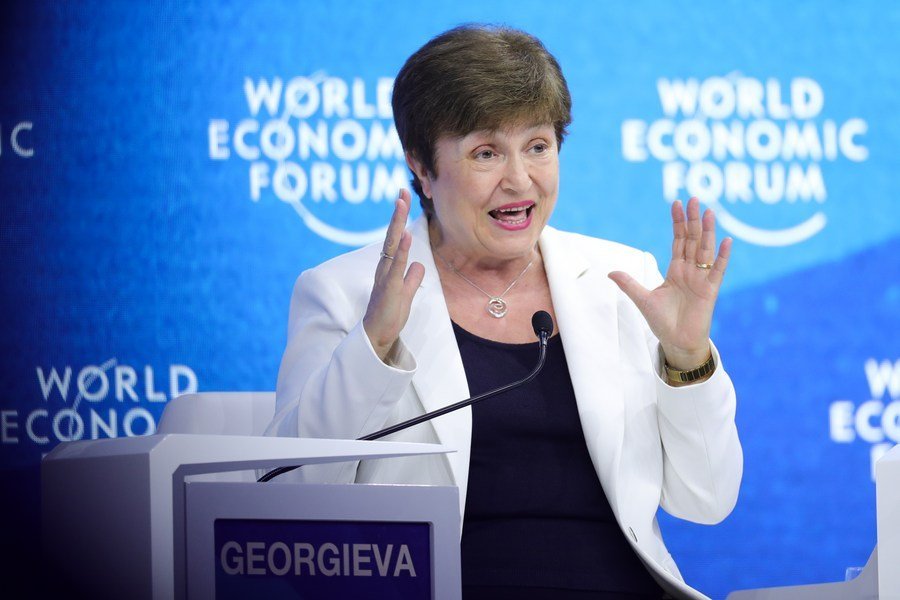
In a recent address, IMF Chief Kristalina Georgieva provided an overview of the current state of the global economy, highlighting both positive and concerning factors. She pointed out that while there are some positive developments, such as increased demand for services and progress in tackling inflation, there are also significant fiscal and financial risks that persist.
Since the onset of the COVID-19 pandemic in 2020, a series of shocks has collectively resulted in a substantial reduction of $3.7 trillion in global economic output. Consequently, economic growth remains below pre-pandemic levels, and the prospects for medium-term growth have further weakened. Stubborn inflation continues to exert pressure, necessitating extended periods of elevated interest rates.
Georgieva emphasized that economic fragmentation poses a severe threat, especially to emerging and developing economies, which are the most vulnerable to disruptions. Speaking from Abidjan, Ivory Coast, she announced the forthcoming release of the IMF’s World Economic Outlook, which depicts a slow and uneven recovery with significant regional disparities.
“The global economy has displayed resilience, with positive developments in the first half of 2023, driven by strong demand for services and progress in combating inflation,” Georgieva stated. “This increases the possibility of a soft landing for the global economy, but vigilance is crucial.”
The current growth rate remains notably weak, significantly below the pre-pandemic average of 3.8%. Additionally, certain nations are expected to grapple with elevated inflation until 2025. Georgieva emphasized that addressing inflation is a top priority, as rising prices erode confidence among consumers and investors, disproportionately affecting vulnerable populations.
“To combat inflation, maintaining higher interest rates for an extended period is essential,” she asserted. “Preventing premature monetary policy easing is critical to guard against potential resurgences of inflation.”
Despite the expectation of a “soft landing” supporting asset prices, Georgieva cautioned that a rapid return of inflation could lead to a sharp tightening of financial conditions, potentially destabilizing global markets.
Georgieva’s warning comes ahead of a gathering of finance ministers and central bankers from 190 countries in Marrakech to discuss the global economic landscape. These meetings are significant as they mark the first time such discussions have occurred on the African continent since 1973, coinciding with a recent earthquake in Morocco.
Georgieva highlighted stark disparities in growth dynamics, noting that the United States is the only major economy that has successfully returned to pre-pandemic output levels. India and Ivory Coast were cited as notable bright spots, while many advanced economies are slowing down, and China is underperforming expectations. Numerous other countries continue to grapple with sluggish growth.
The ongoing trend of economic fragmentation, characterized by protectionist policies, export controls, and reduced global trade, poses a significant risk to growth prospects, especially for emerging and developing economies.
Several nations are burdened with substantial fiscal risks and urgently need to rebuild their fiscal reserves. Africa and other regions are witnessing mounting debt burdens, and banks are facing pressures, necessitating swift action to enhance the global financial safety net.
IMF analysis underscores that 100 emerging and low-income countries, including many in Africa, lack adequate resources and access to swap lines, making them susceptible to financial crises. Georgieva called for efforts to bolster the IMF’s lending capacity and urged member countries to take action to increase quota resources.
She also called on stronger IMF members to provide additional financing for the Poverty Reduction and Growth Trust, which serves the poorest member countries, as well as the newly established $40 billion Resilience and Sustainability Trust, aimed at providing long-term financing for climate-related reforms. Georgieva’s call for global cooperation underscores the imperative of addressing the multifaceted challenges facing the world economy in the coming years.
Source: ipcenter.com
By: Montel Kamau
Serrari Financial Analyst
7th October, 2023